


Document authentication is a critical process that ensures the validity and legitimacy of various official papers, ranging from birth certificates to driver’s licenses. The Authentication Secretary of State plays a pivotal role in this process, providing a seal of approval that makes these documents internationally recognized. In this comprehensive guide, we will delve into the intricacies of document authentication, explore the steps involved, costs associated, and answer common questions surrounding this essential procedure.
1. What is meant by authentication of documents?
Authentication of documents is the process of verifying the legitimacy and accuracy of official papers to make them legally valid in a foreign country. This crucial step is often required when individuals need to use their documents, such as birth certificates, marriage licenses, or driver’s licenses, in a jurisdiction outside their home country. The Authentication Secretary of State, typically part of the state’s Department of State, performs this authentication, adding an official seal or certification to the document.
2. How do you authenticate a document with the state department?
The authentication process involves several steps, and the specific requirements may vary slightly between states. Here is a general overview of how you can authenticate a document with the State Department:
a. Notarization: Begin by having your document notarized by a commissioned notary public. This step involves the notary verifying your identity and witnessing the signing of the document.
b. State Certification: Once notarized, take your document to the Secretary of State’s office in the state where the notary is commissioned. The Secretary of State will authenticate the notary’s signature.
c. U.S. Department of State Authentication: For documents that require international recognition, you must then submit them to the U.S. Department of State. The Office of Authentication will verify the state-level authentication and add its own seal.
3. Where do I authenticate my documents?
Document authentication occurs at multiple levels, typically involving local, state, and federal authorities. The specific locations may vary depending on the type of document and state regulations. Here’s a general guide:
- Notarization: Visit a local notary public to have your document notarized.
- State Certification: Take the notarized document to the Secretary of State’s office in the state where the notary is commissioned.
- U.S. Department of State Authentication: Mail or personally deliver the state-authenticated document to the U.S. Department of State’s Office of Authentications in Washington, D.C.
4. How much does U.S. Department of State authentication cost?
The cost of U.S. Department of State authentication can vary based on factors such as the type of document and processing options. As of my last knowledge update in January 2022, the basic fee for authentication is $8 per document. Expedited services are available for an additional fee. It is advisable to check the official website of the U.S. Department of State for the most current fee schedule.
5. What is the difference between authentication and apostille?
Authentication and apostille serve similar purposes but are distinct processes. Authentication is the certification of a document’s legitimacy for use in foreign countries. It involves verifying the signatures on the document, including the notary public’s, and obtaining official certification from the state and federal authorities.
On the other hand, an apostille is a specific type of authentication recognized under the Hague Convention. It streamlines the process by providing a standardized certificate accepted by all member countries of the Hague Apostille Convention. The apostille eliminates the need for additional certifications and is often used for documents intended for countries that are part of the Hague Convention.
6. Who issues apostille in the U.S.?
In the United States, apostilles are issued by the competent authority designated by each state. Typically, this authority is the Secretary of State or a similar state-level office. It is crucial to check the specific requirements of the state where the document originates to determine the correct issuing authority.
7. Which countries require an apostille?
Apostilles are generally required for documents intended for use in countries that are party to the Hague Apostille Convention. As of my last update in January 2022, over 120 countries are members of the convention, including many European nations, the United States, and others. However, it’s essential to verify the current list of member countries as this may have changed since my last update.
8. Is authentication the same as notarized?
Authentication and notarization are distinct steps in the document validation process. Notarization involves a notary public verifying the identity of the document signer and witnessing the signature. It does not, however, guarantee the document’s acceptance in foreign jurisdictions.
Authentication, on the other hand, is the subsequent step that involves state and federal authorities certifying the notary’s signature on the document. Authentication enhances the document’s credibility and ensures it meets the legal requirements for international use.
9. Is the job of a notary public to authenticate a document?
While notaries public play a crucial role in the document authentication process, their primary responsibility is not to authenticate documents. Notaries public witness and verify signatures, administer oaths, and certify copies of documents. Authentication involves additional steps, typically performed by state and federal authorities, including the Secretary of State and the U.S. Department of State’s Office of Authentications.
10. Why do documents need to be authenticated?
Document authentication is necessary for various reasons, primarily centered around establishing the validity and legitimacy of official papers in foreign jurisdictions. Here are some common scenarios where document authentication is required:
- International Legal Processes: Documents such as power of attorney, affidavits, and contracts may need authentication for legal processes in foreign countries.
- Academic or Professional Qualifications: Educational and professional documents, like diplomas and certificates, may require authentication for recognition in foreign institutions or workplaces.
- Immigration: Documents, including birth certificates and marriage licenses, may need authentication for immigration purposes when moving to another country.
- Business Transactions: Documents related to business transactions, such as contracts and agreements, often require authentication for international business dealings.
11. What is the purpose of authenticating a birth certificate?
Authenticating a birth certificate is crucial for various reasons, especially when the document is required for use in a foreign country. Here are some common purposes:
- International Adoption: When adopting a child from another country, the adopted child’s birth certificate may need to be authenticated to meet the legal requirements of the adoptive country.
- Immigration: Birth certificates are often required for immigration purposes, such as obtaining a visa or residency in a foreign country.
- Marriage Abroad: When getting married in a foreign country, you may need to provide an authenticated birth certificate as part of the marriage registration process.
- Dual Citizenship: Individuals seeking dual citizenship may need to authenticate their birth certificate as part of the application process.
12. Where can I authenticate my U.S. birth certificate?
To authenticate your U.S. birth certificate, follow these steps:
- Notarization: Have your birth certificate notarized by a commissioned notary public.
- State Certification: Take the notarized birth certificate to the Secretary of State’s office in the state where the notary is commissioned for state-level authentication.
- U.S. Department of State Authentication: Submit the state-authenticated birth certificate to the U.S. Department of State’s Office of Authentications for the federal-level authentication.
Ensure that you follow the specific requirements of the state and federal authorities to facilitate a smooth authentication process.
13. How do I authenticate my U.S. driver’s license?
While driver’s licenses are not typically authenticated for international use, there may be specific circumstances where authentication is required. For example, if you plan to use your U.S. driver’s license in a country that requires foreign documents to be authenticated, you may need to follow a similar process:
- Notarization: Have a notary public notarize a copy of your driver’s license.
- State Certification: Take the notarized copy to the Secretary of State’s office in the state where the notary is commissioned for state-level authentication.
- U.S. Department of State Authentication: Submit the state-authenticated copy to the U.S. Department of State’s Office of Authentications for the federal-level authentication.
It’s crucial to verify the specific requirements and whether the country of intended use accepts authenticated driver’s licenses.
Conclusion
In navigating the complex landscape of document authentication, understanding the roles of the Authentication Secretary of State, notaries public, and federal authorities is crucial. This guide has provided a comprehensive overview of the authentication process, addressing key questions related to costs, differences between authentication and apostille, and the purposes behind authenticating specific documents.
Whether you are planning an international adoption, pursuing dual citizenship, or engaging in cross-border business transactions, the authentication of documents ensures their legal acceptance in foreign jurisdictions. Stay informed, follow the prescribed steps, and consult with relevant authorities to streamline the authentication process for your specific needs.
Disclaimer:
The content provided in this blog post is intended for educational purposes only. It is not a substitute for professional advice or services, and the information presented herein should not be construed as legal, financial, medical, or any other professional advice.
The author of this blog is not a licensed professional, and the content is based on their personal opinions, experiences, and research. Readers should consult with a qualified professional for advice regarding their individual situation.
While the author strives to provide accurate and up-to-date information, no guarantee is made regarding the accuracy, completeness, or suitability of the content. The author shall not be held liable for any errors, omissions, or any losses, injuries, or damages arising from the use of the information provided in this blog.
Any links to third-party websites are provided for convenience and informational purposes only. The author does not endorse or make any representations about the content, products, or services offered by these third parties.
Readers are encouraged to independently verify any information presented in this blog and seek professional advice before making any decisions based on the content herein.
By accessing and using this blog, you agree to hold the author harmless from any claims, actions, or liabilities arising out of your use of the information provided herein.
This disclaimer is subject to change without notice, and it is the responsibility of the reader to review and familiarize themselves with the latest version.

About the author


Understanding Allodial Titles, Land Patents, and Their Legal Implications
In property rights and land ownership, the concepts of allodial titles and land patents hold significant legal weight. These terms are often used in discussions related to the protection of property rights, land ownership, and the interplay between various areas of law such as the Uniform Commercial Code, contract law, constitutional law, and statutory law. In this in-depth blog post, we will explore into the intricacies of allodial titles and land patents, exploring their definitions, legal implications, and dispelling common myths and misconceptions associated with them. Key Takeaways: Allodial Titles Explained: An allodial title represents the highest form of land ownership, granting the owner absolute and unburdened ownership of the property, free from any encumbrances, liens, or taxes imposed by external parties. Land Patents and Their Legal Implications: A land patent is a legal document issued by the government that […]

Outsmart the System: Top Legal Strategies You Need to Know
Understanding the Legal Landscape While the legal system may seem intimidating, grasping its core concepts can empower you to navigate its complexities effectively. Understanding this landscape is vital for anyone looking to outsmart the system and optimize their legal strategies. Whether you’re seeking legal hacks for small businesses or tips on how to use legal loopholes to your advantage, recognizing the different legal frameworks at play can be crucial in making informed decisions. Overview of Legal Systems An understanding of the various legal systems is pivotal for recognizing your rights and obligations. Legal frameworks can vary significantly from one country to another, with common systems including civil law, common law, and religious law. Each system has its own structure, offering unique legal strategies and challenges. For example, in a common law system, previous judicial decisions can influence future cases, allowing […]

Ilataza Ban Yasharahla EL’s Public Records Request for Elyria Board of Education
24-0001492: Ilataza Ban Yasharahla EL's Public Records Request for Elyria Board of Education. All Rights Expressly Reserved and Retained. https://nationalnoticerecord.com/elyria-boe-members-required-to-follow-rulings https://nationalnoticerecord.com/is-elyria-school-board-bound-by-ohio-courts https://nationalnoticerecord.com/understanding-the-oath-of-office-legal-obligations-and-consequences

Ohio Legalizing Recreation Marijuana Use May Hurt Dispensaries in Monroe, Michigan
In recent years, the movement to legalize marijuana for adult recreational use has gained significant momentum across the United States. Ohio, a state long synonymous with conservative values, has also embraced this shift in public opinion. With the passing of Ohio Issue 2 and the Ohio Home Grow Bill, the state has joined the ranks of those allowing the recreational use of marijuana. This blog post will delve into the pros and cons of Ohio's legalization, as well as the potential implications for marijuana dispensaries in Monroe, Michigan, which previously benefited from Ohio buyers crossing state lines. https://www.youtube.com/watch?v=0KRzqZ8dUwc Pros of Ohio's Recreational Marijuana Legalization 1. Economic Boost: Legalizing recreational marijuana in Ohio has the potential to generate substantial economic benefits for the state. The marijuana industry has proven to be a lucrative market, with tax revenue and job creation being […]
The Etymology of “Bey” EXPOSED
TURN UP YOUR VOLUME & PRESS PLAY Have you ever wondered what the true origin and meaning of "Bey" is? We've been told that it means "Governor", "Law Enforcer", Chief, etc. But, what if that's incorrect? What if we've been using the "title", "Bey", incorrectly? FILL OUT THE FORM TO GET STARTED First Name: Last Name: Phone Number: Email: I agree to receive email updates and promotions. Submit
Are You A “Colored Person”?
Tune in as we dissect the term "person of color", exposing how its PURPOSELY steeped in plausibility, DECEPTION, and used as a weapon.

We’ve Been FORCED to Make Some Changes
Due to receiving so many tasks that our work has become more tedious, we've been forced to make some changes at National Notice Record.
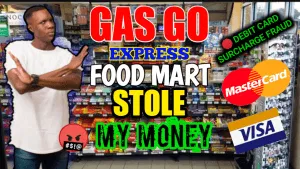
Gas Go Express Food Mart Unjust Enrichment Via Debit Card Surcharge Fees
https://www.youtube.com/watch?v=eJknhtE9JEI In this video, I talk about a consumer experience I had while shopping at Gas Go Express Food Mart Gas Station, located at 237 Lake Avenue, Elyria, Ohio. On November 24, 2021, I made a purchase for 4 taxable items at the location. Each item was $0.99 per. With taxes, it came up to $4.26. As I got ready to place my debit card into the card reader, the Gas Go Express Food Mart clerk immediately added a $.50 debit card surcharge fee. As a common practice, some merchants/stores add a surcharge to your total purchase amount when you spend less than $5 or $10 when using a credit/debit card to process the payment. Being a merchant myself, I know that Master Card, Visa, Discover, and some of the other financial institutions have a strict policy that states that […]

The Hidden Truth: You Don’t Own Your Smartphone Data
Wait, I bought the phone but not the data? Let's talk about that You paid good money for your smartphone, right? It's sitting in your hand. But here's the kicker: that purchase only covered the hardware. The personal data your device generates, that's a whole different ballgame. You don't own it. The big myth that your data belongs to you Many people assume their data is automatically theirs. This is a dangerous misconception. When you hit "agree" on those terms, you often sign away control. Your digital life becomes a commodity. How phone companies turned your privacy into a cash cow Think about the sheer volume of data your phone collects. Phone companies saw this goldmine early on. They built entire business models around harvesting your information, turning your digital footsteps into pure profit. Companies track your calls, texts, and […]

Do Background Checks Align With the Constitution’s Intent?
Let's Be Real: Are Background Checks Actually Constitutional? Some folks point to court decisions, like the U.S. Supreme Court Holds that Constitutional Privacy ... ruling, as proof background checks are fine. They say the courts have consistently allowed these checks, seeing them as reasonable limits on rights. You might wonder, does that make them truly constitutional in spirit? Are we just accepting them because the courts say so, or do we really feel they align with our foundational freedoms? This isn't just about legality; it's about what feels right for a free people. My take on whether they're unconstitutional by design or just abuse Picture this: The government wants to know everything about you before you can do anything. That feels pretty intrusive, doesn't it? Background checks, when they dig too deep, start to feel like they're designed to make […]

Is Forced Hospitalization Legal Without a Court Order?
It's a frightening thought, isn't it? The idea that someone could take your freedom without a judge's order. You might wonder, can a hospital really hold you against your will without court intervention? This isn't just a legal question; it's about your most basic rights. Could this happen to you? Key Takeaways: * Your fundamental liberties are at risk from involuntary psychiatric holds. Imagine losing your freedom without a judge's order.* Forced hospitalization often occurs without court oversight, raising serious due process concerns. Should a doctor's opinion outweigh your rights?* State laws permit temporary detention, but this doesn't guarantee lawful confinement. Are you truly safe from unlawful medical detention?* The definition of "danger to self or others" is alarmingly subjective. Could a misunderstanding strip you of your freedom?* Many fear forced hospitalization can be weaponized by others. What if a […]

If States Can’t Secede, Is Federalism a Fraud?
There's a growing unease among many Americans about the true nature of their federal system. We're often told federalism ensures a balance of power, but if states are powerless to leave, even when faced with an overreaching federal government, does this system truly represent shared governance or something far more unilateral? This foundational question challenges the very legitimacy of the Union, pushing us to consider if federalism, without the possibility of secession, is a deceptive illusion. Key Takeaways: You know, we're always taught that federalism is this perfect balance, states and the feds working together like equals. But what if a state can't ever, ever leave the Union? That really makes you wonder if it was ever a true partnership or just a clever illusion, right? The big, uncomfortable truth is, if the Constitution doesn't actually have a clause saying […]
Is Criminalizing Flag Burning a Direct Attack on Free Speech?
Free speech protects even unpopular viewpoints, you know? When you consider criminalizing flag burning, you're looking at a direct challenge to a core constitutional principle. This isn't just about a flag; it's about the dangerous precedent of government controlling symbolic expression. You must ask: where does this control end? Key Takeaways: You know, the idea of criminalizing flag burning really gets people talking. It touches on something deeply personal for many, doesn't it? This whole debate isn't just about a piece of cloth; it's about what we believe free speech truly means in this country. The Supreme Court has repeatedly affirmed that flag burning is protected symbolic speech. This means actions conveying a message fall under First Amendment protections. Criminalizing flag burning targets political expression, not just an act. This type of law seeks to control how people convey unpopular […]

Can Swearing at Cops Get You Jailed? What States Allow
Just imagine you're in a heated moment, speaking your mind. Can those words land you in jail? You might think your speech is always free, but the truth is far more complex. We'll explore if cursing at a cop can get you arrested and which states allow it. It's about knowing your rights and avoiding serious consequences. The Legal Battleground: Are You Actually Allowed to Insult Police Under the First Amendment? You might think yelling at a cop is always protected. But the First Amendment, while broad, isn't absolute. It protects most offensive speech, even towards officers, but there are critical exceptions where your words become a crime. Free Speech vs. Police Authority: Does Mocking an Officer Violate the Law? Mocking an officer usually falls under free speech. However, if your words are combined with agitation, physical proximity, or a […]
Related
The Hidden Truth: You Don’t Own Your Smartphone Data
Wait, I bought the phone but not the data? Let's talk about that You paid good money for your smartphone, right? It's sitting in your hand. But here's the kicker: that purchase only covered the hardware. The personal data your device generates, that's a whole different ballgame. You don't own it. The big myth that your data belongs to you Many people assume their data is automatically theirs. This is a dangerous misconception. When you hit "agree" on those terms, you often sign away control. Your digital life becomes a commodity. How phone companies turned your privacy into a cash cow Think about the sheer volume of data your phone collects. Phone companies saw this goldmine early on. They built entire business models around harvesting your information, turning your digital footsteps into pure profit. Companies track your calls, texts, and […]
Do Background Checks Align With the Constitution’s Intent?
Let's Be Real: Are Background Checks Actually Constitutional? Some folks point to court decisions, like the U.S. Supreme Court Holds that Constitutional Privacy ... ruling, as proof background checks are fine. They say the courts have consistently allowed these checks, seeing them as reasonable limits on rights. You might wonder, does that make them truly constitutional in spirit? Are we just accepting them because the courts say so, or do we really feel they align with our foundational freedoms? This isn't just about legality; it's about what feels right for a free people. My take on whether they're unconstitutional by design or just abuse Picture this: The government wants to know everything about you before you can do anything. That feels pretty intrusive, doesn't it? Background checks, when they dig too deep, start to feel like they're designed to make […]
Is Forced Hospitalization Legal Without a Court Order?
It's a frightening thought, isn't it? The idea that someone could take your freedom without a judge's order. You might wonder, can a hospital really hold you against your will without court intervention? This isn't just a legal question; it's about your most basic rights. Could this happen to you? Key Takeaways: * Your fundamental liberties are at risk from involuntary psychiatric holds. Imagine losing your freedom without a judge's order.* Forced hospitalization often occurs without court oversight, raising serious due process concerns. Should a doctor's opinion outweigh your rights?* State laws permit temporary detention, but this doesn't guarantee lawful confinement. Are you truly safe from unlawful medical detention?* The definition of "danger to self or others" is alarmingly subjective. Could a misunderstanding strip you of your freedom?* Many fear forced hospitalization can be weaponized by others. What if a […]
If States Can’t Secede, Is Federalism a Fraud?
There's a growing unease among many Americans about the true nature of their federal system. We're often told federalism ensures a balance of power, but if states are powerless to leave, even when faced with an overreaching federal government, does this system truly represent shared governance or something far more unilateral? This foundational question challenges the very legitimacy of the Union, pushing us to consider if federalism, without the possibility of secession, is a deceptive illusion. Key Takeaways: You know, we're always taught that federalism is this perfect balance, states and the feds working together like equals. But what if a state can't ever, ever leave the Union? That really makes you wonder if it was ever a true partnership or just a clever illusion, right? The big, uncomfortable truth is, if the Constitution doesn't actually have a clause saying […]
Is Criminalizing Flag Burning a Direct Attack on Free Speech?
Free speech protects even unpopular viewpoints, you know? When you consider criminalizing flag burning, you're looking at a direct challenge to a core constitutional principle. This isn't just about a flag; it's about the dangerous precedent of government controlling symbolic expression. You must ask: where does this control end? Key Takeaways: You know, the idea of criminalizing flag burning really gets people talking. It touches on something deeply personal for many, doesn't it? This whole debate isn't just about a piece of cloth; it's about what we believe free speech truly means in this country. The Supreme Court has repeatedly affirmed that flag burning is protected symbolic speech. This means actions conveying a message fall under First Amendment protections. Criminalizing flag burning targets political expression, not just an act. This type of law seeks to control how people convey unpopular […]
Can Swearing at Cops Get You Jailed? What States Allow
Just imagine you're in a heated moment, speaking your mind. Can those words land you in jail? You might think your speech is always free, but the truth is far more complex. We'll explore if cursing at a cop can get you arrested and which states allow it. It's about knowing your rights and avoiding serious consequences. The Legal Battleground: Are You Actually Allowed to Insult Police Under the First Amendment? You might think yelling at a cop is always protected. But the First Amendment, while broad, isn't absolute. It protects most offensive speech, even towards officers, but there are critical exceptions where your words become a crime. Free Speech vs. Police Authority: Does Mocking an Officer Violate the Law? Mocking an officer usually falls under free speech. However, if your words are combined with agitation, physical proximity, or a […]