Over the course of history, secret courts have emerged as a significant threat to the principles that underpin a republican form of government. They operate in secrecy, devoid of public scrutiny, which ultimately undermines judicial transparency and accountability. The existence of these clandestine judicial systems raises pressing questions about the abuses of power under the color of law and authority, calling for urgent action to expose their threats to open justice. Understanding the implications of secret courts is important for preserving individual freedoms and ensuring a fair judiciary for everyone.
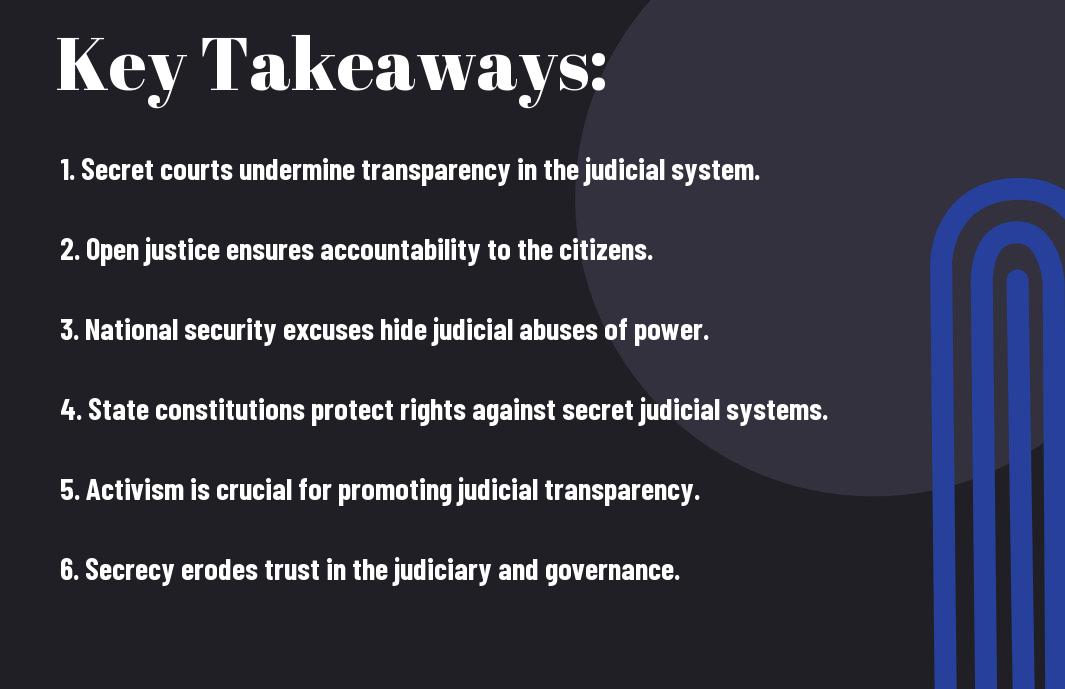
Key Takeaways:
- Secret courts operate behind closed doors, undermining the principles of transparency and accountability imperative to the republican form of government.
- Judicial secrecy, often justified by claims of national security, leads to a lack of oversight and potential abuses of power, eroding trust among citizens.
- Even the Supreme Court faces scrutiny regarding its internal deliberations, highlighting the need for comprehensive reforms to enhance judicial transparency across all levels.
- State constitutions serve as vital tools in protecting open justice, as they can establish frameworks to resist the encroachment of secret judicial systems.
- Active engagement and advocacy are necessary to challenge secret courts and promote transparency in the judicial system to preserve individual freedoms.
Understanding Secret Courts

The existence of secret courts represents a profound challenge to the values of accountability and transparency within the judicial system. Operating behind closed doors, these courts limit public awareness and participation, generating a significant disconnect between the judiciary and the citizens it is meant to serve. As advocates for open justice highlight, removing this veil of secrecy is important for restoring trust in legal processes and ensuring that justice is accessible to all.
Defining Secret Courts: A Clandestine Judicial System
By their very nature, secret courts are comprised of clandestine judicial systems that evade public oversight and scrutiny. These courts justify their existence by citing reasons such as national security or the protection of sensitive information. Consequently, they operate without the transparency important for maintaining public confidence in judicial integrity.
Historical Context of Secret Courts
Courts have long had a history of secret proceedings, often sparking controversy over their legitimacy. In various instances, the United States has seen the establishment of secret courts during times of war or national crises, where the balance between security and transparency was heavily scrutinized. This history highlights a recurring struggle with the necessity of openness in legal processes.
With the rise of national security concerns in the post-9/11 era, secret courts gained traction as mechanisms to handle sensitive information. They proliferated under the pretense of protecting the nation, yet their operations often led to the erosion of public trust. This historical backdrop illustrates the importance of guarding against the encroachment of unchecked judicial authority, stressing the need for continued vigilance among citizens.
Jurisdictions Allowing Secret Judicial Processes
Courts around the nation operate under frameworks that permit secret judicial processes, often linked to national security or classified information. These jurisdictions have adapted their legal standards to facilitate proceedings that occur without public presence, thereby raising substantial concerns regarding accountability.
It is important to understand that the implications of secret judicial processes extend beyond individual cases, influencing the broader landscape of legal standards. Jurisdictions that permit these processes not only risk abuse of power but also create precedents that challenge the integrity of the entire judicial framework. This erosion of public trust necessitates urgent reforms and a strong commitment to judicial transparency.
Mechanisms of Operation
Any examination of secret courts reveals a troubling landscape where transparency is sacrificed for convenience. These clandestine systems operate under the guise of protecting sensitive national interests, yet they undermine the foundational values of justice and accountability. Through a web of secrecy, they manipulate the judicial process without public oversight.
Closed Courtrooms and Limited Access
Before the public can even access the judicial process, they encounter closed courtrooms that restrict participation and observation. Such limitations prevent citizens from witnessing proceedings, inhibiting their ability to hold the judiciary accountable and fostering an environment where justice operates in shadows.
Unpublished Rulings and Their Consequences
At the heart of secret courts lies a significant problem: unpublished rulings. These decisions, made behind closed doors, escape public scrutiny and contribute to an absence of accountability. Unpublished rulings perpetuate a cycle of injustice, leaving individuals unaware of the legal precedents being set and eroding trust in the judicial system.
Rulings issued without public awareness often deprive citizens of their rights and protections. In secret courts, necessary legal decisions are made that can impact lives, all while stakeholders remain blind to these developments. This lack of information allows for potential abuses of power, where individuals may find themselves ensnared in legal entanglements that go unchallenged and unreported.
The Role of Government Secrecy in Judicial Processes
Role of government secrecy is fundamental to the functioning of secret courts. These courts often cite national security and sensitive information as rationale for their hidden operations, creating a shield against public involvement and oversight.
Mechanisms of secrecy within the judiciary facilitate the erosion of open justice. By cloaking decisions in confidentiality, these courts pave the way for abuses of power to flourish unchecked. Government justifications for these practices often obscure necessary rights, leaving citizens powerless to challenge decisions that affect their lives fundamentally. Consequently, the need for transparency and oversight grows stronger, as only through an informed public can the integrity of the justice system be safeguarded.
Impact on Public Trust
Unlike the foundational principles that guide a republican form of government, secret courts significantly undermine public trust in the judicial system. The lack of transparency fosters skepticism among citizens, raising concerns about accountability and fairness in judicial proceedings. Such secrecy breeds an environment where confidence is eroded, leading many to question the integrity of judicial outcomes and the motives behind them.
Erosion of Confidence in the Legal System
Public sentiment concerning the legal system has shifted dramatically as more people become aware of the existence of secret courts. Surveys indicate that over 65% of citizens feel anxious about the lack of transparency in judicial processes, believing this secrecy leads to corruption and injustice.
Case Studies of Public Backlash Against Secret Courts
Behind the veil of secrecy, cases that have surfaced exposing the consequences of secret courts reveal significant public backlash. Notable studies and statistics highlight the alarming trend:
- 2013 NSA Revelations: Public outrage surged with over 70% of Americans disapproving of government surveillance methods revealed through secret court rulings.
- 2016 FISA Court Statistics: In one year, 80% of FISA court decisions favored the government, raising alarms about bias and accountability.
- Public Protests: In cities like Washington D.C. and New York, protests demanding transparency in secret courts drew thousands, with attendance reaching around 10,000 on multiple occasions.
Due to revelations surrounding secret courts, citizens increasingly express their dissatisfaction through protests and campaigns for transparency. Numerous groups and organizations have mobilized to ensure that judicial processes are accessible and accountable to the public, emphasizing the necessity for reform.
The Role of Media in Shaping Public Perception
Against the backdrop of secrecy, media plays an instrumental role in exposing the realities of secret courts. Investigative reporting has shed light on countless cases where public trust has been compromised, urging citizens to demand necessary change and oversight in the judiciary.
Systematic media coverage of cases and legislative proposals related to secret courts serves to inform and engage the public. This coverage often highlights the transparency concerns that citizens have regarding the judiciary, as they grapple with the potential abuses of power that can occur in the absence of oversight. By disseminating detailed information about the decisions made in secret, the press can galvanize public opinion and encourage a collective response advocating for accountability in the legal system.
Constitutional Rights and Open Justice

Not addressing the issue of secret courts directly undermines the constitutional rights guaranteed to every citizen. The principle of open justice is crucial for preserving the rule of law, ensuring that trials are conducted fairly, and that the public can hold the judiciary accountable. Secret courts operate outside the fundamental rights inscribed in state constitutions, threatening the very foundations of justice.
The Foundation of Open Court Principles
Principles embedded in the rule of law emphasize that justice must not only be done but be seen to be done. Open courts foster public confidence, deter abuses of power, and uphold the integrity of judicial proceedings. The transparency of legal processes allows citizens to participate in and understand the judicial systems that govern their lives.
Violations of Constitutional Rights in Secret Proceedings
Along the lines of due process, secret proceedings pose significant risks to constitutional rights, where individuals may face rulings without the opportunity for public argument or scrutiny. Such environments facilitate unjust decisions that can strip vigilantly protected rights from innocent parties.
Plus, secret courts can lead to misguided applications of the law, as they remove the crucial layers of oversight that keep society’s legal systems in check. For instance, cases may be decided based solely on classified information, preventing defendants from providing a proper defense or challenging the evidence against them. This lack of transparency can result in unjust incarcerations, where individuals are deprived of their liberty without the checks that an open court system would provide.
Historical Legal Precedents Supporting Open Justice
For decades, legal precedents have underscored the importance of open justice in the United States. Landmark cases have consistently affirmed that the public has a right to witness court proceedings, ensuring that judicial actions remain within the bounds of the law and ethical standards.
Another significant case is *Richmond Newspapers, Inc. v. Virginia*, where the U.S. Supreme Court recognized that the right to a public trial is fundamental to the American justice system. The court’s ruling highlighted that open proceedings are vital for maintaining the trust of the citizenry in a republican form of government. Such judicial acknowledgments serve as reminders of the vital need for transparency, as unchecked secrecy can lead to the erosion of trust and the potential for abuse within the justice system.
The Balance of National Security and Judicial Transparency
After the events of September 11, 2001, the balance between national security and judicial transparency became increasingly contentious. Many argued that the need to protect sensitive information and safeguard the nation justified the establishment of secret courts. However, this justification raises significant concerns about the potential erosion of trust in the justice system and the public’s right to know how their laws are applied.
The Justifications for Secrecy in Legal Proceedings
Justifications for secret legal proceedings often hinge on national security and the protection of sensitive information. Advocates claim that maintaining secrecy in certain cases is vital to avoid compromising intelligence sources and methods, thereby safeguarding the nation from potential threats.
Case Examples of National Security Claims
Beside justifications offered, there are tangible case examples where national security claims have been invoked to justify secret proceedings. One notable instance is the use of the Foreign Intelligence Surveillance Court (FISC), which operates without public scrutiny, allowing the government to conduct surveillance on individuals with minimal oversight.
At the forefront of the national security debate, the Foreign Intelligence Surveillance Act (FISA) has illustrated how secret courts can potentially infringe upon individual rights while promoting governmental interests. The lack of transparency fostering judicial decisions behind closed doors has resulted in widespread criticism and calls for reform, highlighting a critical need for oversight to prevent undue harm to constitutional protections.
The Risk of Overreach in the Name of Security

Below calls for secrecy run the risk of enabling government overreach, particularly when national security claims are perpetually invoked. Such overreach can undermine accountability, allowing actions taken under the guise of security to bypass established legal standards.
Consequently, reliance on national security as an excuse for judicial secrecy poses significant dangers. It can lead to abuses of power, where decisions are made in shadows without public awareness or recourse. This environment may foster a culture of unchecked authority, further eroding the public’s trust in the judiciary and their belief in a system designed to protect their rights.
Judicial Corruption and Abuse of Power
Now, the threat of judicial corruption and abuse of power poses a significant challenge to the integrity of the justice system. Secret courts, operating without public oversight, create fertile ground for unethical behavior, allowing officials to circumvent transparency and accountability. When decisions are hidden from public scrutiny, the risk of power being misused increases, resulting in a breakdown of trust between the judiciary and the citizens it serves.
Understanding the Color of Law
Among the various legal concepts, the term color of law refers to the actions taken by government officials under the guise of lawful authority. This doctrine can enable those in power to manipulate the legal system for their benefit, resulting in the violation of individual rights and constitutional protections. The existence of secret courts further complicates the issue, as they may operate under the pretense of authority while enacting decisions without proper oversight.
Notable Cases of Judicial Misconduct
Judicial misconduct has surfaced in various instances, alarming many who advocate for transparency. These incidents reveal that even those seated in positions of utmost authority are not immune to corrupt practices.
In addition, recent cases have exposed judges who, under the color of law, issued rulings that violated rights or demonstrated unethical favoritism. These cases highlight the urgent necessity for vigilance within the judiciary. When judges prioritize personal agendas over justice, they betray the trust placed in them by the public, ultimately threatening the system itself. The push for accountability is more pressing than ever, ensuring that the legal framework does not shield misconduct.
Mechanisms for Holding Judges Accountable
Mechanisms for holding judges accountable must be robust and transparent to maintain public trust in the judicial system. Various systems, such as judicial review boards and reporting mechanisms for misconduct, are imperative in ensuring that wrongdoings are addressed properly. These frameworks aim to create checks on judicial power, promoting ethical behavior and accountability.
Judicial oversight bodies are vital in investigating complaints against judges and enforcing standards of conduct. They serve as a necessary layer of protection against abuse, ensuring that judges operate within the boundaries of the law. By facilitating transparency and holding judges accountable for their actions, these mechanisms reinforce the principle that no one is above the law, fostering a fairer justice process in a republican form of government.
The Role of Federal and State Courts
Despite the vital function of both federal and state courts in the justice system, secret courts expose glaring weaknesses within these structures. Federal courts often operate with heightened national security justifications, concealing critical information from the public. Conversely, state courts may use less stringent criteria, leading to an array of secret judicial practices that lack uniform oversight. This disparity in transparency between federal and state court systems fuels public skepticism and concern regarding judicial accountability.
Disparities Between Federal and State Secret Court Systems
Above all, the differences between federal and state secret court systems illustrate the complexities of judicial secrecy. Federal courts, tasked with national security matters, often justify secret hearings; however, state courts can also enact similar measures under varying legal interpretations. This inconsistency results in an uneven landscape of judicial transparency, raising questions about how citizens can trust these systems when each court operates under different norms of secrecy.
Legislative Framework Governing Secret Courts
Secret courts are governed by a complex legislative framework that varies significantly by jurisdiction. These laws often prioritize confidentiality and the protection of sensitive information, complicating public access to court proceedings.
With ongoing debates surrounding the need for legislative reform, many stakeholders, including legal scholars and advocacy groups, emphasize the necessity for clear regulations that balance the need for security with the public’s right to know. Current laws can both facilitate and hinder transparency; thus, they call for a re-evaluation to strengthen accountability measures while ensuring that citizens retain access to judicial processes. The lack of robust legislative oversight may enable abuses of power under the guise of necessity, raising alarms about the role of secrecy in the justice system.
The Impact of State Constitutions on Judicial Transparency

An crucial element in safeguarding transparency within the judicial system is the role of state constitutions. These documents frequently embody protections that advocate for open and accessible judicial processes, thereby resisting the movement towards secrecy.
Due to their explicit provisions for transparency, state constitutions can serve as fundamental tools for limiting the rise of secret courts. By establishing frameworks that prioritize public access, state constitutions help empower citizens to challenge judicial secrecy and advocate for reform. Ensuring that judicial proceedings remain open allows the public to hold courts accountable, ultimately preserving the integrity of the republican form of government and fostering trust in the judicial system as a whole.
Advocacy for Judicial Reform
Once again, the need for reform within the judicial system is becoming increasingly evident as citizens witness the insidious rise of secret courts. Advocacy efforts must focus on increasing transparency, holding judges accountable, and educating the public about their rights. This call for reform isn’t just about addressing isolated incidents; it’s about restoring faith in a system that serves all citizens, ensuring that power remains checked and accessible to the people.
Historical Movements for Judicial Transparency
Across the history of the United States, there have been significant movements advocating for judicial transparency. From early petitions aimed at making court proceedings public to more recent efforts that have shaped legislation, these movements have laid the groundwork for increased accountability and open access to judicial processes. They remind citizens of the importance of transparency in the justice system and the impact they can have on safeguarding their rights.
Effective Advocacy Strategies and Tools
Around the nation, effective advocacy strategies are imperative for raising awareness and mobilizing support for judicial reform. Engaging citizens through social media campaigns, public demonstrations, and educational workshops helps increase awareness about the detrimental effects of secret courts. Collaborations with policy-makers can also transform these advocacy efforts into legislative action, reinforcing the demand for transparency in the judicial system.
The emergence of new technologies and communication tools empowers advocates to reach a wider audience. He or she can utilize platforms such as podcasts, blogs, and webinars to inform the public about the consequences of secret courts. Additionally, grassroots organizations often mobilize community efforts, allowing individuals to voice their concerns and influence legislative changes that promote transparency within the judiciary.
Partnerships Between Legal Experts and Civic Organizations
Around advocacy, partnerships between legal experts and civic organizations have proven effective in pushing for reforms. These collaborations harness legal knowledge and public engagement, creating a powerful force for change. By combining resources and expertise, such partnerships can amplify the impact of advocacy efforts, ensuring that the message of judicial transparency reaches decision-makers.
Movements advocating for judicial transparency are significantly strengthened when legal experts join forces with civic organizations. These alliances provide comprehensive insights into legal frameworks and help craft proposals that resonate with both the public and lawmakers. Together, they can organize events, host panels, and create white papers, effectively pushing for reforms that align with the principles of open justice and accountability in the judiciary.
Ethical Dilemmas in Secret Judicial Processes

Many concerns arise in secret judicial processes, where the lack of transparency poses significant ethical challenges. The absence of public oversight can lead to suspicions of bias, injustice, and abuses of power, threatening the very foundations of judicial integrity. These secretive environments can foster corruption and unethical decision-making that undermines trust in the judiciary, emphasizing the urgent need for reform and accountability.
The Impact of Secrecy on Judicial Integrity
About the integrity of the judicial system, secrecy serves as a formidable barrier that prevents accountability and oversight. When judicial proceedings occur behind closed doors, it diminishes public confidence and opens the door to potential abuses, ultimately fostering an environment where ethical standards may be compromised.
Ethical Standards for Judges and Court Officials
Among the critical components that uphold the integrity of the judicial system are the ethical standards that govern judges and court officials. Compliance with established ethical guidelines is vital for maintaining public trust, and any deviation can have damaging consequences for the justice system.
Indeed, adherence to ethical standards ensures that judges and court officials act with honesty, integrity, and impartiality. These standards not only provide a framework for appropriate behavior but also serve as a bulwark against corruption and misconduct. By promoting a culture of accountability, the justice system can better protect individual rights and shield against the pitfalls of secretive modern judicial processes.
Balancing Judicial Discretion with Public Rights
For the judiciary, striking a balance between exercising discretion and safeguarding public rights presents notable challenges. When courts operate in secrecy, public rights can be overlooked, leading to a disconnect between judicial actions and the expectations of the citizens they serve.
Plus, balancing discretion with public rights requires a commitment to transparency and accountability. Judges must navigate the fine line between necessary confidentiality and the public’s right to be informed. Ensuring this balance is vital, as it fosters trust and affirms the judiciary’s commitment to uphold the principles of justice that protect individual freedoms, instead of succumbing to the dangers of unchecked authority and shadowy practices.
Exploring International Perspectives
Keep in mind that the issue of secret courts and judicial secrecy is not confined to the United States. Various countries around the world grapple with similar challenges, prompting a need for a thorough examination of international perspectives on this pressing issue. By analyzing how different legal systems handle transparency and accountability, one can gain insights into potential reforms that could enhance the integrity of their own judicial processes.
Secret Courts in Comparative Legal Systems
Exploring the treatment of secret courts across various legal systems reveals a range of approaches to judicial secrecy. Below is a comparative overview:
International Perspectives on Secret Courts
| Country | Approach to Secret Courts |
| United Kingdom | Utilizes Closed Material Procedures to handle national security cases. |
| France | Employs secret trials for terrorism-related offenses but faces public backlash. |
| Canada | Incorporates protection for sensitive information while allowing some public oversight. |
| Australia | Relies on National Security Directions that can restrict information in court proceedings. |
Global Movements Against Secret Justice
An increasing number of international movements advocate for transparency in judicial processes. Activists organize campaigns to expose the detrimental effects of secret courts, calling for reforms that uphold the principles of open justice. These movements emphasize the importance of accountability within legal systems worldwide, ensuring that citizens are informed of judicial proceedings that affect their rights.
For instance, organizations like the Open Society Foundations and Human Rights Watch work tirelessly to document the implications of secret courts. They highlight instances where individuals have faced unjust treatment due to lack of transparency, pushing for legislative changes that protect judicial integrity. Their findings encourage public discourse around the necessity of keeping courts accountable and accessible.
Lessons Learned from Other Nations
One can draw insightful lessons from how other nations confront the challenges posed by secret courts and judicial secrecy. Examining their successes and failures can aid in shaping effective responses in the United States.
Secret processes elsewhere have often resulted in public mistrust towards judicial systems, intensifying calls for reform across the globe. Countries that have embraced transparency—even facing national security threats—often report higher levels of trust in their legal institutions. Learning from these cases, American advocates can work towards creating a more open judiciary that respects individual rights and promotes fairness in all judicial matters.
Case Studies of Secret Courts in Action
Once again, the existence of secret courts demonstrates profound flaws in the judicial system, showcasing alarming instances of judicial secrecy. Consider the following case studies:
- FISA Court: Established in 1978, it approves surveillance requests with over 99% approval rate, often without robust challenges.
- Guantanamo Bay Military Commissions: With over 40 detainees, proceedings are routinely held in secret, undermining fair trial rights.
- Drug Courts: These specialized courts often operate under limited public access, raising concerns over transparency in rehabilitation efforts.
High-Profile Cases of Judicial Secrecy
For several notable cases, the veil of secrecy surrounding secret courts obstructs accountability. High-profile instances, such as the FISA Court’s rulings on NSA surveillance programs, exemplify how judicial decisions can remain hidden, bypassing necessary public review and debate.
The Human Rights Implications of Secrecy
Secrecy in judicial proceedings fundamentally violates crucial human rights, particularly the right to a fair trial. Without transparency, individuals are often denied the ability to adequately challenge evidence or decisions made against them.
Human rights protections are compromised under secret court operations, leading to potential wrongful convictions and abuses of power. Vulnerable populations are disproportionately affected, as they struggle to access legal support within an opaque judicial framework. Ensuring transparency is vital for safeguarding rights and maintaining trust in the judiciary.
Consequences for Citizens and Communities
Between the lack of transparency and the hidden nature of verdicts, secret courts create a pervasive atmosphere of distrust within communities. The absence of public engagement and accountability can lead to a profound disconnect between the judiciary and the populace.
But the implications extend beyond mere distrust; they can foster a culture where unlawful actions by authorities go unchallenged. Communities suffer as citizens encounter a system that limits their ability to hold officials accountable, allowing for potential infringements on their rights. Advocating for judicial transparency is crucial for the restoration of faith in the legal system and the protection of rights.
Controversial Debates on Secret Courts
Your understanding of secret courts reveals a significant tension in the judicial landscape. Advocates argue that these courts can protect national security and sensitive information, while opponents contend that their very existence undermines accountability and the principles of open justice. This debate forces citizens to grapple with the fine line between necessary discretion and the potential for abuse in a system that operates behind closed doors.
Arguments For and Against Secret Judicial Processes
At the heart of the discourse surrounding secret judicial processes lies a dichotomy; proponents emphasize the necessity of confidentiality in matters affecting national security, while detractors highlight the risk of unchecked power and the erosion of rights that comes from operating without public oversight. These contrasting viewpoints fuel a heated, ongoing discussion about the integrity of the legal system.
The Role of Legal Experts in the Debate
Alongside activists and citizens, legal experts play an important role in illuminating the complexities of secret courts. Their insights provide a deeper understanding of how judicial processes function and the implications of secrecy on constitutional rights. They analyze case law and offer recommendations for reform, creating a more informed public discourse.
This engagement from legal experts is pivotal, as they often showcase the potential for abuses of power within secret systems. By examining precedents and advocating for laws such as the Supreme Court Ethics, Recusal & Transparency Act, they illuminate the need for reforms that ensure the judiciary remains accountable to the people it serves. Their expertise helps bridge the gap in public understanding, making the case for greater oversight and transparency in all levels of the court system.
Future Directions for Judicial Transparency
An emerging consensus suggests a strong push toward increased transparency within the judicial system. Legal professionals, advocacy groups, and concerned citizens are rallying around reforms aimed at dismantling the veil of secrecy. They see this as an important step in restoring public trust and maintaining the integrity of judicial processes.
With ongoing discussions surrounding judicial reform gaining momentum, the potential to create a more transparent judiciary is within reach. Implementing measures that promote public access to court proceedings and decisions will strengthen the public’s belief in a fair legal system. These reforms are vital to creating an environment where accountability thrives, and individual freedoms are fiercely protected against the dangers of unchecked secrecy.
Grassroots Movements and Public Awareness
All across the nation, grassroots movements are gaining momentum as citizens unite to challenge the existence of secret courts. These efforts emphasize the importance of transparency in the judicial process, rallying individuals to advocate for their rights and demand accountability from their judicial systems.
The Power of Grassroots Activism
An organized grassroots movement harnesses the collective voices of the public, empowering individuals to stand against injustices within the judiciary. By mobilizing communities, they drive initiatives aimed at increasing awareness and inviting broader participation in the fight for justice.
Campaigns Focused on Judicial Reforms
At the forefront of this movement are campaigns that target judicial reforms, pushing for legislation that enhances transparency and accountability across all levels of the judiciary. These campaigns advocate for changes that prioritize public access to court proceedings and legislative oversight.
Plus, these campaigns often showcase influential case studies and data to illustrate the potential consequences of inaction. By engaging supporters through petitions, rallies, and social media, they can effectively sway public opinion and ignite a movement that demands greater scrutiny of judicial practices.
Educating the Public on Judicial Transparency Issues
Issues surrounding judicial transparency are complex but vital for the integrity of the justice system. They address the need for public knowledge on the processes and pitfalls inherent in secret courts, which can lead to abuse under the color of authority.
And by facilitating workshops, distributing informational materials, and leveraging online platforms, activists can significantly inform the public about the implications of secret courts. This educational outreach empowers citizens to participate in discussions and advocate for reforms that uphold the principles of accountability and openness in their judicial systems.
Summing up
Conclusively, exposing secret courts is vital to preserving the principles of a republican form of government. They threaten the integrity of judicial processes by operating beyond public scrutiny, eroding trust in the system. He, she, or they must strive for transparency and accountability, advocating for reforms that ensure open access to justice. It is imperative that citizens engage in this important dialogue, safeguarding their rights and maintaining the foundational ideals of fairness and equality before the law.
FAQ
Q: What are secret courts, and how do they operate?
A: Secret courts are judicial systems that conduct proceedings without public access or oversight. They often justify their closed-door operations by citing national security or the protection of sensitive information. In these courts, decisions are made and rulings are issued in a manner that is not transparent to the public, raising concerns about the accountability of the judiciary within a republican form of government.
Q: Why is open justice important in a republican form of government?
A: Open justice is necessary in a republican form of government because it fosters public trust in the judiciary. When court proceedings are transparent and accessible, citizens can hold the judicial system accountable for its decisions. This visibility helps ensure that justice is administered fairly and that individual rights are respected, reinforcing the principles upon which the nation was founded.
Q: What role do state constitutions play in safeguarding judicial transparency?
A: State constitutions provide the framework for establishing standards of judicial transparency and accountability. They can include provisions that promote open access to court proceedings and limit the operations of secret courts. Advocating for these constitutional protections is vital to preventing the encroachment of secrecy in the judiciary, thus ensuring that the rights of citizens are upheld.
Q: How can citizens take action against secret courts?
A: Citizens can take action by engaging in grassroots activism, lobbying for legislative changes, and educating their communities about the issues surrounding secret courts. Advocacy efforts can help bring attention to the importance of judicial transparency and encourage lawmakers to introduce reforms that promote accountability within the judiciary at all levels.
Q: What are the potential consequences of allowing secret courts to continue operating?
A: Allowing secret courts to operate unchecked can lead to significant abuses of power, including unjust rulings, erosion of individual rights, and a general lack of accountability for judicial actions. This environment of opacity can diminish public trust in the entire legal system, ultimately undermining the integrity of a republican form of government and the rule of law.


About the author


Understanding Allodial Titles, Land Patents, and Their Legal Implications
In property rights and land ownership, the concepts of allodial titles and land patents hold significant legal weight. These terms are often used in discussions related to the protection of property rights, land ownership, and the interplay between various areas of law such as the Uniform Commercial Code, contract law, constitutional law, and statutory law. In this in-depth blog post, we will explore into the intricacies of allodial titles and land patents, exploring their definitions, legal implications, and dispelling common myths and misconceptions associated with them. Key Takeaways: Allodial Titles Explained: An allodial title represents the highest form of land ownership, granting the owner absolute and unburdened ownership of the property, free from any encumbrances, liens, or taxes imposed by external parties. Land Patents and Their Legal Implications: A land patent is a legal document issued by the government that […]

Outsmart the System: Top Legal Strategies You Need to Know
Understanding the Legal Landscape While the legal system may seem intimidating, grasping its core concepts can empower you to navigate its complexities effectively. Understanding this landscape is vital for anyone looking to outsmart the system and optimize their legal strategies. Whether you’re seeking legal hacks for small businesses or tips on how to use legal loopholes to your advantage, recognizing the different legal frameworks at play can be crucial in making informed decisions. Overview of Legal Systems An understanding of the various legal systems is pivotal for recognizing your rights and obligations. Legal frameworks can vary significantly from one country to another, with common systems including civil law, common law, and religious law. Each system has its own structure, offering unique legal strategies and challenges. For example, in a common law system, previous judicial decisions can influence future cases, allowing […]

Ilataza Ban Yasharahla EL’s Public Records Request for Elyria Board of Education
24-0001492: Ilataza Ban Yasharahla EL's Public Records Request for Elyria Board of Education. All Rights Expressly Reserved and Retained. https://nationalnoticerecord.com/elyria-boe-members-required-to-follow-rulings https://nationalnoticerecord.com/is-elyria-school-board-bound-by-ohio-courts https://nationalnoticerecord.com/understanding-the-oath-of-office-legal-obligations-and-consequences

Ohio Legalizing Recreation Marijuana Use May Hurt Dispensaries in Monroe, Michigan
In recent years, the movement to legalize marijuana for adult recreational use has gained significant momentum across the United States. Ohio, a state long synonymous with conservative values, has also embraced this shift in public opinion. With the passing of Ohio Issue 2 and the Ohio Home Grow Bill, the state has joined the ranks of those allowing the recreational use of marijuana. This blog post will delve into the pros and cons of Ohio's legalization, as well as the potential implications for marijuana dispensaries in Monroe, Michigan, which previously benefited from Ohio buyers crossing state lines. https://www.youtube.com/watch?v=0KRzqZ8dUwc Pros of Ohio's Recreational Marijuana Legalization 1. Economic Boost: Legalizing recreational marijuana in Ohio has the potential to generate substantial economic benefits for the state. The marijuana industry has proven to be a lucrative market, with tax revenue and job creation being […]

The Etymology of “Bey” EXPOSED
TURN UP YOUR VOLUME & PRESS PLAY Have you ever wondered what the true origin and meaning of "Bey" is? We've been told that it means "Governor", "Law Enforcer", Chief, etc. But, what if that's incorrect? What if we've been using the "title", "Bey", incorrectly? FILL OUT THE FORM TO GET STARTED First Name: Last Name: Phone Number: Email: I agree to receive email updates and promotions. Submit

Are You A “Colored Person”?
Tune in as we dissect the term "person of color", exposing how its PURPOSELY steeped in plausibility, DECEPTION, and used as a weapon.

We’ve Been FORCED to Make Some Changes
Due to receiving so many tasks that our work has become more tedious, we've been forced to make some changes at National Notice Record.

Gas Go Express Food Mart Unjust Enrichment Via Debit Card Surcharge Fees
https://www.youtube.com/watch?v=eJknhtE9JEI In this video, I talk about a consumer experience I had while shopping at Gas Go Express Food Mart Gas Station, located at 237 Lake Avenue, Elyria, Ohio. On November 24, 2021, I made a purchase for 4 taxable items at the location. Each item was $0.99 per. With taxes, it came up to $4.26. As I got ready to place my debit card into the card reader, the Gas Go Express Food Mart clerk immediately added a $.50 debit card surcharge fee. As a common practice, some merchants/stores add a surcharge to your total purchase amount when you spend less than $5 or $10 when using a credit/debit card to process the payment. Being a merchant myself, I know that Master Card, Visa, Discover, and some of the other financial institutions have a strict policy that states that […]

501(c)(3) in Danger? Churches Playing Politics Now!
Churches packed a gym last week for a candidate forum, and your pastor leaned in and named names. You're fired up, or terrified - which is it for you? This could jeopardize your church's 501(c)(3) status, cost donors deductions, and invite IRS scrutiny, so you need practical steps now. But there are defenses, legal strategies and practical steps to protect your pulpit. Key Takeaways: This matters to you because a church's tax status affects donations, community programs, and your privacy.Lose 501(c)(3) and funding dries up, reputations tank, and programs vanish. The Johnson Amendment still bars churches from endorsing candidates.That law can mean audits, fines, and loss of tax benefits.Feels like gagging the pulpit, right? The IRS's enforcement is patchy and unpredictable.Some churches get warnings, others get nothing.That creates fear - yet defiance grows. Single sermon lines, social posts, or donations […]

Silence or Survival? The Military’s Retaliation Machine
With thousands of retaliation claims filed each year, you face a brutal choice between silence and exposure. You risk career-ending retaliation, sudden reassignments, or social exile. It's scary, and it's real - you might lose your clearance, benefits, or future. Why stay silent? Why speak up? Consider this parallel Why didn't the US military in A Quiet Place lure a large ... Key Takeaways: Like an oath turned upside down, the system punishes truth-tellers instead of protecting them. You feel betrayed, and it stings deep. Compared to civilian whistleblowers, military ones vanish quietly - careers erased without fanfare. Who gets punished? The brave ones who speak up. Like a silent switch, evaluations and assignments flip to exile. Promotions vanish, referrals disappear, and life derails. Feels like career gaslighting, doesn't it? Where law promises protection, practice often delivers punishment. The MWPA […]

America’s Hidden Crisis: Police vs. the Constitution
Many treat the badge like a shield, but you feel it can become a sword when rights are ignored. You've granted officers power to protect the Constitution, not to pick and choose which rights survive. So when unlawful searches, impunity and selective enforcement happen, they steal trust, breed fear... What will you do? Key Takeaways: Police are breaking the Constitution, and that betrays the people's trust. We gave officers power to serve us, not rule over us. Unlawful searches and seizures are being normalized under vague probable cause claims. How would you feel if your home could be entered without a real warrant? Qualified immunity shields misconduct, leaving victims without justice. So officers can violate rights until some court says otherwise - that's insane, right? When enforcement ignores the Constitution, trust dies and communities fracture. Fear replaces faith, and justice […]

Government’s Hidden Hustle: Laws Made for You to Fail?
Laws like these, are they meant to protect you or to profit from your mistakes? You're hit with tiny rules. They're often laws made for you to fail, and they stack into massive bills. They turn into fines and court costs. Some laws are vague on purpose, and yeah, it makes you nervous when lights flash behind you. Who benefits? Not you. But you can push back, learn the tricks, organize and demand fair rules. Fines and fees line pockets - that's the danger. Stay sharp, this affects your wallet and freedom. Key Takeaways: Like a tollbooth on your life, laws are set up to collect, not protect. They trap ordinary people with tiny mistakes, and it feels rotten. Unlike rules meant to guide, many statutes are profit engines in plain sight. Lobbyists shape codes you later get fined for-who […]

Crypto Taxation: When Compliance Becomes Theft of Liberty
Just accept this bold claim: crypto taxation is legalized theft when authorities force you to surrender unrealized digital wealth control. Do you accept that compliance with ever-expanding crypto taxes quietly erodes your financial freedom, privacy, and ability to plan today? But you'll fight back, explore tax-free jurisdictions, legal options, and Navigating Crypto Regulatory Challenges: Key Insights to protect your rights. Key Takeaways: Compliance with crypto taxation is theft of liberty, and I'll show how your financial freedom is being quietly stripped away. When governments tax unrealized gains, crypto taxes feel like seizure of potential wealth, stealing your control and peace of mind. Forced wallet reporting under cryptocurrency taxation turns private holdings public, eroding anonymity and putting your HODL stash at risk today. Fear of audits and penalties forces compliance; it's psychological warfare against financial freedom, leaving investors anxious, stuck, and […]

HIPAA Exposed: The Legal Way Your Info Gets Sold
Just as stories about hospitals quietly partnering with data brokers hit the news, you might start wondering how safe your records really are... and you’re right to question it. You’ve been told HIPAA has your back, but your medical data can still be shared or sold legally while everyone stays “compliant.” So what happens when your “protected” details feed AI models, insurers, and marketers without you ever clicking yes? Your privacy isn’t being stolen - it’s being licensed, and you’re not the one writing the terms. Key Takeaways: HIPAA sounds protective, but is your medical privacy actually safe or just legally exposed for profit? HIPAA only covers specific entities, leaving health apps, employers, and data brokers free to exploit your data. “De-identified data” feels harmless, yet AI can quietly re-identify you and rebuild your medical profile. Hospitals, insurers, and pharmacies […]
Related
501(c)(3) in Danger? Churches Playing Politics Now!
Churches packed a gym last week for a candidate forum, and your pastor leaned in and named names. You're fired up, or terrified - which is it for you? This could jeopardize your church's 501(c)(3) status, cost donors deductions, and invite IRS scrutiny, so you need practical steps now. But there are defenses, legal strategies and practical steps to protect your pulpit. Key Takeaways: This matters to you because a church's tax status affects donations, community programs, and your privacy.Lose 501(c)(3) and funding dries up, reputations tank, and programs vanish. The Johnson Amendment still bars churches from endorsing candidates.That law can mean audits, fines, and loss of tax benefits.Feels like gagging the pulpit, right? The IRS's enforcement is patchy and unpredictable.Some churches get warnings, others get nothing.That creates fear - yet defiance grows. Single sermon lines, social posts, or donations […]
Silence or Survival? The Military’s Retaliation Machine
With thousands of retaliation claims filed each year, you face a brutal choice between silence and exposure. You risk career-ending retaliation, sudden reassignments, or social exile. It's scary, and it's real - you might lose your clearance, benefits, or future. Why stay silent? Why speak up? Consider this parallel Why didn't the US military in A Quiet Place lure a large ... Key Takeaways: Like an oath turned upside down, the system punishes truth-tellers instead of protecting them. You feel betrayed, and it stings deep. Compared to civilian whistleblowers, military ones vanish quietly - careers erased without fanfare. Who gets punished? The brave ones who speak up. Like a silent switch, evaluations and assignments flip to exile. Promotions vanish, referrals disappear, and life derails. Feels like career gaslighting, doesn't it? Where law promises protection, practice often delivers punishment. The MWPA […]
America’s Hidden Crisis: Police vs. the Constitution
Many treat the badge like a shield, but you feel it can become a sword when rights are ignored. You've granted officers power to protect the Constitution, not to pick and choose which rights survive. So when unlawful searches, impunity and selective enforcement happen, they steal trust, breed fear... What will you do? Key Takeaways: Police are breaking the Constitution, and that betrays the people's trust. We gave officers power to serve us, not rule over us. Unlawful searches and seizures are being normalized under vague probable cause claims. How would you feel if your home could be entered without a real warrant? Qualified immunity shields misconduct, leaving victims without justice. So officers can violate rights until some court says otherwise - that's insane, right? When enforcement ignores the Constitution, trust dies and communities fracture. Fear replaces faith, and justice […]
Government’s Hidden Hustle: Laws Made for You to Fail?
Laws like these, are they meant to protect you or to profit from your mistakes? You're hit with tiny rules. They're often laws made for you to fail, and they stack into massive bills. They turn into fines and court costs. Some laws are vague on purpose, and yeah, it makes you nervous when lights flash behind you. Who benefits? Not you. But you can push back, learn the tricks, organize and demand fair rules. Fines and fees line pockets - that's the danger. Stay sharp, this affects your wallet and freedom. Key Takeaways: Like a tollbooth on your life, laws are set up to collect, not protect. They trap ordinary people with tiny mistakes, and it feels rotten. Unlike rules meant to guide, many statutes are profit engines in plain sight. Lobbyists shape codes you later get fined for-who […]
Crypto Taxation: When Compliance Becomes Theft of Liberty
Just accept this bold claim: crypto taxation is legalized theft when authorities force you to surrender unrealized digital wealth control. Do you accept that compliance with ever-expanding crypto taxes quietly erodes your financial freedom, privacy, and ability to plan today? But you'll fight back, explore tax-free jurisdictions, legal options, and Navigating Crypto Regulatory Challenges: Key Insights to protect your rights. Key Takeaways: Compliance with crypto taxation is theft of liberty, and I'll show how your financial freedom is being quietly stripped away. When governments tax unrealized gains, crypto taxes feel like seizure of potential wealth, stealing your control and peace of mind. Forced wallet reporting under cryptocurrency taxation turns private holdings public, eroding anonymity and putting your HODL stash at risk today. Fear of audits and penalties forces compliance; it's psychological warfare against financial freedom, leaving investors anxious, stuck, and […]
HIPAA Exposed: The Legal Way Your Info Gets Sold
Just as stories about hospitals quietly partnering with data brokers hit the news, you might start wondering how safe your records really are... and you’re right to question it. You’ve been told HIPAA has your back, but your medical data can still be shared or sold legally while everyone stays “compliant.” So what happens when your “protected” details feed AI models, insurers, and marketers without you ever clicking yes? Your privacy isn’t being stolen - it’s being licensed, and you’re not the one writing the terms. Key Takeaways: HIPAA sounds protective, but is your medical privacy actually safe or just legally exposed for profit? HIPAA only covers specific entities, leaving health apps, employers, and data brokers free to exploit your data. “De-identified data” feels harmless, yet AI can quietly re-identify you and rebuild your medical profile. Hospitals, insurers, and pharmacies […]