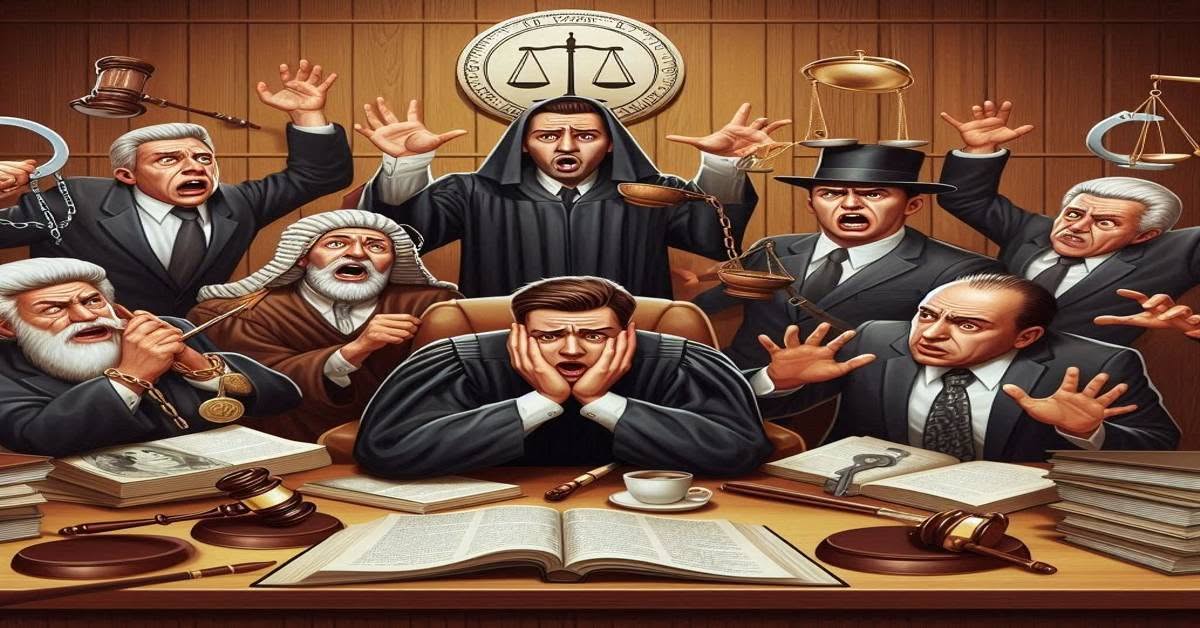

Imagine yourself sitting in a packed courtroom, witnessing a trial that will make headlines for years to come. The prosecution presents its case, the defense counters, and the jury deliberates. But what happens when the system fails, and justice is not served? You’re about to enter a world of dramatic twists, shocking turns, and lessons for the future. “Legal Blunders: Famous Courtroom Fails” takes you on a journey through the most infamous courtroom missteps in history, where a single mistake can alter the course of justice and leave a lasting impact on our society.
Key Takeaways:
- Famous courtroom fails can have far-reaching and unforgettable consequences, highlighting the importance of rigorous legal standards and impartiality in judicial proceedings.
- A single legal blunder can dramatically influence a jury’s perception, as seen in the O.J. Simpson trial, where the prosecution’s decision to have Simpson try on gloves led to the defense’s memorable line, “If it doesn’t fit, you must acquit.”
- Mass hysteria and flawed legal processes can lead to catastrophic consequences, as exemplified by the McMartin Preschool trial, which resulted in no convictions after a seven-year legal battle.
- Systemic failures within the legal system can lead to wrongful convictions, as seen in the Central Park Five case, where five teenagers were falsely accused and convicted of assaulting a jogger in Central Park.
- Lax security measures can have devastating consequences, as demonstrated by Ted Bundy’s escapes from custody, which allowed a dangerous criminal to roam free and commit further crimes.
- Legal missteps and societal values can clash dramatically in the courtroom, as seen in the Scopes Monkey Trial, which put the teaching of evolution in public schools on trial.
- Personal biases and societal fears can lead to grave legal errors, with tragic outcomes, as demonstrated by the trial of Socrates, which resulted in his death sentence.
These famous courtroom fails serve as powerful reminders of the importance of maintaining the integrity of our justice system and the need for ongoing reform and vigilance to prevent future blunders.
The O.J. Simpson Trial: Gloves That Didn’t Fit
Assuming you’re familiar with the O.J. Simpson trial, you’ll recall the sensationalized media coverage and the drama that unfolded in the courtroom. But what made this trial so infamous?
Background
Any discussion of the O.J. Simpson trial begins with the brutal murders of Nicole Brown Simpson and Ron Goldman. The prosecution’s case hinged on physical evidence, including a bloody glove found at the crime scene and another discovered at O.J.’s estate.
The Glove Incident
An attempt to recreate the crime scene led to one of the most memorable moments in courtroom history: O.J. Simpson trying on the gloves. The prosecution’s strategy backfired when the gloves appeared too small for Simpson’s hands, leading to the defense’s now-famous phrase, “If it doesn’t fit, you must acquit.”
Another crucial aspect of the glove incident was the prosecution’s failure to properly preserve and handle the evidence. The gloves had been stored in a plastic bag, which may have caused them to shrink, further undermining the prosecution’s case.
Impact on the Case
Incident after incident, the prosecution’s mistakes mounted, and the jury’s perception of the case shifted. The glove incident, in particular, raised reasonable doubt about O.J.’s guilt, making it difficult for the prosecution to secure a conviction.
Gloves that didn’t fit became a powerful symbol of the prosecution’s failures, and the jury ultimately acquitted O.J. Simpson. This verdict sparked widespread controversy, with many believing justice had not been served.
Lessons Learned
Learned from this trial is the importance of meticulous evidence handling and presentation. The prosecution’s mistakes not only damaged their case but also undermined the public’s trust in the legal system.
Impact of the O.J. Simpson trial extends beyond the courtroom, as it highlighted the need for more rigorous forensic standards and greater awareness of racial biases in the justice system. The trial’s influence can still be seen in modern legal proceedings, serving as a reminder of the importance of attention to detail and fairness in the pursuit of justice.
The McMartin Preschool Trial: A Witch Hunt Gone Wrong
Not all legal blunders are equal, and the McMartin Preschool trial stands out as one of the most egregious examples of a witch hunt gone wrong.
Background
One fateful day in 1983, a mother accused her ex-husband of sexually abusing their son at the McMartin Preschool in Manhattan Beach, California. This spark ignited a firestorm of accusations, leading to a seven-year legal battle that would captivate the nation.
Legal Errors
Witch hunts often begin with a kernel of truth, but quickly spiral out of control. In this case, highly suggestive questioning of children, flawed interviewing techniques, and dubious testimony from a self-proclaimed “expert” on child abuse led to a perfect storm of legal errors.
For instance, the prosecution’s star witness, a woman named Kee MacFarlane, used anatomically correct dolls to question the children, leading to false and fantastical accusations. This questionable methodology, combined with the prosecution’s zealous pursuit of convictions, created a toxic environment where the accused were presumed guilty until proven innocent.
Trial Proceedings
One of the most striking aspects of the McMartin trial was its sheer duration. The case dragged on for seven years, with the prosecution calling over 100 witnesses and presenting a staggering 10,000 exhibits. The defense, on the other hand, faced an uphill battle, struggling to counter the prosecution’s narrative of widespread abuse.
This trial was a masterclass in how not to conduct a legal proceeding. The prosecution’s aggressive tactics, combined with the judge’s failure to rein in the proceedings, created a circus-like atmosphere that obscured the search for truth.
Outcome and Impact
Trial after trial, the McMartin defendants were acquitted or had their charges dismissed. In the end, not a single conviction was secured, despite the prosecution’s Herculean efforts. The trial’s outcome was a stark reminder that, in the pursuit of justice, we must always prioritize fairness and due process.
Impact of this trial was immense. It led to a reevaluation of how child abuse cases are investigated and prosecuted, with a greater emphasis on protecting the rights of the accused. The McMartin trial also spawned a wave of similar cases, many of which were later discredited as false or exaggerated.
Lessons Learned
Outcome of this trial serves as a stark reminder that legal blunders can have far-reaching consequences. The McMartin trial teaches us that, in our zeal to protect the vulnerable, we must not sacrifice the principles of justice.
Background checks on witnesses, rigorous scrutiny of evidence, and a commitment to fairness are imperative in preventing similar legal blunders. By learning from this trial, we can create a justice system that is more just, more fair, and more effective in protecting the rights of all parties involved.
#### The Central Park Five: Miscarriage of Justice
The Central Park Five: Miscarriage of Justice
To understand the gravity of this case, you must first consider the context in which it unfolded.
#### Background
Background
Park benches, playgrounds, and jogging trails – these are the images that come to mind when thinking of New York City’s Central Park. But in 1989, this tranquil oasis was shattered by a brutal crime that would leave a lasting impact on the city and its people.
#### Coerced Confessions
Coerced Confessions
An innocent jogger, Trisha Meili, was found brutally beaten and raped in Central Park. The police investigation that followed would lead to the wrongful conviction of five teenagers, later known as the Central Park Five.
The confessions of the five teenagers, Antron McCray, Kevin Richardson, Korey Wise, Raymond Santana, and Yusef Salaam, were coerced through intense and manipulative interrogation tactics. These false confessions would become the cornerstone of the prosecution’s case, despite lacking any concrete evidence.
#### Trial and Conviction
Trial and Conviction
Background checks, forensic evidence, and eyewitness accounts – all crucial elements in building a solid case – were either ignored or mishandled. The trial was a rush to judgment, with the prosecution relying heavily on the coerced confessions.
It was a perfect storm of legal errors, with the prosecution’s tunnel vision and the defense’s inadequate representation combining to seal the fate of the five teenagers. In 1990, they were convicted and sentenced to prison terms ranging from 5 to 15 years.
#### Exoneration
Exoneration
Trial by fire – that’s what the Central Park Five endured. But in 2002, their nightmare finally came to an end when Matias Reyes, a serial rapist, confessed to the crime.
With DNA evidence finally linking Reyes to the crime scene, the convictions of the Central Park Five were vacated. Their exoneration was a bittersweet victory, as they had already served their sentences and had their lives forever altered.
#### Lessons Learned
Lessons Learned
On the surface, the Central Park Five case appears to be a catastrophic failure of the legal system. However, it also serves as a poignant reminder of the importance of protecting the rights of the accused and ensuring that justice is served.
Exoneration may have brought closure to the Central Park Five, but it also highlighted the need for systemic reforms to prevent similar miscarriages of justice in the future. As you reflect on this case, remember that the pursuit of justice is a continuous journey, one that requires eternal vigilance and a commitment to upholding the highest legal standards.
Ted Bundy’s Escapes: The Lax Security Fiascos
Keep in mind that even the most notorious criminals can take advantage of lax security measures, and Ted Bundy’s escapes are a stark reminder of this reality.
Background
With his charismatic persona and good looks, Ted Bundy was able to deceive many, including those in the legal system, which ultimately contributed to his ability to escape not once, but twice.
First Escape
Escapes don’t get much more brazen than Bundy’s first, which occurred in 1975 when he was allowed to represent himself in court.
Plus, the fact that he was given access to the courthouse library, where he jumped from a second-story window, is a stunning example of the lack of security measures in place at the time.
Second Escape
To make matters worse, Bundy managed to escape again in 1977, this time by losing enough weight to slip through a hole in the ceiling of his cell.
First, it’s astonishing that Bundy was able to manipulate the system to such an extent, and second, it’s appalling that the authorities failed to ensure his secure detention.
Consequences
Bundys’ escapes had devastating consequences, allowing him to continue his killing spree and claim even more victims.
Second, these escapes exposed serious flaws in the legal system, highlighting the need for stricter security protocols and more vigilant monitoring of high-risk prisoners.
Lessons Learned
One of the most critical lessons from Bundy’s escapes is the importance of maintaining robust security measures in courthouses and prisons.
Consequences of lax security can be deadly, as seen in Bundy’s case, and it’s crucial to prioritize the safety of both the public and law enforcement officials.
The Scopes Monkey Trial: Evolution on Trial
Unlike some of the other legal blunders we’ve discussed, the Scopes Monkey Trial wasn’t exactly a mistake in the classical sense. Instead, it was a deliberate attempt to challenge the status quo and push the boundaries of what was considered acceptable in the classroom. If you’re interested in reading more about The Biggest Legal Blunders in the Last 5 Years, you’ll find some fascinating stories that highlight the importance of getting it right in the courtroom.
Background
The Scopes Monkey Trial took place in 1925, a time when the teaching of evolution was still a relatively new and controversial concept. Tennessee had recently passed the Butler Act, which prohibited the teaching of human evolution in public schools. John Scopes, a high school teacher, was accused of violating this law by teaching his students about evolution.
The Trial
Any trial that pits science against religion is bound to be dramatic, and the Scopes Monkey Trial was no exception. The prosecution, led by William Jennings Bryan, argued that Scopes had violated the law by teaching evolution. The defense, led by Clarence Darrow, countered that the law was unconstitutional and that evolution was a scientifically proven fact.
This trial was more than just a legal battle – it was a clash of ideologies. The prosecution saw evolution as a threat to traditional values and religious beliefs, while the defense saw it as a fundamental aspect of scientific inquiry. The trial was a media sensation, with reporters and spectators flocking to Dayton, Tennessee to witness the drama unfold.
Verdict and Aftermath
Verdict: Guilty. Scopes was found guilty of violating the Butler Act and was fined $100. But the real impact of the trial went far beyond the courtroom. The Scopes Monkey Trial marked a turning point in the debate over evolution, with many seeing it as a victory for science and reason.
Trial aftermath was marked by a significant shift in public opinion. While the trial didn’t immediately lead to the repeal of the Butler Act, it helped to galvanize support for the teaching of evolution in public schools. In the years that followed, similar laws were struck down in other states, paving the way for the widespread acceptance of evolution as a fundamental scientific principle.
Lessons Learned
On the surface, the Scopes Monkey Trial seems like a straightforward case of a teacher violating a law. But scratch beneath the surface, and you’ll find a complex web of ideological and philosophical debates. The trial highlights the importance of separating church and state, and the need for educators to be able to teach scientific facts without fear of reprisal.
Another key takeaway from the Scopes Monkey Trial is the dangers of politicizing science. When scientific facts are distorted or suppressed for ideological reasons, it can have far-reaching consequences for society as a whole. By examining this trial, we can gain a deeper understanding of the importance of promoting critical thinking and intellectual freedom in our educational institutions.
The Trial of Socrates: Philosophical Misjudgments
All great philosophers leave behind a lasting legacy, but few have been as influential as Socrates. His trial, which took place in 399 BCE, is a fascinating example of how legal blunders can occur even in ancient times.
Background
Any student of philosophy knows that Socrates was a thorn in the side of Athenian politics. His relentless questioning of authority figures and his perceived corruption of the youth led to his trial on charges of impiety and corrupting the minds of the young.
Socrates’ Defense
Philosophical inquiry was at the heart of Socrates’ defense, but it ultimately sealed his fate. He argued that he was not corrupting the youth but rather encouraging them to think critically and seek wisdom.
It was Socrates’ method of questioning, known as the Socratic method, that proved to be his downfall. By questioning the wisdom of his accusers and suggesting that they should honor him as a benefactor of the state, Socrates further antagonized the jury.
Verdict and Execution
Philosophical disagreements aside, the verdict was guilty, and Socrates was sentenced to death by drinking poison hemlock.
A sense of irony surrounds Socrates’ execution, as he was ultimately killed for his pursuit of wisdom and his refusal to compromise his values.
Lessons Learned
To this day, Socrates’ trial serves as a powerful reminder of the dangers of allowing personal biases and societal fears to influence legal judgments.
Execution of justice requires a deep understanding of the issues at hand, and Socrates’ trial highlights the importance of critical thinking and intellectual honesty in the pursuit of truth.

The Lindbergh Baby Kidnapping Trial: Misleading Evidence
For many, the Lindbergh baby kidnapping trial is one of the most infamous cases in American legal history. The 1932 kidnapping and murder of Charles Lindbergh’s 20-month-old son sent shockwaves across the nation, and the subsequent trial was a media sensation.
Background
Historical context is important in understanding the magnitude of this case. The Lindbergh family was an American icon, with Charles Lindbergh being the first person to fly solo across the Atlantic Ocean. The kidnapping and murder of their child was a devastating blow to the family and the nation.
Investigation and Arrest
On September 19, 1932, the Lindbergh’s nanny discovered the baby missing from his crib. A ransom note demanding $50,000 was found on the windowsill. The investigation that followed was one of the largest and most publicized in American history at the time.
Misleading evidence, including a homemade ladder found near the scene, led investigators to focus on a suspect who was later cleared of any wrongdoing. It wasn’t until a gas station attendant reported a suspicious person trying to pass a ransom note that the police finally had a lead. The suspect, Bruno Hauptmann, was arrested, and a search of his home revealed a significant amount of evidence linking him to the crime.
Trial Proceedings
For the prosecution, the trial was a masterclass in presenting circumstantial evidence. The state presented a wealth of evidence, including eyewitness testimony, handwriting analysis, and physical evidence found at the crime scene and in Hauptmann’s home.
This trial showcased the importance of thorough investigation and meticulous presentation of evidence. The prosecution’s case was built on a foundation of small details that, when combined, created a compelling narrative of guilt.
Lessons Learned
For investigators and prosecutors, the Lindbergh baby kidnapping trial serves as a reminder of the dangers of misleading evidence and the importance of considering alternative explanations. It also highlights the significance of thorough investigation and the need to follow up on every lead, no matter how small.
Evidence, no matter how convincing, must be carefully evaluated to ensure that it is not misleading or circumstantial. The Lindbergh baby kidnapping trial is a powerful reminder of the importance of rigorous legal standards and the need for impartiality in the pursuit of justice.
#### The Leopold and Loeb Trial: A Crime of Privilege
The Leopold and Loeb Trial: A Crime of Privilege
Your attention is drawn to one of the most infamous crimes of the 20th century, a case that would shake the very foundations of the American justice system.
Background
Trial of the century, a phrase often used to describe a sensational courtroom drama, was never more apt than in the case of Nathan Leopold and Richard Loeb. Two brilliant, privileged young men from wealthy families in Chicago, they would commit a heinous crime that would captivate the nation.
The Crime and Investigation
One fateful day in May 1924, 14-year-old Bobby Franks, a cousin of Loeb’s, was kidnapped and brutally murdered. The investigation that followed was one of the most extensive and publicized in American history at the time.
Understanding the motivations behind this senseless crime is crucial to grasping the magnitude of the legal blunder that would follow. Leopold and Loeb, both University of Chicago students, were obsessed with the concept of the “superman” and believed they were above the law. They kidnapped Franks, demanding a ransom from his family, but ultimately murdered him in cold blood.
Trial Proceedings
Crime and privilege collided in the courtroom as Leopold and Loeb’s high-powered defense team, led by the legendary Clarence Darrow, faced off against the prosecution. The trial was a media sensation, with the defendants’ privileged backgrounds and the brutality of the crime captivating the nation.
It was a battle of wits, with Darrow employing his signature tactics to sway the jury. He would argue that the defendants were not entirely responsible for their actions, citing the influence of Nietzsche’s philosophy and the defendants’ troubled childhoods. The prosecution, on the other hand, sought to prove that the murder was premeditated and that the defendants were fully aware of their actions.
Lessons Learned
Crime does not discriminate, but the justice system often does. The Leopold and Loeb trial exposed the dark underbelly of privilege and its influence on the legal system. The defendants’ wealth and social status undoubtedly played a role in shaping the trial’s outcome.
Leopold and Loeb’s case serves as a stark reminder that justice must be blind to privilege and social standing. The trial’s outcome, while controversial, sparked a national conversation about the role of privilege in the justice system and the need for reform. As we reflect on this infamous case, we are reminded that true justice can only be achieved when the law is applied equally to all, regardless of background or social status.

The Black Dahlia Murder Trial: Botched Investigation
Once again, a high-profile murder case captivated the nation, only to be marred by a botched investigation that would haunt the justice system for years to come.
Background
Murder, mutilation, and mystery – the Black Dahlia case had it all. In 1947, Elizabeth Short, a 22-year-old aspiring actress, was found brutally murdered in a vacant lot in Los Angeles. The gruesome nature of the crime, combined with the lack of leads, sparked a media frenzy that would put immense pressure on the investigation.
Investigation and Suspects
Suspects emerged, but so did inconsistencies and missteps. The police interviewed over 150 people, yet no one was formally charged. The investigation was plagued by leaks to the press, compromised evidence, and questionable interrogation techniques. The case files were even stolen, further hindering the investigation.
The police focused on several suspects, including Robert “Red” Manley, who had a history of mental illness, and Dr. George Hodel, a physician with a troubled past. However, both men were eventually cleared due to lack of concrete evidence.
Trial Proceedings
To make matters worse, the trial proceedings were marked by prosecutorial misconduct and judicial errors. The prosecution’s reliance on circumstantial evidence and questionable testimony led to a series of mistrials.
Plus, the intense media scrutiny and public pressure took a toll on the investigators, leading to further mistakes and oversights. The case remained unsolved, leaving the public with a sense of frustration and injustice.
Lessons Learned
Botched investigations, like the Black Dahlia case, serve as a stark reminder of the importance of maintaining a rigorous and impartial investigation process. Leaks to the press, compromised evidence, and questionable interrogation techniques can have devastating consequences, undermining the pursuit of justice.
Investigation failures, such as this one, highlight the need for robust protocols, rigorous training, and accountability within law enforcement agencies. By learning from these mistakes, we can work towards a more efficient and effective justice system.
The Alger Hiss Trial: Espionage and Deception
For any lawyer, the Alger Hiss trial serves as a stark reminder of the dangers of deception and the importance of thorough investigation. As you probe into the details of this infamous case, you’ll discover how a web of lies and deceit led to one of the most notorious legal errors in American history.
Background
One of the most significant espionage cases of the 20th century, the Alger Hiss trial revolved around the alleged Soviet spy Alger Hiss, a former U.S. State Department official. Hiss’s trial was a sensationalized media event, captivating the nation’s attention and sparking heated debates about communism, loyalty, and national security.
Investigation and Charges
For years, rumors swirled around Hiss’s alleged connections to Soviet espionage. In 1948, Whittaker Chambers, a former Communist Party member and journalist, accused Hiss of being a Soviet spy. The subsequent investigation led to Hiss’s indictment on two counts of perjury, related to his denials of espionage activities.
Charges of espionage were never formally brought against Hiss, as the statute of limitations had expired. Instead, prosecutors focused on Hiss’s alleged lies under oath, which ultimately led to his downfall.
Trial Proceedings
Any trial involving allegations of espionage and treason is bound to be dramatic, and the Hiss trial was no exception. The prosecution’s key witness, Whittaker Chambers, provided damning testimony, including producing microfilm evidence of stolen government documents hidden in a pumpkin patch. Hiss’s defense team, on the other hand, argued that Chambers was a mentally unstable liar motivated by revenge.
Trial proceedings were marked by intense media scrutiny, with the nation fixated on the unfolding drama. The jury ultimately delivered a guilty verdict, and Hiss was sentenced to 44 months in prison.
Lessons Learned
Alger Hiss’s conviction served as a stark reminder of the importance of thorough investigation and the dangers of deception. This case highlights the need for prosecutors to carefully vet witnesses and evidence, ensuring that justice is served without sacrificing integrity.
This trial also underscores the importance of maintaining a level head in the face of sensationalized media coverage. In the end, it was the prosecution’s meticulous preparation and attention to detail that secured a conviction, despite the defendant’s initial denials and attempts to discredit the accuser.
The Nuremberg Trials: Justice for War Crimes
Once again, the world was left reeling from the atrocities committed during World War II. In the aftermath, the Allied powers sought to bring those responsible to justice, leading to the Nuremberg Trials.
Background
Historical context played a significant role in setting the stage for the Nuremberg Trials. The sheer scale of Nazi atrocities, including the systematic persecution and extermination of six million Jews and millions of other people, demanded accountability.
Trial Proceedings
Nuremberg, Germany, was chosen as the site for the trials, with the Palace of Justice serving as the courtroom. The trials began on November 20, 1945, and lasted for almost a year, with 22 high-ranking Nazi officials standing trial.
Another notable aspect of the trial proceedings was the introduction of the concept of “crimes against humanity,” which held individuals accountable for atrocities committed against civilian populations.
Verdicts and Sentences
Proceedings concluded on October 1, 1946, with 12 defendants sentenced to death, seven receiving prison terms, and three acquitted.
With the verdicts, the Nuremberg Trials sent a powerful message that those who commit war crimes and crimes against humanity would be held accountable, regardless of their position or nationality.
Lessons Learned
On the heels of the Nuremberg Trials, the international community recognized the need for a more formalized system of international law and accountability.
It is important to acknowledge that the Nuremberg Trials set a crucial precedent for future war crimes tribunals, including those in Rwanda and the former Yugoslavia, and continue to influence international justice today.
Notable keywords: famous courtroom fails, legal blunders, courtroom mistakes, notorious legal errors, famous legal cases, Nuremberg Trials, war crimes, crimes against humanity, international law, accountability.
The Rosenberg Spy Trial: Atomic Secrets
Now, let’s research into one of the most infamous spy trials in American history, a case that would shake the nation and raise questions about the fairness of the legal system.
Background
To understand the context of the Rosenberg spy trial, we need to go back to the early 1950s, a time of heightened Cold War tensions and fears of communist infiltration in the United States.
Investigation and Charges
Atomic secrets were at the heart of the investigation that led to the charges against Julius and Ethel Rosenberg, a married couple accused of espionage for passing nuclear secrets to the Soviet Union.
For instance, the prosecution’s key witness, David Greenglass, a former Army machinist, claimed that Julius Rosenberg had recruited him to spy for the Soviets, and that he had provided classified information about the atomic bomb.
Trial Proceedings
Secrets and lies dominated the trial, which began in March 1951, as the prosecution presented its case against the Rosenbergs.
Plus, the defense’s strategy, which focused on discrediting Greenglass’s testimony, ultimately failed to sway the jury, leading to a guilty verdict.
Lessons Learned
Learned from the Rosenberg spy trial is the importance of ensuring that the legal system does not succumb to the pressures of public fear and hysteria, as was the case during the Red Scare of the 1950s.
Proceedings like these highlight the need for a fair and impartial judiciary, one that can withstand external influences and protect the rights of the accused, even in the face of overwhelming public opinion.
The Rosenbergs’ execution in 1953 remains a controversial topic, with many questioning the fairness of their trial and the severity of their punishment.
The My Lai Massacre Trial: Military Accountability
After the My Lai Massacre, one of the most infamous incidents of the Vietnam War, the US military was forced to confront its own accountability and the consequences of its actions.
Background
To understand the significance of the My Lai Massacre trial, it’s imperative to revisit the events of March 16, 1968, when American soldiers from the 1st Battalion, 20th Infantry Regiment, 11th Infantry Brigade, killed hundreds of unarmed Vietnamese civilians, mostly women and children, in the hamlet of My Lai.
Investigation and Charges
On September 5, 1969, Lieutenant Colonel Frank A. Barker, the commander of the 11th Infantry Brigade, ordered an investigation into the incident, which led to the court-martial of several soldiers, including Lieutenant William Calley, who was charged with premeditated murder.
Massacre investigations revealed that the Army had received reports of civilian casualties, but they were initially dismissed as “enemy propaganda.” It wasn’t until a soldier, Ron Ridenhour, wrote a letter to Congress and the Pentagon, detailing the atrocities he had heard about from fellow soldiers, that the investigation was launched.
Trial Proceedings
Background checks on the defendants revealed that many had been under intense pressure to meet body count targets, which may have contributed to the massacre. The prosecution presented evidence of the atrocities, including eyewitness testimony and graphic photographs.
It was during the trial that the full extent of the massacre became clear, with witnesses describing scenes of unimaginable horror, including the killing of babies and the rape of young girls. The defense argued that the soldiers were following orders and that the villagers were suspected of being Viet Cong sympathizers.
Lessons Learned
On reflection, the My Lai Massacre trial highlighted the importance of military accountability and the need for clear guidelines on the rules of engagement. The trial also raised questions about the morality of war and the psychological effects of combat on soldiers.
Another critical lesson learned was the significance of whistleblower protections, as Ron Ridenhour’s bravery in coming forward ultimately led to the investigation and prosecution of those responsible. The My Lai Massacre trial serves as a stark reminder of the dangers of unchecked military power and the importance of upholding human rights, even in the midst of conflict.

To wrap up
On the whole, you’ve witnessed the devastating impact of legal blunders on lives, reputations, and the pursuit of justice. From O.J. Simpson’s gloves to Ted Bundy’s escapes, these famous courtroom fails have left an indelible mark on history. As you reflect on these notorious legal errors, remember that they serve as a stark reminder of the importance of vigilance, impartiality, and rigorous legal standards. By learning from these mistakes, you can help shape a more just and equitable world, where the pursuit of justice is fair, impartial, and true.
FAQ
Q: What are some of the most infamous legal blunders in history?
A: Some of the most notorious legal errors include the O.J. Simpson trial, the McMartin Preschool trial, the Central Park Five case, Ted Bundy’s escapes, the Scopes Monkey Trial, the trial of Socrates, and the Salem Witch Trials. These cases are infamous for their dramatic twists, shocking turns, and far-reaching consequences.
Q: What can we learn from these famous courtroom fails?
A: These cases serve as powerful reminders of the importance of rigorous legal standards, the need for impartiality, and the consequences of allowing external pressures to influence judicial proceedings. They highlight the dangers of mass hysteria, flawed legal processes, and personal biases, and underscore the need for vigilance in safeguarding against future blunders.
Q: How do legal blunders impact the justice system?
A: Legal errors can have catastrophic consequences, not only for the accused but also for the justice system itself. They can lead to wrongful convictions, undermine public trust, and create a sense of injustice. Moreover, they can also lead to reforms and changes in legal procedures, ultimately strengthening the justice system.
Q: What are some common causes of legal blunders?
A: Common causes of legal blunders include flawed evidence, poor legal representation, mass hysteria, personal biases, and external pressures. Additionally, lax security measures, dubious testimony, and a failure to adhere to standard legal procedures can also contribute to legal errors.
Q: How can we prevent future legal blunders?
A: To prevent future legal blunders, it is necessary to maintain rigorous legal standards, ensure impartiality, and safeguard against external pressures. This can be achieved by promoting fair and transparent legal processes, providing adequate training for legal professionals, and fostering a culture of accountability and integrity.
Q: What is the significance of studying famous courtroom fails?
A: Studying famous courtroom fails is necessary for understanding the complexity of legal proceedings and the critical importance of maintaining the integrity of our justice system. By examining these historical and modern courtroom mistakes, we can better appreciate the fallibility of human institutions and the ongoing need for reform and vigilance.
Q: How do legal blunders affect the public’s perception of the justice system?
A: Legal blunders can significantly erode public trust in the justice system, leading to a sense of injustice and disillusionment. However, by acknowledging and learning from these mistakes, the justice system can demonstrate its commitment to fairness, accountability, and transparency, ultimately strengthening public confidence.
Q: Can legal blunders be a catalyst for change?
A: Yes, legal blunders can be a catalyst for change, leading to reforms and improvements in legal procedures. By examining the causes and consequences of these errors, we can identify areas for improvement and work towards creating a more just and equitable system.


About the author


Understanding Allodial Titles, Land Patents, and Their Legal Implications
In property rights and land ownership, the concepts of allodial titles and land patents hold significant legal weight. These terms are often used in discussions related to the protection of property rights, land ownership, and the interplay between various areas of law such as the Uniform Commercial Code, contract law, constitutional law, and statutory law. In this in-depth blog post, we will explore into the intricacies of allodial titles and land patents, exploring their definitions, legal implications, and dispelling common myths and misconceptions associated with them. Key Takeaways: Allodial Titles Explained: An allodial title represents the highest form of land ownership, granting the owner absolute and unburdened ownership of the property, free from any encumbrances, liens, or taxes imposed by external parties. Land Patents and Their Legal Implications: A land patent is a legal document issued by the government that […]

Outsmart the System: Top Legal Strategies You Need to Know
Understanding the Legal Landscape While the legal system may seem intimidating, grasping its core concepts can empower you to navigate its complexities effectively. Understanding this landscape is vital for anyone looking to outsmart the system and optimize their legal strategies. Whether you’re seeking legal hacks for small businesses or tips on how to use legal loopholes to your advantage, recognizing the different legal frameworks at play can be crucial in making informed decisions. Overview of Legal Systems An understanding of the various legal systems is pivotal for recognizing your rights and obligations. Legal frameworks can vary significantly from one country to another, with common systems including civil law, common law, and religious law. Each system has its own structure, offering unique legal strategies and challenges. For example, in a common law system, previous judicial decisions can influence future cases, allowing […]

Ilataza Ban Yasharahla EL’s Public Records Request for Elyria Board of Education
24-0001492: Ilataza Ban Yasharahla EL's Public Records Request for Elyria Board of Education. All Rights Expressly Reserved and Retained. https://nationalnoticerecord.com/elyria-boe-members-required-to-follow-rulings https://nationalnoticerecord.com/is-elyria-school-board-bound-by-ohio-courts https://nationalnoticerecord.com/understanding-the-oath-of-office-legal-obligations-and-consequences

Ohio Legalizing Recreation Marijuana Use May Hurt Dispensaries in Monroe, Michigan
In recent years, the movement to legalize marijuana for adult recreational use has gained significant momentum across the United States. Ohio, a state long synonymous with conservative values, has also embraced this shift in public opinion. With the passing of Ohio Issue 2 and the Ohio Home Grow Bill, the state has joined the ranks of those allowing the recreational use of marijuana. This blog post will delve into the pros and cons of Ohio's legalization, as well as the potential implications for marijuana dispensaries in Monroe, Michigan, which previously benefited from Ohio buyers crossing state lines. https://www.youtube.com/watch?v=0KRzqZ8dUwc Pros of Ohio's Recreational Marijuana Legalization 1. Economic Boost: Legalizing recreational marijuana in Ohio has the potential to generate substantial economic benefits for the state. The marijuana industry has proven to be a lucrative market, with tax revenue and job creation being […]

The Etymology of “Bey” EXPOSED
TURN UP YOUR VOLUME & PRESS PLAY Have you ever wondered what the true origin and meaning of "Bey" is? We've been told that it means "Governor", "Law Enforcer", Chief, etc. But, what if that's incorrect? What if we've been using the "title", "Bey", incorrectly? FILL OUT THE FORM TO GET STARTED First Name: Last Name: Phone Number: Email: I agree to receive email updates and promotions. Submit

Are You A “Colored Person”?
Tune in as we dissect the term "person of color", exposing how its PURPOSELY steeped in plausibility, DECEPTION, and used as a weapon.

We’ve Been FORCED to Make Some Changes
Due to receiving so many tasks that our work has become more tedious, we've been forced to make some changes at National Notice Record.

Gas Go Express Food Mart Unjust Enrichment Via Debit Card Surcharge Fees
https://www.youtube.com/watch?v=eJknhtE9JEI In this video, I talk about a consumer experience I had while shopping at Gas Go Express Food Mart Gas Station, located at 237 Lake Avenue, Elyria, Ohio. On November 24, 2021, I made a purchase for 4 taxable items at the location. Each item was $0.99 per. With taxes, it came up to $4.26. As I got ready to place my debit card into the card reader, the Gas Go Express Food Mart clerk immediately added a $.50 debit card surcharge fee. As a common practice, some merchants/stores add a surcharge to your total purchase amount when you spend less than $5 or $10 when using a credit/debit card to process the payment. Being a merchant myself, I know that Master Card, Visa, Discover, and some of the other financial institutions have a strict policy that states that […]

Is Your Signature a Trap? The UCC Truth
Just a quick question for you: Are you sure about what your signature really means? Your signature, under the Uniform Commercial Code (UCC), isn't just an autograph. It can be a legal trap, binding you to terms you never fully understood. Learn to protect yourself from these hidden dangers in commercial transactions. Seriously, is your signature actually a legal trap or just a silent endorsement? You probably think your signature is just a formality, right? But under the Uniform Commercial Code (UCC), it's much more. Your signature acts as a binding endorsement, fueling the financial system, often at your personal expense. Why we're conditioned to sign stuff without looking and the bad news that follows Ever feel rushed to sign? This conditioning makes you enter "contracts of adhesion." You're then seen as a "debtor" or "representative", not a living person […]

The Merchant’s Bible: Decoding UCC Article 1
Many entrepreneurs overlook the bedrock of commercial law. You must understand UCC Article 1. This article governs your business transactions, from agreements to definitions. Ignoring these foundational provisions can lead to costly disputes. Master this crucial legal framework to protect your interests and achieve success. Key Takeaways: * UCC Article 1 forms the foundational rules of US commercial law. It defines core concepts, distinguishing an "agreement" from a binding "contract."* Merchants must recognize that UCC Article 1 rules often supersede common law in business dealings. This shift dictates different legal obligations and expectations.* Certain mandates cannot be disclaimed, including good faith, diligence, reasonableness, and care. These duties always govern commercial transactions.* Past actions, such as course of dealing and course of performance, can redefine written contracts. Documenting reservations of rights protects legal leverage.* UCC Article 1 is adapting to the […]

Hidden in Plain Sight: The UCC 1-308 Shield
You probably feel something is off. You sign documents daily, but do you truly understand their hidden implications? This little-known shield can protect your inherent rights. It's a secret many miss, but you don't have to be one of them. Key Takeaways: You know, there's this growing buzz online about reclaiming personal sovereignty, and a lot of folks are looking into how the Uniform Commercial Code fits into that. It feels like we're all just waking up to how much of our lives are governed by unspoken rules. * Signing documents "without prejudice UCC 1-308" isn't just legal jargon; it's a profound declaration. This simple act communicates you are performing an action, but you aren't consenting to hidden contract terms. * Many everyday agreements, like your driver's license application, are "adhesion contracts." You typically accept their terms completely, or you […]

UCC Secrets: The Code That Owns Your Daily Life
UCC is everywhere, shaping your financial reality. You might not realize it, but the Uniform Commercial Code governs your daily life. This code dictates how your assets are handled, often without your explicit understanding. You need to know these secrets. Key Takeaways: You know, most folks think they're playing by "Civil Law" rules, but the truth is, the Uniform Commercial Code (UCC) is the real silent puppet master pulling the strings of daily life. It's not just some obscure legal jargon; it's the very foundation of our commercial world. That "Corporate Personhood" stuff in the UCC isn't just for big companies; it's about the "Strawman" created with your birth certificate. This legal fiction might be the key to understanding why your identity feels like a perfected security interest. UCC 1-308, that "without prejudice" phrase, it's not a magic spell, but […]

What If Traffic Tickets Are Just Municipal Profit Schemes?
The Great Harvesting: Why Traffic Tickets are Municipal Profit Schemes I. What If Traffic Tickets Were Never About Safety? What if everything you’ve been told about traffic tickets is wrong? What if traffic enforcement has quietly shifted from “public safety” to public revenue? This shift transforms ordinary citizens into municipal ATMs. You are not being “protected” on the road. Instead, you are being harvested. This is happening algorithmically, administratively, and unconstitutionally. For decades, Americans accepted traffic tickets as routine. But here is the question almost no one asks. Are traffic tickets unconstitutional? Is this a cleverly disguised municipal profit scheme? These municipal corporations depend on fines. They need them like businesses depend on sales. There is a massive rise in public distrust today. People ask: “Are traffic tickets unconstitutional revenue streams?” This is an explosive search trend across all major […]

Service Providers Are Hiding Fees-and It’s NOT Legal
Many of you have likely felt the sting of unexpected charges on your bills. You signed a contract, yet the total is higher than expected. This isn't just annoying; it's often illegal. You deserve to know every cost upfront. Are you tired of feeling cheated by hidden fees? Key Takeaways: * Does that bill make your stomach drop? Hidden fees are a sneaky strategy, not an accident, making your monthly charges mysteriously higher than expected.* Are they playing fair with your money? Companies often use vague terms like “service fees” or “administrative costs” to mask charges you never agreed to.* Is this even legal? No, concealing fees violates consumer protection laws, making it deceptive and unfair to you.* Why did they hide it from you? Businesses exploit emotions, getting you to commit before revealing the costly details in fine print.* […]
Related
Is Your Signature a Trap? The UCC Truth
Just a quick question for you: Are you sure about what your signature really means? Your signature, under the Uniform Commercial Code (UCC), isn't just an autograph. It can be a legal trap, binding you to terms you never fully understood. Learn to protect yourself from these hidden dangers in commercial transactions. Seriously, is your signature actually a legal trap or just a silent endorsement? You probably think your signature is just a formality, right? But under the Uniform Commercial Code (UCC), it's much more. Your signature acts as a binding endorsement, fueling the financial system, often at your personal expense. Why we're conditioned to sign stuff without looking and the bad news that follows Ever feel rushed to sign? This conditioning makes you enter "contracts of adhesion." You're then seen as a "debtor" or "representative", not a living person […]
The Merchant’s Bible: Decoding UCC Article 1
Many entrepreneurs overlook the bedrock of commercial law. You must understand UCC Article 1. This article governs your business transactions, from agreements to definitions. Ignoring these foundational provisions can lead to costly disputes. Master this crucial legal framework to protect your interests and achieve success. Key Takeaways: * UCC Article 1 forms the foundational rules of US commercial law. It defines core concepts, distinguishing an "agreement" from a binding "contract."* Merchants must recognize that UCC Article 1 rules often supersede common law in business dealings. This shift dictates different legal obligations and expectations.* Certain mandates cannot be disclaimed, including good faith, diligence, reasonableness, and care. These duties always govern commercial transactions.* Past actions, such as course of dealing and course of performance, can redefine written contracts. Documenting reservations of rights protects legal leverage.* UCC Article 1 is adapting to the […]
Hidden in Plain Sight: The UCC 1-308 Shield
You probably feel something is off. You sign documents daily, but do you truly understand their hidden implications? This little-known shield can protect your inherent rights. It's a secret many miss, but you don't have to be one of them. Key Takeaways: You know, there's this growing buzz online about reclaiming personal sovereignty, and a lot of folks are looking into how the Uniform Commercial Code fits into that. It feels like we're all just waking up to how much of our lives are governed by unspoken rules. * Signing documents "without prejudice UCC 1-308" isn't just legal jargon; it's a profound declaration. This simple act communicates you are performing an action, but you aren't consenting to hidden contract terms. * Many everyday agreements, like your driver's license application, are "adhesion contracts." You typically accept their terms completely, or you […]
UCC Secrets: The Code That Owns Your Daily Life
UCC is everywhere, shaping your financial reality. You might not realize it, but the Uniform Commercial Code governs your daily life. This code dictates how your assets are handled, often without your explicit understanding. You need to know these secrets. Key Takeaways: You know, most folks think they're playing by "Civil Law" rules, but the truth is, the Uniform Commercial Code (UCC) is the real silent puppet master pulling the strings of daily life. It's not just some obscure legal jargon; it's the very foundation of our commercial world. That "Corporate Personhood" stuff in the UCC isn't just for big companies; it's about the "Strawman" created with your birth certificate. This legal fiction might be the key to understanding why your identity feels like a perfected security interest. UCC 1-308, that "without prejudice" phrase, it's not a magic spell, but […]
What If Traffic Tickets Are Just Municipal Profit Schemes?
The Great Harvesting: Why Traffic Tickets are Municipal Profit Schemes I. What If Traffic Tickets Were Never About Safety? What if everything you’ve been told about traffic tickets is wrong? What if traffic enforcement has quietly shifted from “public safety” to public revenue? This shift transforms ordinary citizens into municipal ATMs. You are not being “protected” on the road. Instead, you are being harvested. This is happening algorithmically, administratively, and unconstitutionally. For decades, Americans accepted traffic tickets as routine. But here is the question almost no one asks. Are traffic tickets unconstitutional? Is this a cleverly disguised municipal profit scheme? These municipal corporations depend on fines. They need them like businesses depend on sales. There is a massive rise in public distrust today. People ask: “Are traffic tickets unconstitutional revenue streams?” This is an explosive search trend across all major […]
Service Providers Are Hiding Fees-and It’s NOT Legal
Many of you have likely felt the sting of unexpected charges on your bills. You signed a contract, yet the total is higher than expected. This isn't just annoying; it's often illegal. You deserve to know every cost upfront. Are you tired of feeling cheated by hidden fees? Key Takeaways: * Does that bill make your stomach drop? Hidden fees are a sneaky strategy, not an accident, making your monthly charges mysteriously higher than expected.* Are they playing fair with your money? Companies often use vague terms like “service fees” or “administrative costs” to mask charges you never agreed to.* Is this even legal? No, concealing fees violates consumer protection laws, making it deceptive and unfair to you.* Why did they hide it from you? Businesses exploit emotions, getting you to commit before revealing the costly details in fine print.* […]