


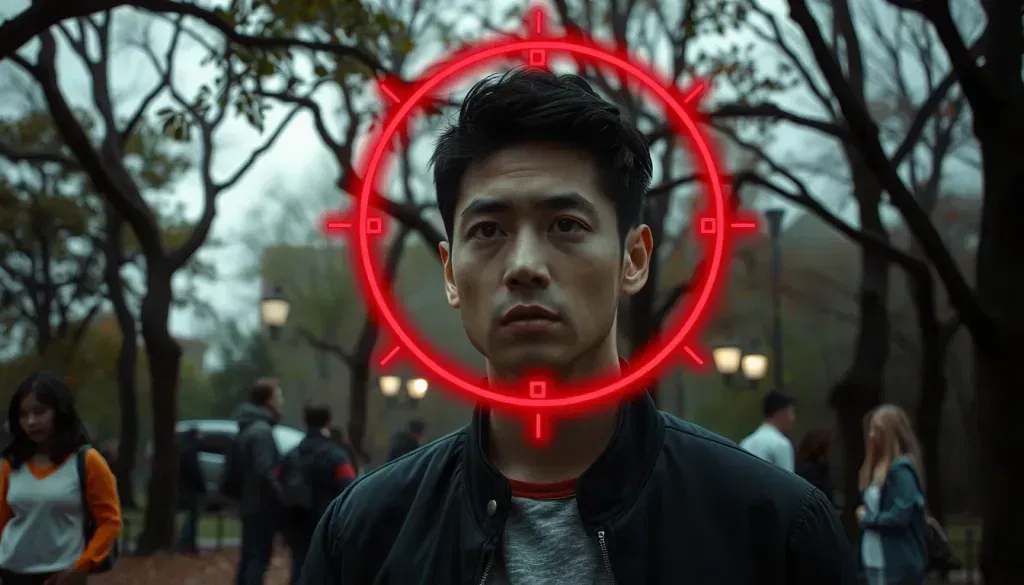
With facial recognition systems proliferating in public and private spaces, you face constant biometric surveillance; your image can be scanned, indexed, and used without your consent. This tech is error-prone and biased, so you risk misidentification and life-altering consequences. Yet you’re not powerless: legal challenges, policy campaigns, and obfuscation tools offer real defenses. Learn how this industry operates and what practical steps you can take to protect your privacy and rights.
Key Takeaways:
- Facial recognition is rolling out everywhere — law enforcement, stores, employers, schools and hospitals — often without your consent or knowledge.
- Laws are fragmented and full of loopholes: a few pockets of protection exist, but in most places the technology operates with little oversight.
- The tech is biased and error-prone: people of color, women and children face higher misidentification rates, with real consequences like wrongful stops and arrests.
- Workplaces and schools are normalizing biometric surveillance by burying consent in paperwork and selling “safety” as cover for constant monitoring.
- Don’t wait. Push for bans and moratoria, boycott opaque vendors, demand consent policies, and use obfuscation/privacy tools; join groups like EFF, Fight for the Future and S.T.O.P. to amplify the fight.
The Unseen Dangers of Facial Recognition Technology
Data collection that used to require effort now happens passively: cameras, social media scrapes, and routine checkpoints all feed the same engines. Your image can be harvested from a public post, matched to a store CCTV clip, and then cross-referenced with a government or private watchlist—often within minutes. That chain of events turns a single snapshot into a permanent biometric record that can follow you across cities, jobs, and life events. Companies like Clearview have openly built massive image stores—reportedly scraping >3 billion images—and sold access to law enforcement and private clients, which means your face can become searchable without your knowledge or consent.
Legal patchwork and corporate opacity let the problem metastasize. Illinois’ BIPA created a rare private right of action, producing multimillion-dollar settlements (Facebook agreed to roughly $650 million in a 2020 class settlement over face-tagging), but most states leave you exposed. Surveillance that starts as “safety” or “efficiency” quickly becomes a permanent index: retention policies are vague, data-sharing agreements are secret, and you rarely get a transparent right to delete or opt out. The practical outcome is chilling—a world where a single misidentification or a harvested photo can produce lasting consequences for your work, travel, and freedom.
Dissecting Biometric Scanning
Scanners reduce your face to a numeric template—a vector of measurements for eyes, nose, cheekbones and spacing—so that comparisons happen mathematically instead of visually. Live face-capture systems now use 3D mapping, infrared, and liveness checks to defeat simple spoofing, but those defenses aren’t universal. Cheap deployments still rely on 2D images, making them vulnerable to photos, masks, or adversarial makeup. Antivirus-style defenses can be bypassed: researchers have demonstrated that printed masks and patterned glasses can fool many commercial systems.
Templates are portable and aggregateable. You can be identified even if the original image was public—because the template links across databases. Retailers, hospitals, and employers may store these templates for months or years, and vendors routinely promise integration with police or border lists. That portability means a single scan can propagate through multiple systems, multiplying risk—and the harder part: once a biometric template leaks, you can’t change your face the way you would change a password.

The Algorithms Behind the Lens
Training data is where the damage begins. Major audits—like the Gender Shades study—showed commercial systems with error rates for darker-skinned women as high as 34.4% while lighter-skinned men saw error rates around 0.8%. NIST evaluations later confirmed that performance varies dramatically across vendors and demographic groups. Those uneven error rates translate directly into real-world harm: false positives have led to wrongful detentions, including high-profile cases where innocent people were arrested after a facial match was treated as definitive evidence.
Model opacity compounds the danger. Vendors often treat thresholds, training sets, and post-processing as proprietary, leaving you no way to evaluate risk or demand fixes. Engineers tune systems for a business metric—catch more “matches” or reduce customer friction—so you become a trade-off statistic. A match score of 0.85 may mean very different things from one vendor to another; in the hands of an overzealous user, a probabilistic score can be read as absolute guilt.
Adversarial tactics and model drift add another layer of risk. Attackers can craft input patterns that intentionally corrupt embeddings, reducing accuracy; meanwhile, models trained on one population degrade when applied elsewhere, making deployment outside test conditions dangerous. You should treat any confidence score as suspect: algorithms report probabilities, but humans interpret them as certainties—often with life-altering results for the person being scanned.
Surveillance in Plain Sight: The Growing Landscape of Facial Recognition
Real-World Applications: From Airports to Retail
At airports you already get funneled through systems designed to read your face: the U.S. Customs and Border Protection program has rolled out biometrics at dozens of international terminals, pitching faster boarding and automated immigration checks while quietly building a massive watchlist of traveler images. Airlines and vendors advertise reduced lines and lower fraud, and yet your biometric data is captured and retained—often without a clear opt-out and sometimes shared across agencies and contractors.
Retailers have gone beyond CCTV to deploy systems that flag repeat shoplifting suspects, identify “VIP” shoppers, and map dwell time against product displays. Vendors such as FaceFirst and other firms sell solutions to hundreds of stores that promise loss prevention and personalization, while some chains maintain private databases of flagged faces. That means your weekly trip to buy milk can translate into a persistent commercial profile that follows you across locations and vendors.
The Arms Race Among Law Enforcement and Corporations
Police departments and corporate security teams are buying at scale. Private firms like Clearview AI—known for scraping over 3 billion images from social platforms—have marketed datasets to law enforcement worldwide, and reporting shows Clearview signed contracts with more than 2,200 agencies and organizations. Your image can be run through these swaths of data in seconds, turning casual presence at a scene into an automated lead or a false match that can ruin your life.
Procurement cycles now favor faster, cheaper systems over oversight: vendors boast real‑time matching, cloud indexing, and cross‑jurisdiction sharing that collapse legal and privacy safeguards. Corporations pitch productivity and loss reduction; police pitch public safety—both buy the same promise of instant identification. The result for you is a surveillance network where commercial and state actors increasingly share tools, norms, and data flows.
Digging deeper, federal and local grant programs have subsidized much of this expansion, and contract clauses often allow long‑term data retention and third‑party access. That means you’re not just facing one camera or one store: you’re up against an ecosystem designed to aggregate, normalize, and monetize your face across public and private boundaries.
Consent Isn’t Required: The Involuntary Surveillance Economy
Data Scraping and Database Exploits
Companies and contractors quietly vacuum up your images across the web—profile photos, event shots, even frames from live streams—and turn them into searchable faceprints. One of the most notorious examples, Clearview AI scraped over three billion images from sites like Facebook, LinkedIn, Instagram and YouTube to build a commercial database that was then marketed to law enforcement and private clients. Once your image is captured, it can be indexed, duplicated, and cross‑referenced in ways you never authorized.
Those faceprints aren’t harmless metadata; they’re assets that firms license and police departments query. You should know that some state laws give victims a legal remedy: under Illinois’s BIPA, companies can face statutory damages of $1,000 per negligent violation and up to $5,000 per intentional or reckless violation, which has driven dozens of high‑profile suits. Still, lawsuits move slowly while databases keep growing, and private contractors routinely exploit legal gray areas—scraping public platforms and aggregating profiles into systems that can contain tens or hundreds of millions of faceprints.

The Unchecked Use of Your Digital Footprint
Every photo you post, tag, or are tagged in becomes a datapoint that attackers and vendors can use. Algorithms stitch together images, device identifiers, purchase records, license plate reads and location pings to create a persistent identity graph tied to your face. Retailers deploy this to flag “suspects” for loss prevention; employers use it to monitor time on task and mood; ad networks can enrich targeting by matching in‑store behavior to online profiles. Once that linkage exists, you don’t just have an image floating on a site—you have a living dossier that follows you into stores, workplaces, and public spaces.
Consequences are concrete. Misidentifications have already ruined lives: in 2020 Detroit police arrested Robert Williams after a facial recognition match that was later shown to be false. Independent testing, including NIST analyses, has shown persistent accuracy disparities across race, age and gender—meaning you’re not just surveilled, you’re unequally surveilled. Companies and agencies argue utility and speed, but you pay in privacy, risk of wrongful detention, and long‑term profiling that can affect hiring, travel, and civic participation.
Deletion isn’t a reliable escape hatch. Copies of your images propagate through third‑party providers, data brokers, and shadow databases; removing a photo from a platform often doesn’t purge derived faceprints sold or stored elsewhere. That fragmentation makes meaningful consent effectively impossible—you can’t withdraw a biometric once it’s replicated across a commercial surveillance ecosystem, and you remain subject to identification and inference long after you thought the picture was gone.
The Human Impact: Stories of Misidentification and Harm
You don’t have to imagine the damage—there are concrete, documented cases where facial recognition has upended lives. Beyond the tech jargon and policy debates, people have been detained, fired, and publicly humiliated because an algorithm decided they matched a stored image. Courts and employers treat those matches as leads; in practice, that means a single false positive can trigger an arrest, a lost job, or a lifetime of suspicion.
Long-term harm is often invisible: mugshots and arrest records get copied, scraped, and resold, creating a permanent digital scar that follows you through background checks and social verification systems. Civil liberties groups and investigative journalists have flagged multiple instances where an algorithmic error produced real-world consequences—so this isn’t theoretical. Your face, once misidentified, can be used as evidence against you indefinitely.
When Technology Fails: Wrongful Arrests
One of the most chilling examples occurred in Detroit in January 2020, when Robert Williams was wrongfully arrested after police relied on a facial recognition match to link him to a shoplifting photo; he spent more than a day in custody before the error was exposed. That case is not an anomaly—civil liberties organizations have documented similar incidents where misidentification led directly to detention, interrogation, and criminal charges that were later dropped.
Algorithms are treated like human witnesses in too many departments: a match can become probable cause. Amazon Rekognition’s 2018 test by the ACLU that matched 28 members of Congress to mugshots showed how easily systems produce false leads. For you, that means being in the wrong place at the wrong time — or simply resembling someone in a database — can trigger police action driven by a machine, not by human verification or corroborating evidence.
The Disproportionate Effects on Marginalized Communities
Research shows the harm isn’t spread evenly. The MIT “Gender Shades” study found commercial systems producing error rates as high as 34.7% for darker‑skinned women versus around 0.8% for lighter‑skinned men. Subsequent NIST testing echoed those patterns: many algorithms have materially higher false positive and false negative rates for Black and Asian faces. That gap translates directly into more stops, more detentions, and more wrongful suspicion for people already over‑targeted by policing.
Because law enforcement photo databases and criminal histories disproportionately contain images of people from marginalized communities, you face a feedback loop: the more your community is policed, the more your faces are in the system, and the more the technology misfires against you. Black individuals have been shown to be up to 100 times more likely to be misidentified, turning a tool touted for safety into an engine of systemic bias.
Patterns of harm extend beyond policing: in schools and workplaces, students and employees from marginalized backgrounds report higher rates of flagging, discipline, and surveillance-driven exclusions. When an algorithm errs, it compounds existing inequalities—denying opportunities, stigmatizing your record, and normalizing unequal treatment under the guise of neutral technology.
The Path to a Surveillance State: A Cautionary Tale
You can watch how the pieces lock into place: private cameras, public CCTV, social-media scraping, and police databases all wired together by facial-recognition APIs. Companies like Clearview built searchable libraries of billions of scraped images, then sold access to law enforcement and private clients; every time you post a photo, tag a friend, or appear on a security camera, you increase the odds of being indexed. That steady accretion turns fleeting moments into permanent records — and once those records are searchable, your movements, associations, and even who you speak with can be reconstructed without your knowledge.
Small policy decisions compound into massive control. When a school signs a “safety” contract for face scans, or a store installs a camera network that ties into a corporate database, you don’t just lose privacy in that building — you become part of a system that can be queried by dozens of actors. Cities that substitute automated surveillance for actual oversight hand the keys to systems that are opaque, error-prone, and designed to scale. The result: mass surveillance becomes the default, and you’re the product being traded, analyzed, and eventually acted upon.
The Dangers of Predictive Policing
Algorithms don’t invent crime; they echo history. When predictive-policing tools train on arrest records and stop data from over-policed neighborhoods, they learn to send more officers back to the same places — a self-reinforcing loop that increases stops, citations, and arrests for the people who live there. Studies and real-world audits show these systems concentrate enforcement on low-income communities and communities of color, producing more contact, more criminal records, and no clear public-safety gains.
Facial recognition plugged into predictive platforms turns suspicion into a persistent tag. You can be flagged by a camera because your face “matches” a profile, then funneled into future surveillance and scrutiny. High-profile errors have already produced harm: dozens of documented wrongful detainments and cases like the 2020 wrongful arrest of Robert Williams in Detroit illustrate how a single false match can upend a life. That’s not hypothetical — that’s how algorithms translate into real-world punishment for you.
Global Implications: Lessons from China’s Social Credit System
China’s experiments show exactly how facial recognition scales into social control. City-level pilots and private-credit programs tied movement and access to digital records, with reports of travel bans, loan denials, and reduced internet speeds for people placed on blacklists. Governments and platforms linking identity data to behavior create a system where a score, a flag, or a facial match can instantly restrict your ability to board a plane, rent an apartment, or apply for work — an automated penalty system enforced by cameras and databases.
Exportation of surveillance tools multiplies the threat. Chinese vendors and global surveillance firms supply cameras, matching engines, and analytics to regimes and corporations worldwide; you don’t have to live in one city to be affected by a playbook that combines biometric ID with reputation metrics. The tech stack—high-resolution cameras, persistent face templates, and cross-referenced records—means the same mechanisms that curtail liberties in one place can be copied and implemented elsewhere, fast.
Digging deeper: the social-credit model isn’t a single government program so much as a blueprint. Public records, commercial transaction histories, and behavioral flags can be algorithmically aggregated into scores or risk labels; facial recognition provides the persistent, real-world tie between your digital dossier and your physical movements. Systems that already deny services based on “blacklist” criteria demonstrate that your face can become the primary key in databases that decide who gets privileges and who gets penalties — and once that architecture is built, reversing it becomes exponentially harder for you and for future generations.
Final Thoughts: Reclaiming Privacy in an Age of Surveillance

Where you should put your energy
You can force change by treating this like the civil-rights fight it is: lobby city councils for bans (San Francisco did it in 2019), back state bills modeled on Illinois’ BIPA, and support lawsuits that hit companies where it hurts. NIST tests showed some systems misidentify people of color at rates up to 100 times higher, Clearview scraped more than 3 billion images from the open web, and class actions under BIPA have already produced major pressure—Facebook agreed to a roughly $650 million settlement over biometric tagging claims. Those numbers translate into leverage: BIPA allows statutory damages of $1,000–$5,000 per violation, which is why companies change behavior when the legal risk becomes real. You want policy that forces transparency, limits retention, and requires warrants for sensitive biometric searches; target your efforts there.
Concrete moves you can make today
You don’t have to wait for lawmakers to act to reduce your exposure. Remove or restrict photo access on social accounts, run image-obfuscation tools like Fawkes, and consider adversarial clothing or wearables in high-risk settings; activists and technologists are already using these tactics to blunt trackers. Audit your employer and school policies—demand written consent and opt-outs—and keep a paper trail if you’re pressured to accept surveillance. Cases like the 2020 wrongful arrest of Detroit resident Robert Williams—misidentified by a law‑enforcement facial-match—show what’s at stake if you ignore it. Join organizations such as EFF, Fight for the Future, or S.T.O.P. to amplify your voice; coordinated public pressure and targeted litigation are the proven routes to roll back mass biometric surveillance, and that collective action is where you’ll actually reclaim your privacy.
FAQ
Q: What exactly is the threat laid out in “Facial Recognition Is Spreading—And You’re the Target”?
A: The threat is plain and simple: your face is being treated as a data commodity. Cameras and algorithms capture, identify, and index people without meaningful consent. That data flows to corporations, law enforcement, and contractors who can link images to identities, movement patterns, purchase history, employment records and more. Once you’re in those databases you can be tracked indefinitely—at work, at school, while traveling, shopping, or protesting. The danger isn’t just a single bad actor; it’s a system that normalizes constant biometric surveillance and hands control of personal lives to organizations that don’t need your consent to act.
Q: Is facial recognition legal? Can companies and police just use it anywhere?
A: Legal treatment is patchwork. There’s no sweeping federal ban; instead you get a confusing mix of state laws, local ordinances and corporate policies. Illinois’ BIPA gives individuals strong rights and private litigation options. California’s CCPA offers some protections but contains exemptions and loopholes. Several cities have banned or restricted government use, but many states explicitly permit broad use, and employers and retailers often operate in legal gray zones. In short: yes, many actors can deploy FRT lawfully right now. That’s why activism and local ordinances are the frontline of defense.
Q: How are companies getting my face without asking? Aren’t there privacy limits?
A: They harvest images from public sources—social media posts, public video feeds, scraped profile photos—and combine those with footage from store cameras, building security, and third-party databases. Facial-tagging features, photo metadata, and even routine identity checks provide fodder. Legal limits are often weak because contracts, terms of service, and vague “consent” clauses get used to justify reuse. Even where privacy rules apply, enforcement is sporadic and slow; by the time action happens, the data is already embedded in multiple systems.
Q: What can an individual do right now to reduce exposure and fight back?
A: Treat this like a hostile business environment and act strategically. Practical steps: 1) Reduce publicly available images—lock social profiles, delete or untag photos, and strip metadata before posting. 2) Use privacy tools and obfuscation like adversarial-image tools or anti-FRT clothing and accessories to break automatic matching. 3) Exercise legal rights where available—file BIPA claims in Illinois, submit data-access or deletion requests under CCPA where applicable, and file complaints with state attorneys general or the FTC. 4) Push employers and schools for written consent policies; refuse nonconsensual biometric monitoring where you can. 5) Support and connect with organizations (EFF, S.T.O.P., Fight for the Future) that litigate and lobby for stronger rules. Don’t act like a bystander.
Q: How do communities and policymakers stop this spread—what actually works?
A: The record shows the most effective moves are local bans, enforceable state laws, and targeted litigation. Cities have had success banning government use; states like Illinois created real legal teeth with private rights of action. What works in practice: 1) Elect or pressure officials to pass no-use or strict-use ordinances for public agencies and require transparency audits for vendors. 2) Demand that public contracts prohibit black-box supplier practices and require impact assessments and auditability. 3) Fund and support public-interest lawsuits that expose misuse and set precedents. 4) Mobilize consumers—boycott vendors that deploy opaque FRT systems and publicize who’s profiting. This is a fight that’s waged locally, company-by-company, courtroom-by-courtroom. Passive outrage won’t win it; organized pressure will.


About the author


Understanding Allodial Titles, Land Patents, and Their Legal Implications
In property rights and land ownership, the concepts of allodial titles and land patents hold significant legal weight. These terms are often used in discussions related to the protection of property rights, land ownership, and the interplay between various areas of law such as the Uniform Commercial Code, contract law, constitutional law, and statutory law. In this in-depth blog post, we will explore into the intricacies of allodial titles and land patents, exploring their definitions, legal implications, and dispelling common myths and misconceptions associated with them. Key Takeaways: Allodial Titles Explained: An allodial title represents the highest form of land ownership, granting the owner absolute and unburdened ownership of the property, free from any encumbrances, liens, or taxes imposed by external parties. Land Patents and Their Legal Implications: A land patent is a legal document issued by the government that […]

Outsmart the System: Top Legal Strategies You Need to Know
Understanding the Legal Landscape While the legal system may seem intimidating, grasping its core concepts can empower you to navigate its complexities effectively. Understanding this landscape is vital for anyone looking to outsmart the system and optimize their legal strategies. Whether you’re seeking legal hacks for small businesses or tips on how to use legal loopholes to your advantage, recognizing the different legal frameworks at play can be crucial in making informed decisions. Overview of Legal Systems An understanding of the various legal systems is pivotal for recognizing your rights and obligations. Legal frameworks can vary significantly from one country to another, with common systems including civil law, common law, and religious law. Each system has its own structure, offering unique legal strategies and challenges. For example, in a common law system, previous judicial decisions can influence future cases, allowing […]

Ilataza Ban Yasharahla EL’s Public Records Request for Elyria Board of Education
24-0001492: Ilataza Ban Yasharahla EL's Public Records Request for Elyria Board of Education. All Rights Expressly Reserved and Retained. https://nationalnoticerecord.com/elyria-boe-members-required-to-follow-rulings https://nationalnoticerecord.com/is-elyria-school-board-bound-by-ohio-courts https://nationalnoticerecord.com/understanding-the-oath-of-office-legal-obligations-and-consequences

Ohio Legalizing Recreation Marijuana Use May Hurt Dispensaries in Monroe, Michigan
In recent years, the movement to legalize marijuana for adult recreational use has gained significant momentum across the United States. Ohio, a state long synonymous with conservative values, has also embraced this shift in public opinion. With the passing of Ohio Issue 2 and the Ohio Home Grow Bill, the state has joined the ranks of those allowing the recreational use of marijuana. This blog post will delve into the pros and cons of Ohio's legalization, as well as the potential implications for marijuana dispensaries in Monroe, Michigan, which previously benefited from Ohio buyers crossing state lines. https://www.youtube.com/watch?v=0KRzqZ8dUwc Pros of Ohio's Recreational Marijuana Legalization 1. Economic Boost: Legalizing recreational marijuana in Ohio has the potential to generate substantial economic benefits for the state. The marijuana industry has proven to be a lucrative market, with tax revenue and job creation being […]

The Etymology of “Bey” EXPOSED
TURN UP YOUR VOLUME & PRESS PLAY Have you ever wondered what the true origin and meaning of "Bey" is? We've been told that it means "Governor", "Law Enforcer", Chief, etc. But, what if that's incorrect? What if we've been using the "title", "Bey", incorrectly? FILL OUT THE FORM TO GET STARTED First Name: Last Name: Phone Number: Email: I agree to receive email updates and promotions. Submit
Are You A “Colored Person”?
Tune in as we dissect the term "person of color", exposing how its PURPOSELY steeped in plausibility, DECEPTION, and used as a weapon.

We’ve Been FORCED to Make Some Changes
Due to receiving so many tasks that our work has become more tedious, we've been forced to make some changes at National Notice Record.

Gas Go Express Food Mart Unjust Enrichment Via Debit Card Surcharge Fees
https://www.youtube.com/watch?v=eJknhtE9JEI In this video, I talk about a consumer experience I had while shopping at Gas Go Express Food Mart Gas Station, located at 237 Lake Avenue, Elyria, Ohio. On November 24, 2021, I made a purchase for 4 taxable items at the location. Each item was $0.99 per. With taxes, it came up to $4.26. As I got ready to place my debit card into the card reader, the Gas Go Express Food Mart clerk immediately added a $.50 debit card surcharge fee. As a common practice, some merchants/stores add a surcharge to your total purchase amount when you spend less than $5 or $10 when using a credit/debit card to process the payment. Being a merchant myself, I know that Master Card, Visa, Discover, and some of the other financial institutions have a strict policy that states that […]

UCC Secrets: The Code That Owns Your Daily Life
UCC is everywhere, shaping your financial reality. You might not realize it, but the Uniform Commercial Code governs your daily life. This code dictates how your assets are handled, often without your explicit understanding. You need to know these secrets. Key Takeaways: You know, most folks think they're playing by "Civil Law" rules, but the truth is, the Uniform Commercial Code (UCC) is the real silent puppet master pulling the strings of daily life. It's not just some obscure legal jargon; it's the very foundation of our commercial world. That "Corporate Personhood" stuff in the UCC isn't just for big companies; it's about the "Strawman" created with your birth certificate. This legal fiction might be the key to understanding why your identity feels like a perfected security interest. UCC 1-308, that "without prejudice" phrase, it's not a magic spell, but […]
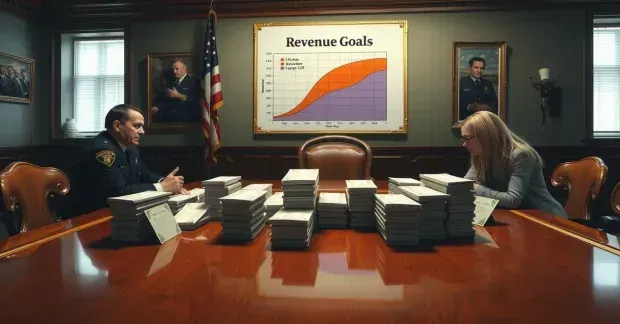
What If Traffic Tickets Are Just Municipal Profit Schemes?
The Great Harvesting: Why Traffic Tickets are Municipal Profit Schemes I. What If Traffic Tickets Were Never About Safety? What if everything you’ve been told about traffic tickets is wrong? What if traffic enforcement has quietly shifted from “public safety” to public revenue? This shift transforms ordinary citizens into municipal ATMs. You are not being “protected” on the road. Instead, you are being harvested. This is happening algorithmically, administratively, and unconstitutionally. For decades, Americans accepted traffic tickets as routine. But here is the question almost no one asks. Are traffic tickets unconstitutional? Is this a cleverly disguised municipal profit scheme? These municipal corporations depend on fines. They need them like businesses depend on sales. There is a massive rise in public distrust today. People ask: “Are traffic tickets unconstitutional revenue streams?” This is an explosive search trend across all major […]

Service Providers Are Hiding Fees-and It’s NOT Legal
Many of you have likely felt the sting of unexpected charges on your bills. You signed a contract, yet the total is higher than expected. This isn't just annoying; it's often illegal. You deserve to know every cost upfront. Are you tired of feeling cheated by hidden fees? Key Takeaways: * Does that bill make your stomach drop? Hidden fees are a sneaky strategy, not an accident, making your monthly charges mysteriously higher than expected.* Are they playing fair with your money? Companies often use vague terms like “service fees” or “administrative costs” to mask charges you never agreed to.* Is this even legal? No, concealing fees violates consumer protection laws, making it deceptive and unfair to you.* Why did they hide it from you? Businesses exploit emotions, getting you to commit before revealing the costly details in fine print.* […]

The Hidden Truth: You Don’t Own Your Smartphone Data
Wait, I bought the phone but not the data? Let's talk about that You paid good money for your smartphone, right? It's sitting in your hand. But here's the kicker: that purchase only covered the hardware. The personal data your device generates, that's a whole different ballgame. You don't own it. The big myth that your data belongs to you Many people assume their data is automatically theirs. This is a dangerous misconception. When you hit "agree" on those terms, you often sign away control. Your digital life becomes a commodity. How phone companies turned your privacy into a cash cow Think about the sheer volume of data your phone collects. Phone companies saw this goldmine early on. They built entire business models around harvesting your information, turning your digital footsteps into pure profit. Companies track your calls, texts, and […]

Do Background Checks Align With the Constitution’s Intent?
Let's Be Real: Are Background Checks Actually Constitutional? Some folks point to court decisions, like the U.S. Supreme Court Holds that Constitutional Privacy ... ruling, as proof background checks are fine. They say the courts have consistently allowed these checks, seeing them as reasonable limits on rights. You might wonder, does that make them truly constitutional in spirit? Are we just accepting them because the courts say so, or do we really feel they align with our foundational freedoms? This isn't just about legality; it's about what feels right for a free people. My take on whether they're unconstitutional by design or just abuse Picture this: The government wants to know everything about you before you can do anything. That feels pretty intrusive, doesn't it? Background checks, when they dig too deep, start to feel like they're designed to make […]

Is Forced Hospitalization Legal Without a Court Order?
It's a frightening thought, isn't it? The idea that someone could take your freedom without a judge's order. You might wonder, can a hospital really hold you against your will without court intervention? This isn't just a legal question; it's about your most basic rights. Could this happen to you? Key Takeaways: * Your fundamental liberties are at risk from involuntary psychiatric holds. Imagine losing your freedom without a judge's order.* Forced hospitalization often occurs without court oversight, raising serious due process concerns. Should a doctor's opinion outweigh your rights?* State laws permit temporary detention, but this doesn't guarantee lawful confinement. Are you truly safe from unlawful medical detention?* The definition of "danger to self or others" is alarmingly subjective. Could a misunderstanding strip you of your freedom?* Many fear forced hospitalization can be weaponized by others. What if a […]
Related
UCC Secrets: The Code That Owns Your Daily Life
UCC is everywhere, shaping your financial reality. You might not realize it, but the Uniform Commercial Code governs your daily life. This code dictates how your assets are handled, often without your explicit understanding. You need to know these secrets. Key Takeaways: You know, most folks think they're playing by "Civil Law" rules, but the truth is, the Uniform Commercial Code (UCC) is the real silent puppet master pulling the strings of daily life. It's not just some obscure legal jargon; it's the very foundation of our commercial world. That "Corporate Personhood" stuff in the UCC isn't just for big companies; it's about the "Strawman" created with your birth certificate. This legal fiction might be the key to understanding why your identity feels like a perfected security interest. UCC 1-308, that "without prejudice" phrase, it's not a magic spell, but […]
What If Traffic Tickets Are Just Municipal Profit Schemes?
The Great Harvesting: Why Traffic Tickets are Municipal Profit Schemes I. What If Traffic Tickets Were Never About Safety? What if everything you’ve been told about traffic tickets is wrong? What if traffic enforcement has quietly shifted from “public safety” to public revenue? This shift transforms ordinary citizens into municipal ATMs. You are not being “protected” on the road. Instead, you are being harvested. This is happening algorithmically, administratively, and unconstitutionally. For decades, Americans accepted traffic tickets as routine. But here is the question almost no one asks. Are traffic tickets unconstitutional? Is this a cleverly disguised municipal profit scheme? These municipal corporations depend on fines. They need them like businesses depend on sales. There is a massive rise in public distrust today. People ask: “Are traffic tickets unconstitutional revenue streams?” This is an explosive search trend across all major […]
Service Providers Are Hiding Fees-and It’s NOT Legal
Many of you have likely felt the sting of unexpected charges on your bills. You signed a contract, yet the total is higher than expected. This isn't just annoying; it's often illegal. You deserve to know every cost upfront. Are you tired of feeling cheated by hidden fees? Key Takeaways: * Does that bill make your stomach drop? Hidden fees are a sneaky strategy, not an accident, making your monthly charges mysteriously higher than expected.* Are they playing fair with your money? Companies often use vague terms like “service fees” or “administrative costs” to mask charges you never agreed to.* Is this even legal? No, concealing fees violates consumer protection laws, making it deceptive and unfair to you.* Why did they hide it from you? Businesses exploit emotions, getting you to commit before revealing the costly details in fine print.* […]
The Hidden Truth: You Don’t Own Your Smartphone Data
Wait, I bought the phone but not the data? Let's talk about that You paid good money for your smartphone, right? It's sitting in your hand. But here's the kicker: that purchase only covered the hardware. The personal data your device generates, that's a whole different ballgame. You don't own it. The big myth that your data belongs to you Many people assume their data is automatically theirs. This is a dangerous misconception. When you hit "agree" on those terms, you often sign away control. Your digital life becomes a commodity. How phone companies turned your privacy into a cash cow Think about the sheer volume of data your phone collects. Phone companies saw this goldmine early on. They built entire business models around harvesting your information, turning your digital footsteps into pure profit. Companies track your calls, texts, and […]
Do Background Checks Align With the Constitution’s Intent?
Let's Be Real: Are Background Checks Actually Constitutional? Some folks point to court decisions, like the U.S. Supreme Court Holds that Constitutional Privacy ... ruling, as proof background checks are fine. They say the courts have consistently allowed these checks, seeing them as reasonable limits on rights. You might wonder, does that make them truly constitutional in spirit? Are we just accepting them because the courts say so, or do we really feel they align with our foundational freedoms? This isn't just about legality; it's about what feels right for a free people. My take on whether they're unconstitutional by design or just abuse Picture this: The government wants to know everything about you before you can do anything. That feels pretty intrusive, doesn't it? Background checks, when they dig too deep, start to feel like they're designed to make […]
Is Forced Hospitalization Legal Without a Court Order?
It's a frightening thought, isn't it? The idea that someone could take your freedom without a judge's order. You might wonder, can a hospital really hold you against your will without court intervention? This isn't just a legal question; it's about your most basic rights. Could this happen to you? Key Takeaways: * Your fundamental liberties are at risk from involuntary psychiatric holds. Imagine losing your freedom without a judge's order.* Forced hospitalization often occurs without court oversight, raising serious due process concerns. Should a doctor's opinion outweigh your rights?* State laws permit temporary detention, but this doesn't guarantee lawful confinement. Are you truly safe from unlawful medical detention?* The definition of "danger to self or others" is alarmingly subjective. Could a misunderstanding strip you of your freedom?* Many fear forced hospitalization can be weaponized by others. What if a […]