


Wait, I bought the phone but not the data? Let’s talk about that
You paid good money for your smartphone, right? It’s sitting in your hand. But here’s the kicker: that purchase only covered the hardware. The personal data your device generates, that’s a whole different ballgame. You don’t own it.
The big myth that your data belongs to you
Many people assume their data is automatically theirs. This is a dangerous misconception. When you hit “agree” on those terms, you often sign away control. Your digital life becomes a commodity.
How phone companies turned your privacy into a cash cow
Think about the sheer volume of data your phone collects. Phone companies saw this goldmine early on. They built entire business models around harvesting your information, turning your digital footsteps into pure profit.
Companies track your calls, texts, and browsing history. They know your location, your app usage, and even your spending habits. This granular insight into your life is incredibly valuable. They package and sell this data to advertisers and data brokers, all without your explicit knowledge or a fair share of the profits. It’s a massive, unchecked market built on your personal information.
Why having access isn’t the same as actually owning it
You can see your photos and messages, sure. But access doesn’t equate to ownership. If you can’t truly control where it goes, who sees it, or stop its distribution, then it’s not yours.
Consider a library book; you have access to read it, but you don’t own the copyright or the right to publish it yourself. Your data is similar. You can view it on your device, but the underlying rights and control often belong to someone else. This distinction is critical for understanding your true digital standing.
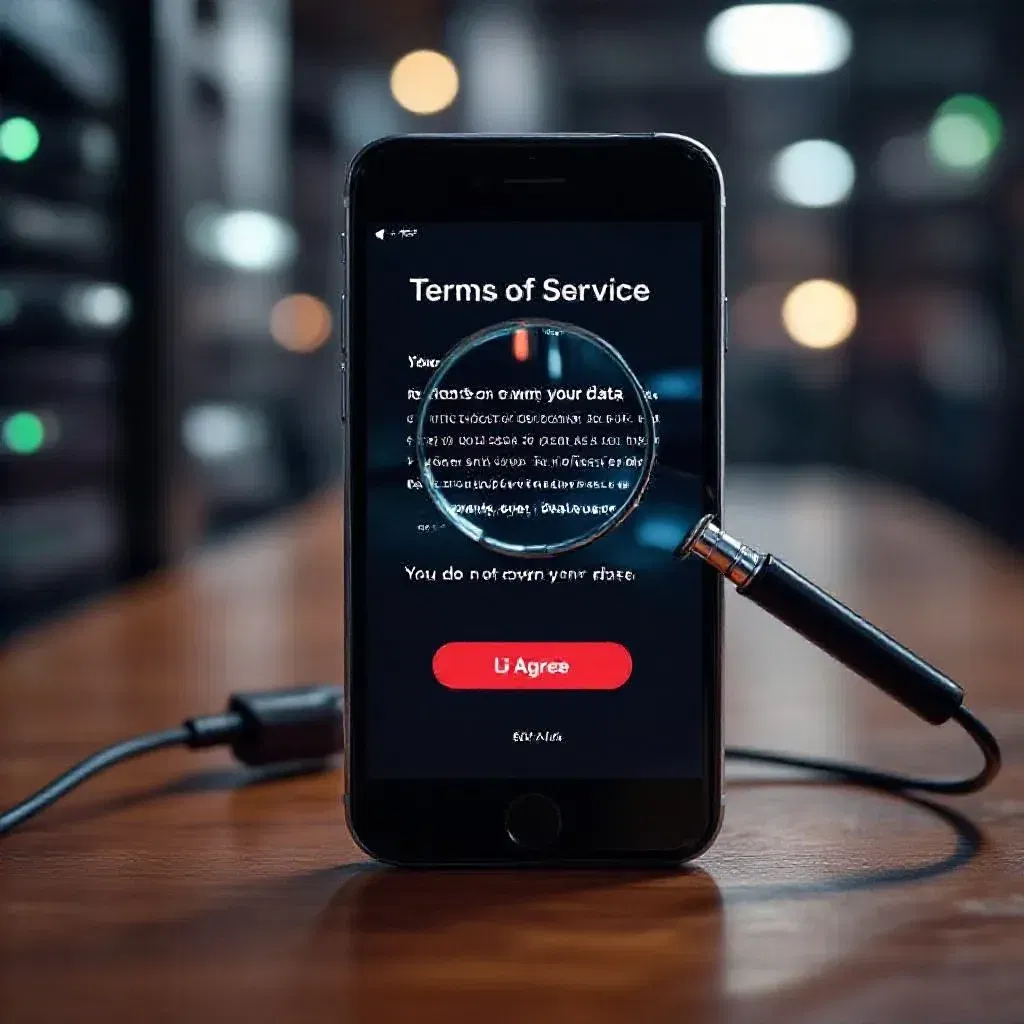
Honestly, who actually reads those terms of service? Here’s why you should
You probably just scroll past those endless legal documents, right? But buried in that tiny text are clauses that redefine your relationship with your own digital self. Ignoring them means giving away your most personal information.
How the fine print quietly steals your digital rights
Hidden within the jargon, you’re signing away rights to your photos, messages, and location data. These agreements turn your private life into a corporate asset, without you ever truly knowing.
What Apple and Samsung are really saying in those updates
Those constant updates aren’t just about new features. They’re often stealthily changing the rules of engagement for your data. You’re agreeing to new terms every time you click “install,” unknowingly granting more access.
Every time you hit that “update” button, you’re necessaryly renewing a contract you haven’t read. These updates can introduce new permissions, expand data collection, or alter how your information is shared. It’s a subtle, ongoing negotiation where you’re always at a disadvantage, because you’re not even aware it’s happening.
The fake choice of clicking agree just to use your phone
You’re stuck, aren’t you? Your phone is useless until you click “agree.” This isn’t a choice; it’s a forced transaction where your personal data is the currency.
It feels like a simple click, but it’s a profound surrender. You can’t access your contacts, send a text, or even make a call without consenting to these terms. It’s an illusion of free will, where the only path to using your own device involves signing over control of your digital identity.
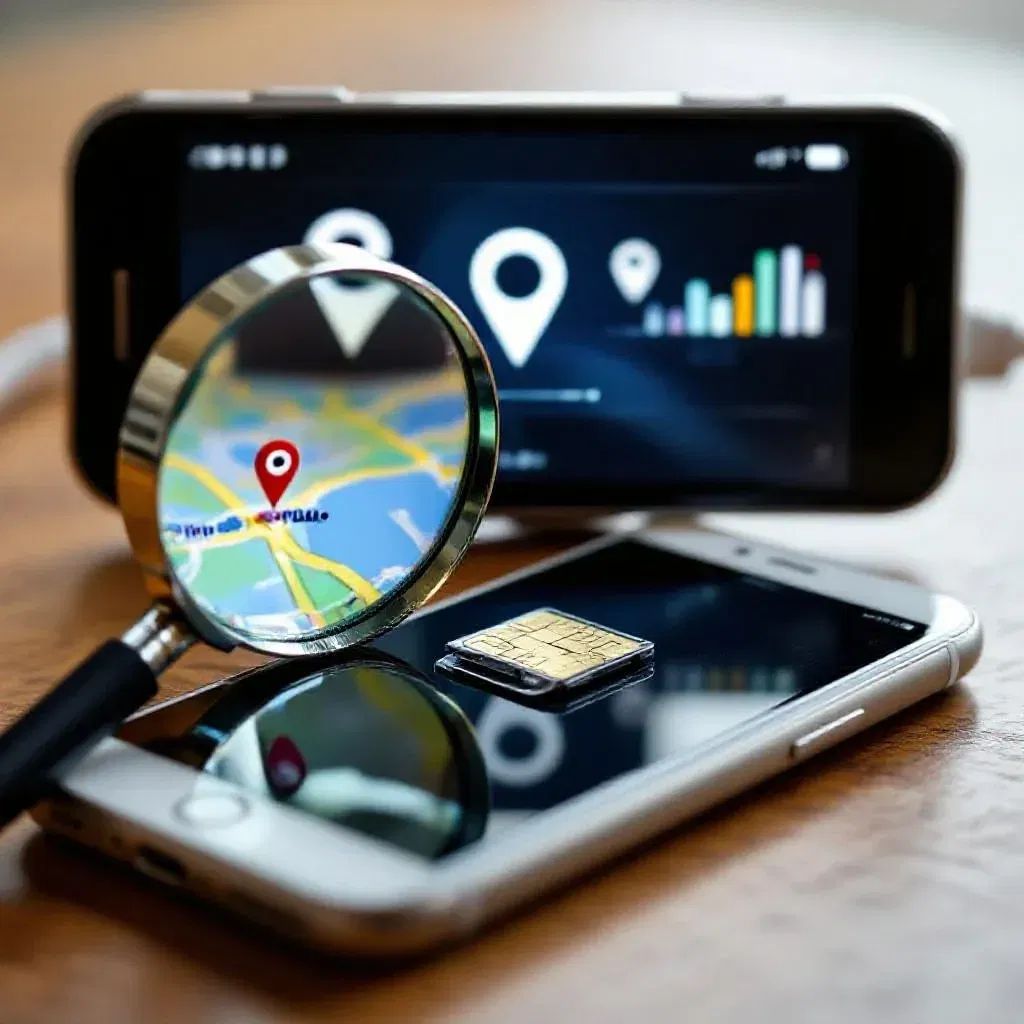
The Hidden Truth: You Don’t Own Your Smartphone Data
So, does popping out your SIM card actually hide your trail?
Many people believe removing their SIM card makes them invisible. You might think it disconnects you, erasing your digital footprint. But this isn’t the complete picture. Your phone’s identity is more persistent than you imagine.
The truth about what a SIM card does and doesn’t store
Your SIM card mainly stores your subscriber identity module, hence the name. It holds your phone number and carrier authentication. Crucially, it doesn’t store your personal photos, messages, or app data. It’s a key to the network, not your digital diary.
Why your phone’s identity sticks around even without a card
Your phone has a unique hardware identity, like an IMEI number. This identifier remains with the device itself. It’s how networks and manufacturers recognize your specific phone, even without a SIM card inserted. This identity is permanently linked to your device.
Even without a SIM, your phone’s unique hardware identifier, the IMEI, is still broadcasting. Manufacturers and even some apps can use this to track your device’s activity. So, while you might lose network connectivity, your phone’s ghost still lingers, leaving a trail of its existence. It’s like taking off your name tag but still being recognizable by your face.
What happens to your info when you switch to a new carrier
When you switch carriers, your old SIM card becomes inactive. But your phone’s identity, the IMEI, stays the same. Your new carrier then associates that existing hardware with a new SIM and account. Your old data remains with the previous carrier, not erased from existence.
Switching carriers doesn’t magically wipe the slate clean. Your old carrier still holds data associated with your previous account. They retain records of your calls, messages, and browsing history during your time with them. This information isn’t transferred; it’s simply left behind, still accessible to them as per their data retention policies. It’s a chilling thought, isn’t it? Your past digital life, still out there.
Why we’re all trading our secrets for a little bit of convenience
You might think you’re getting something for free, but you’re actually paying with your most personal details. Every time you hit “agree,” you’re making a silent deal, giving companies access to your digital life for a bit of ease. It’s a trade-off that costs you more than you know.
The psychology of why we give up privacy for free stuff
We’re wired for instant gratification. That quick access or “free” app feels good now, so we overlook the invisible cost. You’re sacrificing long-term control for a fleeting moment of convenience, barely thinking twice about it.
How those smart features are just tracking tools in disguise
Many “smart” features are actually just clever tracking mechanisms. Your voice assistant isn’t just listening for commands; it’s logging your preferences and conversations. That personalized news feed isn’t magic; it’s built from your browsing habits.
Think about it: your phone’s camera might offer cool filters, but it’s also analyzing your face for biometric data. Your smart home devices, while helpful, are constantly collecting data on your routines, even your conversations. These features, designed to make your life easier, are constantly feeding a data machine that knows more about you than you probably realize.
The real price of letting apps know your every move
Giving apps access to your location, contacts, and photos seems harmless, right? But this data paints a detailed picture of your entire life. This personal map of your existence is then sold, analyzed, and used to influence your decisions.
This isn’t just about targeted ads following you around the internet; it’s about companies understanding your habits better than you do. They can predict your next purchase, your political leanings, or even your health concerns. This intimate knowledge can be used to manipulate you, to shape your reality without you even realizing it. You’re losing control over your own narrative.
What’s your carrier actually seeing? It’s way more than you think
Your carrier isn’t just a pipeline for calls and texts. They’re actually seeing everything you do on their network. Think about it: they know your location, what apps you open, and how much data you’re using. It’s a goldmine of information about your daily habits.
The stuff your mobile provider tracks that they don’t mention
Mobile providers track your precise location data constantly. They also log every website you visit, every app you use, and even who you communicate with. They don’t usually highlight these details in their marketing materials, do they?
Why using cellular data doesn’t keep you invisible
Using cellular data provides no real anonymity. Your carrier assigns you an IP address, linking all your online activity directly back to you. They can see every site, every search, every interaction, making you incredibly visible.
Many people falsely believe that switching from Wi-Fi to cellular data somehow grants them a cloak of invisibility. This is a dangerous misconception. Your mobile provider is importantly your internet service provider when you’re off Wi-Fi, and they have the same, if not greater, capacity to monitor your digital footprint. Every packet of data you send or receive passes through their servers, allowing them to log your browsing history, app usage, and even your real-time location. It’s not about being anonymous; it’s about shifting *who* is watching you.
The big lie about private data plans you pay for
Private data plans offer a false sense of security. These plans often just mean *less throttling* or *more data*, not actual privacy from your carrier. They still collect, analyze, and profit from your activities.
When you sign up for a “private” or “unlimited” data plan, the marketing makes it sound like you’re getting some exclusive protection. That’s simply not true. While you might get faster speeds or avoid data caps, your carrier’s fundamental data collection practices remain unchanged. They’re still building a detailed profile of your online behavior, selling that data to advertisers, and potentially sharing it with other entities. You’re paying for convenience, not for true ownership or control over your digital life.
Can your boss or your parents really see what you’re up to on mobile data?
You might wonder if your private life stays private when you’re using your own mobile data. Unfortunately, your employer or even your parents can still monitor your activities, making your digital footprint far from invisible. They often have more access than you think, especially with certain software.
The difference between tracking on Wi-Fi versus your own data
Interestingly, using your own mobile data doesn’t grant you immunity from surveillance. While Wi-Fi networks can log your activity, your cellular carrier also collects extensive data on your browsing and app usage, creating a detailed profile of you.
How monitoring software makes your history an open book
Monitoring software can turn your private history into an open book, even on your personal device. This software bypasses standard privacy settings, offering a direct window into your activities. It’s a direct threat to your digital self-ownership, giving others unauthorized access to your private life.
This kind of software, often installed without your full knowledge or consent, acts like a spy on your phone. It silently records everything: your texts, calls, browsing history, social media interactions, and even your location. Imagine every secret conversation, every private search, every personal photo being accessible to someone else – that’s the reality with these powerful tools. It’s a complete violation of your personal space, leaving you exposed and vulnerable.
What’s actually visible on a work phone versus your personal one
A work phone usually comes with pre-installed monitoring tools, making everything you do visible to your employer. Your personal phone, however, offers a false sense of security; while less obvious, monitoring software can still be installed, erasing your privacy completely.
With a work phone, you crucially operate under constant observation. Your employer can see your calls, texts, app usage, browsing history, and even your physical location, often without needing to notify you for every action. This is because you’ve likely agreed to their terms of service, which grant them broad monitoring rights. On your personal device, the threat is more insidious. If monitoring software is installed, perhaps by a parent or an ex-partner, it functions just as invasively, turning your most private device into a tool of surveillance against you. Your fundamental right to privacy is completely undermined.
My take on Apple versus Samsung: Who’s actually keeping your secrets?
You might assume big brands protect you. But Apple and Samsung, while seemingly different, both collect immense amounts of your data. Neither truly gives you full ownership, despite their public privacy claims. Your digital identity remains a commodity for them.
How different brands handle your data ownership differently
Some brands are more transparent about data collection than others. Others bury clauses deep in their terms, making it nearly impossible for you to understand what you’re giving away. Always read the fine print, even if it’s tedious.
The sneaky agreements hidden inside your OS updates
Every time you update your operating system, you’re likely agreeing to new terms. These hidden agreements often expand data collection permissions without you even realizing it. You’re signing away more rights with each ‘agree’ button.
These OS updates aren’t just about bug fixes or new features; they’re also opportunities for manufacturers to subtly adjust their data collection policies. You click “agree” to continue using your device, unknowingly granting fresh permissions for your personal information to be gathered, analyzed, and even shared. It’s a continuous, silent renegotiation of your data ownership, always in their favor.
The metadata war between Android and iPhone users
Android and iPhone users often debate privacy. Yet, both ecosystems extensively collect your metadata – the “data about data.” This includes who you call, when, and where, painting an intimate picture of your life. Metadata reveals more than you think.
This “metadata” is incredibly powerful. It tracks your location patterns, communication frequency, and even your app usage habits. While the content of your messages might be encrypted, the patterns of your communication are not. This information helps companies build detailed profiles of you, which can then be sold to advertisers or even used for targeted influence campaigns. It’s a silent observer, always watching.
The cloud isn’t just a fluffy storage space – it’s a digital warehouse you don’t own
This isn’t about magical mist; it’s about physical servers you never see. Your “cloud” is a giant, remote computer network, owned and operated by a corporation. You’re just renting space, not buying the building. So, that feeling of control? It’s an illusion.
Where your photos and files actually live when you back them up
Your cherished memories and important documents don’t float freely. They’re stored on massive server farms, often across the globe. These aren’t your computers; they belong to companies like Google, Apple, or Amazon. Your data is just another file in their colossal inventory.
Why cloud companies can legally look through your stuff
That lengthy “Terms of Service” you clicked without reading? It’s a contract. You likely granted them broad permissions, allowing access for maintenance, security, and even “improving services.” They’re not being sneaky; you gave them permission.
Your agreements often contain clauses that allow these companies to scan your data for various reasons. They might be looking for illegal content, or simply analyzing patterns to enhance their algorithms. It’s all about what you agreed to in that fine print, which often gives them a surprising amount of leeway. So, while you trust them with your private life, they’re legally entitled to poke around in it.
How to get your data back from those remote servers
Retrieving your data isn’t always straightforward. You generally download copies, but the original often remains. They don’t just hand over the server. It’s like asking for a book back from a library; you get your copy, but the library still has theirs.
You can usually download your files through their web interfaces or specific apps. However, this process can be clunky, especially with large amounts of data. And even after you’ve downloaded everything, there’s no guarantee the company completely purges all traces from their servers. They might retain backups or metadata for a set period, making true deletion a complex, sometimes impossible, task. It’s a stark reminder that once your data leaves your device, you lose a significant amount of say over its fate.
Seriously, why isn’t there a law that says my data is actually mine?
You’d think in this digital age, your personal data would be your undeniable property. Yet, there’s a shocking legal void, leaving your most intimate digital footprint exposed. This lack of clear ownership means your data is a free-for-all, not a protected asset.
The messy reality of data laws in the United States
America’s legal system hasn’t caught up to the digital world. There isn’t one overarching law giving you explicit data ownership, so your information floats in a legal gray area, often exploited by those who profit from it.
What GDPR actually does for you and where it fails
The GDPR offers some hope, giving you limited rights to access and delete your data. However, it falls short of true ownership. It doesn’t grant you absolute control over how your data is used or sold.
This European Union regulation, while a step forward, doesn’t actually make your data *yours*. It provides mechanisms for you to *request* access or deletion, which is great, but it doesn’t give you the final say on who profits from it or how it moves across borders. You’re still negotiating, not owning. It’s like being allowed to visit your house, but someone else holds the deed.
The ongoing fight between your rights and corporate greed
This constant battle pits your fundamental right to privacy against powerful corporations’ endless hunger for profit. Your data is their goldmine, and they will fight tooth and nail to keep it. This isn’t just about money; it’s about who controls your digital identity.
Every time you see a new app update or a change in terms of service, it’s often another skirmish in this war. Companies are constantly seeking new ways to extract and monetize your information, often disguised as “improved services” or “personalized experiences.” They bank on you not reading the fine print, knowing that convenience often trumps caution. It’s a relentless push, and your data is the prize.
How companies are making a killing off your daily habits
Imagine walking into a store, and they know your favorite color, your last purchase, and even what you thought about buying. That’s your digital reality. Companies aren’t just selling phones; they’re monetizing your entire existence, every single tap and swipe.
Turning your digital life into something they can sell
Every app you download, every website you visit, it’s all recorded. Your digital footprint becomes a valuable commodity. They package your preferences and behaviors, selling them to anyone who wants a peek into your private world.
The massive industry that lives off your personal info
Someone out there is making a fortune from your choices. This industry is vast, involving data brokers, advertisers, and even shadowy entities you’ve never heard of. They trade your personal details like stocks, turning your habits into profit.
This isn’t a small side hustle for them. We’re talking about a multi-billion-dollar industry that thrives on collecting, analyzing, and selling your personal information. Think about every ad you see online; that’s them using your data to target you specifically, trying to influence your next purchase. It’s an invisible economy, and you’re the product.
Why free platforms are actually the most expensive ones
You might love those “free” social media apps or email services. But they come at a hidden price. You’re paying with your privacy, surrendering your data for convenience.
That “free” service isn’t free at all. You’re trading access to your most intimate details for the ability to chat with friends or store photos. They get to build a comprehensive profile of you, which is far more valuable than a subscription fee.
Here’s how you can finally start taking back some control
Ready to fight back? You can actually reclaim your digital self. It involves understanding where your data goes and then actively choosing alternatives that prioritize your ownership. You’ll feel a sense of freedom when you start seeing how much you’ve given away without realizing it, and how much you can win back. Taking these steps is about protecting your digital identity.
Simple ways to stop leaking so much info every day
Think about your app permissions. Do they *really* need your location or microphone? Turn off unnecessary access. Opt out of personalized ads and app tracking in your settings. These small actions reduce your digital footprint significantly.
My favorite tools and apps that actually respect privacy
Want to communicate without being watched? Signal is an excellent choice for encrypted messaging. DuckDuckGo offers a search engine that doesn’t track you. These are simple switches that offer huge privacy gains.
Consider changing your default browser to something like Brave or Firefox Focus, which have built-in trackers blockers. For email, ProtonMail provides end-to-end encryption, ensuring only you and your recipient can read your messages. Using a VPN like ExpressVPN or NordVPN can also mask your IP address, making it harder for companies to track your online activity. Every step you take with these tools helps build a stronger wall around your personal information.
Why local storage is way better than the cloud for your peace of mind
Storing your files on your device or an external hard drive means *you* control them. The cloud, while convenient, means your most personal memories are on someone else’s server, making them vulnerable.
When you upload photos or documents to cloud services, you’re imperatively handing over a copy to a third party, often without fully understanding their terms of service. Local storage, whether on your computer, an external hard drive, or a USB stick, keeps your data physically with you. This drastically reduces the risk of data breaches or unauthorized access, giving you true ownership and security over your most precious digital assets. It’s about having your data physically in your hands, not floating in someone else’s digital ether.
Final Words
With these considerations, you must understand the true cost of convenience. Your personal information, your digital identity, remains vulnerable. You deserve to control your own narrative, to safeguard the intimate details of your existence. Don’t let others dictate the story of your life; reclaim what is rightfully yours.
FAQ
Q: If I buy a smartphone, doesn’t that mean I own all the data on it?
A: Many people assume buying a phone means owning its data, but that’s a common misunderstanding. You own the physical device, yes, but the data created on it often falls under the control of manufacturers, app developers, and service providers. It’s a shocking truth that what feels intensely personal isn’t always yours.
Q: I delete things from my phone all the time. Doesn’t that mean the data is gone forever?
A: Deleting something from your phone often just removes it from your immediate view. Copies may linger in cloud backups, on company servers, or within metadata. It’s a chilling thought-your deleted memories could still exist, out of your control, somewhere in the digital ether.
Q: Who actually profits from my smartphone data if I don’t own it?
A: A vast network of entities profits from your data. Data brokers collect it, advertisers target you with it, and cloud services store it. Your every digital move becomes a valuable commodity for them, not for you. This invisible trade happens constantly, without your full awareness.
Q: What happens if I don’t read those long “Terms of Service” agreements?
A: Not reading those agreements means you unknowingly consent to corporations collecting, using, and even selling your data. Buried in that fine print are clauses granting them extensive rights over your digital life. It’s like signing away parts of your identity without even knowing it.
Q: Can my mobile carrier see everything I do online, even if I use my own data plan?
A: Yes, your mobile carrier can track your browsing, app usage, and location patterns. They act as a gateway to the internet, giving them a broad view of your digital activities. Even on your own data plan, your actions are often monitored and logged, a unsettling thought for your privacy.
Q: Why is it so hard to truly delete all my personal data from the internet once it’s out there?
A: Once your data leaves your device and enters the internet, it’s replicated across servers, databases, and third-party systems. It becomes incredibly difficult to trace and remove every single copy. It feels like a digital ghost, haunting the internet, forever linked to you.
Q: What can I actually do to regain some control over my smartphone data?
A: Start by adjusting app permissions, disabling personalized ads, and using encrypted messaging. Consider storing sensitive data locally instead of in the cloud. Educate yourself on privacy settings and regional laws. Reclaiming control means actively defending your digital self from pervasive collection.


About the author


Understanding Allodial Titles, Land Patents, and Their Legal Implications
In property rights and land ownership, the concepts of allodial titles and land patents hold significant legal weight. These terms are often used in discussions related to the protection of property rights, land ownership, and the interplay between various areas of law such as the Uniform Commercial Code, contract law, constitutional law, and statutory law. In this in-depth blog post, we will explore into the intricacies of allodial titles and land patents, exploring their definitions, legal implications, and dispelling common myths and misconceptions associated with them. Key Takeaways: Allodial Titles Explained: An allodial title represents the highest form of land ownership, granting the owner absolute and unburdened ownership of the property, free from any encumbrances, liens, or taxes imposed by external parties. Land Patents and Their Legal Implications: A land patent is a legal document issued by the government that […]

Outsmart the System: Top Legal Strategies You Need to Know
Understanding the Legal Landscape While the legal system may seem intimidating, grasping its core concepts can empower you to navigate its complexities effectively. Understanding this landscape is vital for anyone looking to outsmart the system and optimize their legal strategies. Whether you’re seeking legal hacks for small businesses or tips on how to use legal loopholes to your advantage, recognizing the different legal frameworks at play can be crucial in making informed decisions. Overview of Legal Systems An understanding of the various legal systems is pivotal for recognizing your rights and obligations. Legal frameworks can vary significantly from one country to another, with common systems including civil law, common law, and religious law. Each system has its own structure, offering unique legal strategies and challenges. For example, in a common law system, previous judicial decisions can influence future cases, allowing […]

Ilataza Ban Yasharahla EL’s Public Records Request for Elyria Board of Education
24-0001492: Ilataza Ban Yasharahla EL's Public Records Request for Elyria Board of Education. All Rights Expressly Reserved and Retained. https://nationalnoticerecord.com/elyria-boe-members-required-to-follow-rulings https://nationalnoticerecord.com/is-elyria-school-board-bound-by-ohio-courts https://nationalnoticerecord.com/understanding-the-oath-of-office-legal-obligations-and-consequences

Ohio Legalizing Recreation Marijuana Use May Hurt Dispensaries in Monroe, Michigan
In recent years, the movement to legalize marijuana for adult recreational use has gained significant momentum across the United States. Ohio, a state long synonymous with conservative values, has also embraced this shift in public opinion. With the passing of Ohio Issue 2 and the Ohio Home Grow Bill, the state has joined the ranks of those allowing the recreational use of marijuana. This blog post will delve into the pros and cons of Ohio's legalization, as well as the potential implications for marijuana dispensaries in Monroe, Michigan, which previously benefited from Ohio buyers crossing state lines. https://www.youtube.com/watch?v=0KRzqZ8dUwc Pros of Ohio's Recreational Marijuana Legalization 1. Economic Boost: Legalizing recreational marijuana in Ohio has the potential to generate substantial economic benefits for the state. The marijuana industry has proven to be a lucrative market, with tax revenue and job creation being […]

The Etymology of “Bey” EXPOSED
TURN UP YOUR VOLUME & PRESS PLAY Have you ever wondered what the true origin and meaning of "Bey" is? We've been told that it means "Governor", "Law Enforcer", Chief, etc. But, what if that's incorrect? What if we've been using the "title", "Bey", incorrectly? FILL OUT THE FORM TO GET STARTED First Name: Last Name: Phone Number: Email: I agree to receive email updates and promotions. Submit

Are You A “Colored Person”?
Tune in as we dissect the term "person of color", exposing how its PURPOSELY steeped in plausibility, DECEPTION, and used as a weapon.

We’ve Been FORCED to Make Some Changes
Due to receiving so many tasks that our work has become more tedious, we've been forced to make some changes at National Notice Record.

Gas Go Express Food Mart Unjust Enrichment Via Debit Card Surcharge Fees
https://www.youtube.com/watch?v=eJknhtE9JEI In this video, I talk about a consumer experience I had while shopping at Gas Go Express Food Mart Gas Station, located at 237 Lake Avenue, Elyria, Ohio. On November 24, 2021, I made a purchase for 4 taxable items at the location. Each item was $0.99 per. With taxes, it came up to $4.26. As I got ready to place my debit card into the card reader, the Gas Go Express Food Mart clerk immediately added a $.50 debit card surcharge fee. As a common practice, some merchants/stores add a surcharge to your total purchase amount when you spend less than $5 or $10 when using a credit/debit card to process the payment. Being a merchant myself, I know that Master Card, Visa, Discover, and some of the other financial institutions have a strict policy that states that […]

Is Your Signature a Trap? The UCC Truth
Just a quick question for you: Are you sure about what your signature really means? Your signature, under the Uniform Commercial Code (UCC), isn't just an autograph. It can be a legal trap, binding you to terms you never fully understood. Learn to protect yourself from these hidden dangers in commercial transactions. Seriously, is your signature actually a legal trap or just a silent endorsement? You probably think your signature is just a formality, right? But under the Uniform Commercial Code (UCC), it's much more. Your signature acts as a binding endorsement, fueling the financial system, often at your personal expense. Why we're conditioned to sign stuff without looking and the bad news that follows Ever feel rushed to sign? This conditioning makes you enter "contracts of adhesion." You're then seen as a "debtor" or "representative", not a living person […]

The Merchant’s Bible: Decoding UCC Article 1
Many entrepreneurs overlook the bedrock of commercial law. You must understand UCC Article 1. This article governs your business transactions, from agreements to definitions. Ignoring these foundational provisions can lead to costly disputes. Master this crucial legal framework to protect your interests and achieve success. Key Takeaways: * UCC Article 1 forms the foundational rules of US commercial law. It defines core concepts, distinguishing an "agreement" from a binding "contract."* Merchants must recognize that UCC Article 1 rules often supersede common law in business dealings. This shift dictates different legal obligations and expectations.* Certain mandates cannot be disclaimed, including good faith, diligence, reasonableness, and care. These duties always govern commercial transactions.* Past actions, such as course of dealing and course of performance, can redefine written contracts. Documenting reservations of rights protects legal leverage.* UCC Article 1 is adapting to the […]

Hidden in Plain Sight: The UCC 1-308 Shield
You probably feel something is off. You sign documents daily, but do you truly understand their hidden implications? This little-known shield can protect your inherent rights. It's a secret many miss, but you don't have to be one of them. Key Takeaways: You know, there's this growing buzz online about reclaiming personal sovereignty, and a lot of folks are looking into how the Uniform Commercial Code fits into that. It feels like we're all just waking up to how much of our lives are governed by unspoken rules. * Signing documents "without prejudice UCC 1-308" isn't just legal jargon; it's a profound declaration. This simple act communicates you are performing an action, but you aren't consenting to hidden contract terms. * Many everyday agreements, like your driver's license application, are "adhesion contracts." You typically accept their terms completely, or you […]

UCC Secrets: The Code That Owns Your Daily Life
UCC is everywhere, shaping your financial reality. You might not realize it, but the Uniform Commercial Code governs your daily life. This code dictates how your assets are handled, often without your explicit understanding. You need to know these secrets. Key Takeaways: You know, most folks think they're playing by "Civil Law" rules, but the truth is, the Uniform Commercial Code (UCC) is the real silent puppet master pulling the strings of daily life. It's not just some obscure legal jargon; it's the very foundation of our commercial world. That "Corporate Personhood" stuff in the UCC isn't just for big companies; it's about the "Strawman" created with your birth certificate. This legal fiction might be the key to understanding why your identity feels like a perfected security interest. UCC 1-308, that "without prejudice" phrase, it's not a magic spell, but […]

What If Traffic Tickets Are Just Municipal Profit Schemes?
The Great Harvesting: Why Traffic Tickets are Municipal Profit Schemes I. What If Traffic Tickets Were Never About Safety? What if everything you’ve been told about traffic tickets is wrong? What if traffic enforcement has quietly shifted from “public safety” to public revenue? This shift transforms ordinary citizens into municipal ATMs. You are not being “protected” on the road. Instead, you are being harvested. This is happening algorithmically, administratively, and unconstitutionally. For decades, Americans accepted traffic tickets as routine. But here is the question almost no one asks. Are traffic tickets unconstitutional? Is this a cleverly disguised municipal profit scheme? These municipal corporations depend on fines. They need them like businesses depend on sales. There is a massive rise in public distrust today. People ask: “Are traffic tickets unconstitutional revenue streams?” This is an explosive search trend across all major […]

Service Providers Are Hiding Fees-and It’s NOT Legal
Many of you have likely felt the sting of unexpected charges on your bills. You signed a contract, yet the total is higher than expected. This isn't just annoying; it's often illegal. You deserve to know every cost upfront. Are you tired of feeling cheated by hidden fees? Key Takeaways: * Does that bill make your stomach drop? Hidden fees are a sneaky strategy, not an accident, making your monthly charges mysteriously higher than expected.* Are they playing fair with your money? Companies often use vague terms like “service fees” or “administrative costs” to mask charges you never agreed to.* Is this even legal? No, concealing fees violates consumer protection laws, making it deceptive and unfair to you.* Why did they hide it from you? Businesses exploit emotions, getting you to commit before revealing the costly details in fine print.* […]
Related
Is Your Signature a Trap? The UCC Truth
Just a quick question for you: Are you sure about what your signature really means? Your signature, under the Uniform Commercial Code (UCC), isn't just an autograph. It can be a legal trap, binding you to terms you never fully understood. Learn to protect yourself from these hidden dangers in commercial transactions. Seriously, is your signature actually a legal trap or just a silent endorsement? You probably think your signature is just a formality, right? But under the Uniform Commercial Code (UCC), it's much more. Your signature acts as a binding endorsement, fueling the financial system, often at your personal expense. Why we're conditioned to sign stuff without looking and the bad news that follows Ever feel rushed to sign? This conditioning makes you enter "contracts of adhesion." You're then seen as a "debtor" or "representative", not a living person […]
The Merchant’s Bible: Decoding UCC Article 1
Many entrepreneurs overlook the bedrock of commercial law. You must understand UCC Article 1. This article governs your business transactions, from agreements to definitions. Ignoring these foundational provisions can lead to costly disputes. Master this crucial legal framework to protect your interests and achieve success. Key Takeaways: * UCC Article 1 forms the foundational rules of US commercial law. It defines core concepts, distinguishing an "agreement" from a binding "contract."* Merchants must recognize that UCC Article 1 rules often supersede common law in business dealings. This shift dictates different legal obligations and expectations.* Certain mandates cannot be disclaimed, including good faith, diligence, reasonableness, and care. These duties always govern commercial transactions.* Past actions, such as course of dealing and course of performance, can redefine written contracts. Documenting reservations of rights protects legal leverage.* UCC Article 1 is adapting to the […]
Hidden in Plain Sight: The UCC 1-308 Shield
You probably feel something is off. You sign documents daily, but do you truly understand their hidden implications? This little-known shield can protect your inherent rights. It's a secret many miss, but you don't have to be one of them. Key Takeaways: You know, there's this growing buzz online about reclaiming personal sovereignty, and a lot of folks are looking into how the Uniform Commercial Code fits into that. It feels like we're all just waking up to how much of our lives are governed by unspoken rules. * Signing documents "without prejudice UCC 1-308" isn't just legal jargon; it's a profound declaration. This simple act communicates you are performing an action, but you aren't consenting to hidden contract terms. * Many everyday agreements, like your driver's license application, are "adhesion contracts." You typically accept their terms completely, or you […]
UCC Secrets: The Code That Owns Your Daily Life
UCC is everywhere, shaping your financial reality. You might not realize it, but the Uniform Commercial Code governs your daily life. This code dictates how your assets are handled, often without your explicit understanding. You need to know these secrets. Key Takeaways: You know, most folks think they're playing by "Civil Law" rules, but the truth is, the Uniform Commercial Code (UCC) is the real silent puppet master pulling the strings of daily life. It's not just some obscure legal jargon; it's the very foundation of our commercial world. That "Corporate Personhood" stuff in the UCC isn't just for big companies; it's about the "Strawman" created with your birth certificate. This legal fiction might be the key to understanding why your identity feels like a perfected security interest. UCC 1-308, that "without prejudice" phrase, it's not a magic spell, but […]
What If Traffic Tickets Are Just Municipal Profit Schemes?
The Great Harvesting: Why Traffic Tickets are Municipal Profit Schemes I. What If Traffic Tickets Were Never About Safety? What if everything you’ve been told about traffic tickets is wrong? What if traffic enforcement has quietly shifted from “public safety” to public revenue? This shift transforms ordinary citizens into municipal ATMs. You are not being “protected” on the road. Instead, you are being harvested. This is happening algorithmically, administratively, and unconstitutionally. For decades, Americans accepted traffic tickets as routine. But here is the question almost no one asks. Are traffic tickets unconstitutional? Is this a cleverly disguised municipal profit scheme? These municipal corporations depend on fines. They need them like businesses depend on sales. There is a massive rise in public distrust today. People ask: “Are traffic tickets unconstitutional revenue streams?” This is an explosive search trend across all major […]
Service Providers Are Hiding Fees-and It’s NOT Legal
Many of you have likely felt the sting of unexpected charges on your bills. You signed a contract, yet the total is higher than expected. This isn't just annoying; it's often illegal. You deserve to know every cost upfront. Are you tired of feeling cheated by hidden fees? Key Takeaways: * Does that bill make your stomach drop? Hidden fees are a sneaky strategy, not an accident, making your monthly charges mysteriously higher than expected.* Are they playing fair with your money? Companies often use vague terms like “service fees” or “administrative costs” to mask charges you never agreed to.* Is this even legal? No, concealing fees violates consumer protection laws, making it deceptive and unfair to you.* Why did they hide it from you? Businesses exploit emotions, getting you to commit before revealing the costly details in fine print.* […]