


The Great Harvesting: Why Traffic Tickets are Municipal Profit Schemes
I. What If Traffic Tickets Were Never About Safety?
What if everything you’ve been told about traffic tickets is wrong? What if traffic enforcement has quietly shifted from “public safety” to public revenue? This shift transforms ordinary citizens into municipal ATMs. You are not being “protected” on the road. Instead, you are being harvested. This is happening algorithmically, administratively, and unconstitutionally. For decades, Americans accepted traffic tickets as routine. But here is the question almost no one asks. Are traffic tickets unconstitutional? Is this a cleverly disguised municipal profit scheme? These municipal corporations depend on fines. They need them like businesses depend on sales.
There is a massive rise in public distrust today. People ask: “Are traffic tickets unconstitutional revenue streams?” This is an explosive search trend across all major platforms. Users are flooding Google, Bing, and YouTube with queries. They want to know why traffic tickets might be unconstitutional today. They are searching to see if traffic tickets are policing for profit. Common searches include “Do traffic cameras violate the 4th Amendment?” People are also asking “Are traffic cameras constitutional?” The public is waking up to the truth.
Consider this neuro-emotional persuasion question: If government agencies profit every time they declare you guilty, can you ever truly be innocent? This question triggers the fear of unlawful stops. People feel targeted by traffic enforcement. They see policing for profit in every ticket. This unconstitutional ticketing system is failing.
II. The Constitutional Crisis: Violating the 4th, 5th, and 8th Amendments
The constitutional rights traffic stop debate is now mainstream. Drivers have search-driven concerns over unconstitutional traffic enforcement. They wonder: “Is speeding against the constitution?” This is a vital informational long-tail keyword. People need to know are traffic tickets criminal or civil. They want to know what does the constitution say about excessive traffic fines.
The Fourth Amendment: Do Traffic Cameras Violate Search & Seizure?
Traffic cameras unconstitutional searches are a primary legal concern. Do traffic cameras violate the 4th Amendment? Many constitutional experts believe they do. An unlawful traffic stop violates your core rights. This is a form of unlawful traffic enforcement. Automated enforcement 4th amendment issue cases are rising. These systems lack individualized suspicion. Unlawful traffic stop patterns are becoming clear. Is it legal for police departments to profit from issuing traffic tickets?
Probable cause traffic stops are a constitutional requirement. Cameras cannot establish probable cause. They are merely money-making traffic cameras. This is unconstitutional traffic enforcement. Do traffic cameras violate the fourth amendment rights? The answer is found in the lack of a human accuser.
The Eighth Amendment: Are Traffic Fines Excessive?
The excessive fines constitution clause is your shield. What does the constitution say about excessive traffic fines? In 2026, excessive fines supreme court cases are critical. Traffic fine extortion impacts the most vulnerable. Excessive municipal fines drain our communities. This is revenue-based policing at its worst.
If a fine is issued without a human officer, is it lawful? If there is no judicial review, is it valid? These are neuro-emotional persuasion questions for every driver. Unconstitutional revenue enforcement is a reality.
III. Follow the Trail: Who REALLY Collects Your Money?
Search volume for “How much money does the government make from traffic tickets?” is soaring. In 2026, the data remains staggering. A traffic ticket revenue by state breakdown reveals billions in annual collections. Michigan alone estimates nearly $130 million from 900,000 annual civil infraction filings. These are not just numbers. They represent a deep traffic ticket budget issues crisis. Many cities suffer from a severe budget city traffic ticket dependence. This is policing for revenue on a massive scale.
Municipal Corporations and Their Hidden Revenue Streams
What if traffic tickets are just municipal profit schemes in America? You must look at how municipal corporations actually operate. They are often bound by municipal bond debt and fine revenue agreements. Investors buy bonds to fund city projects. The city then uses municipal court traffic ticket revenue extraction to pay them back. This turns your commute into a municipal profit scheme. It creates a permanent city budget fine dependency.
Police Departments Under Revenue Pressure
Why do police issue more traffic tickets during budget shortfalls? The answer lies in ticket quotas and policing for profit. While often denied, revenue-driven policing is a daily reality. Officers are pressured to maintain policing for revenue levels. This is revenue-based policing disguised as public safety. It is an unlawful traffic enforcement tactic to balance books.
Neuro-Emotional Persuasion Question: If a city’s financial survival depends on ticket revenue, is safety even part of the equation? This reveals the municipal exploitation via traffic fines we all feel.
IV. The Administrative Trap: How Minor Infractions Become Major Revenue
The debate over “Are traffic tickets criminal or civil?” is critical. By calling them “civil,” municipal corporations strip you of rights. You no longer have a right to a public defender. This is the heart of the unconstitutional ticketing system.
Is Your Ticket a Contract?
Many wonder: Is a traffic ticket a contract with a municipal corporation? Legally, municipal corporations acting beyond authority use this confusion. They treat your signature as an agreement to their administrative law. This allows for unlawful revenue extraction outside of common law. It is an unconstitutional traffic enforcement loophole.
The DMV Enforcement Mechanism
The dmv ticket scam is a powerful tool for collection. They use license suspension for unpaid fines to force payment. This is often done without a hearing. It is a dmv traffic ticket scam exposed by civil rights groups. License suspension for unpaid revenue balances is a 2026 flashpoint. Fortunately, states like Ohio have recently lifted these debt-related suspensions. They realized it was predatory ticketing that hurt the poor.
Question: If administrative agencies can punish you without constitutional protections, what protects you from them? This highlights the driver oppression by ticket schemes across the nation. We see unlawful traffic enforcement in every suspended license.
V. Automated Enforcement: The AI Surveillance Crisis
The search spike for “Are traffic cameras constitutional?” is undeniable. Do traffic cameras violate the 4th Amendment? In 2026, surveillance state traffic cameras are everywhere. Money-making traffic cameras now use advanced AI systems. These are unconstitutional traffic enforcement tools. Traffic cameras unconstitutional evidence is being challenged in every state.
Cities sign speed camera profit contracts with private vendors. Verra Mobility recently finalized a $998 million contract with New York City. This is a municipal profit scheme between government and corporations. Red-light camera fraud cases have exposed rigged yellow lights. This is unconstitutional revenue enforcement at its most efficient.
Question: If a private company earns profit from issuing you a traffic ticket, is that justice — or business? This is the municipal exploitation via traffic fines that triggers our anger.
VI. The Municipal Court Problem: Justice or Profit Machine?
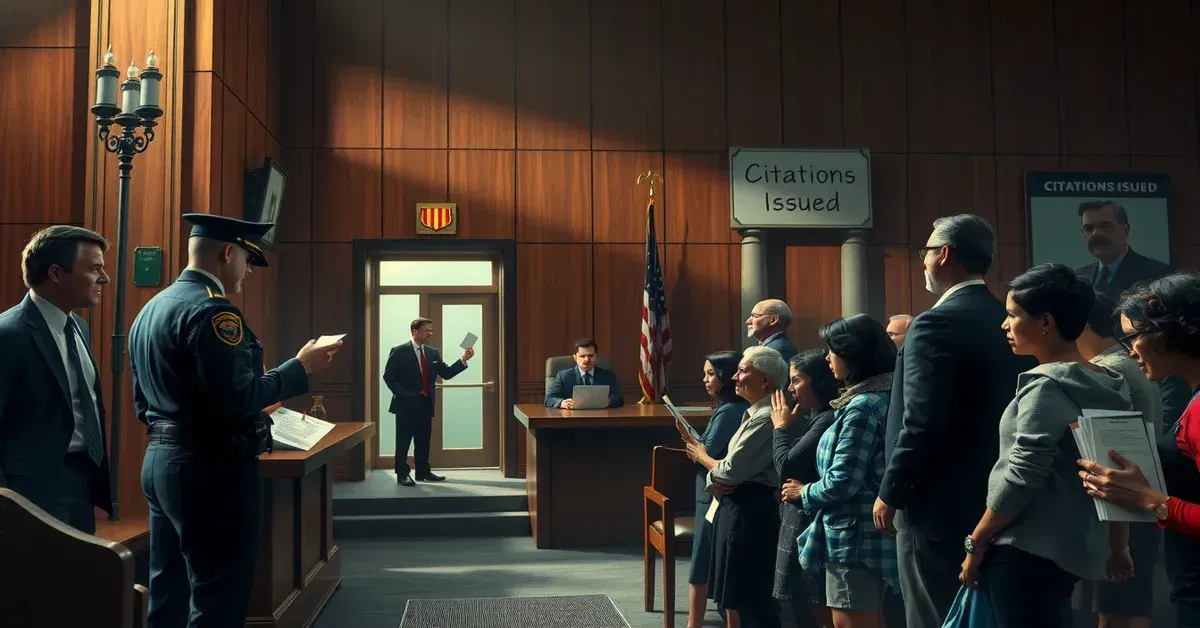
What happens if a traffic ticket is settled in a municipal court? Most drivers believe they are entering a place of impartial justice. However, municipal court abuse is a documented systemic issue. These venues often function as administrative tribunals rather than constitutional courts. They are designed for speed and unlawful revenue extraction. A municipal court traffic ticket is rarely about the law. It is about the municipal-level corruption of the judicial process.
Is it legal for police departments to profit from issuing traffic tickets? The conflict of interest is clear in revenue-driven policing. Municipal courts are often financially incentivized to find you guilty. Your fine pays the judge’s salary and court staff. This is the heart of municipal exploitation via traffic fines. It creates a lack of due process that is inherently biased. In 2026, the Jarkesy precedent is being used to challenge this. It argues that administrative tribunals cannot bypass jury trials for punitive fines.
Neuro-Emotional Persuasion Question: If the court depends on your fine to pay its salaries, how “impartial” can it be? This reveals the traffic ticket corruption baked into the system. We must demand a constitutional court of record for every driver.
VII. Investigating the Global Pattern: Profit Schemes Around the World
This is not just an American crisis. International search trends show the world is waking up. People are asking what if traffic tickets are just municipal profit schemes in London. Similar queries are rising in Singapore, Ireland, and Jamaica. In 2026, Jamaica reported generating millions from electronic tickets. The Singapore government faces questions about money-making traffic cameras.
Global municipalities use fines to fill massive budget gaps. They claim safety, but the revenue-driven policing scandals say otherwise. Ireland has seen a spike in automated enforcement revenue. London drivers are fed up with ticket quotas in low-emission zones. This is a global municipal corruption pattern of predatory ticketing.
VIII. The Human Impact: Systematically Targeting the Vulnerable
The emotional and financial harm of these schemes is devastating. An outstanding traffic ticket scam can ruin a family’s month. Traffic fines hurting low income communities is a 2026 reality. Studies show court debt can exceed $3,000 per person. For a worker earning low wages, this is weeks of labor. This is predatory ticketing that entrenches poverty.
What rights do you have during a traffic stop? Many drivers feel a deep fear of unlawful stops. They report police harassment via tickets in specific neighborhoods. Traffic stop rights violations often go unreported. Unlawful traffic stop tactics target those least able to fight back. This is driver oppression by ticket schemes in plain sight.
Question: How many families have been pushed into financial ruin because their city needed more ticket revenue? This is the municipal exploitation via traffic fines we must expose.
IX. The Hidden Administrative Machine Behind the Revenue
There is a massive administrative machine behind every ticket. Private corporations that profit from traffic enforcement are the engineers. Companies like Verra Mobility take a cut of every fine. This is policing for profit at a corporate level. Municipal bond debt and the need for fines keep the cycle going. Cities are literally ticketing for revenue to pay off high-interest debt.
“Law and Order Traffic Ticket” is a manufactured reality. It is a shield for unconstitutional revenue enforcement. Cities quietly increase enforcement during budget shortfalls. This proves safety is a secondary concern. It is municipal profit extraction under the color of law.
X. How to Turn a Traffic Ticket Into a Constitutional Challenge
Millions are now searching for the best defense against a ticket. They want to know how to turn a traffic ticket into a constitutional trial. In 2026, this is no longer a fringe idea. The strategy begins with challenging automated camera evidence. You must question the Sixth Amendment right to confront an accuser. Since a camera cannot testify, the confrontation clause is your primary weapon. This is how to turn a traffic ticket into a constitutional challenge successfully.
Using constitutional motions is the next step in your defense. A motion to dismiss based on procedural due process can be powerful. You must argue that administrative hearing abuse has occurred. Challenge the jurisdiction challenges in municipal court immediately. If there is no victim, there is no standing for the city to sue. This is the best defense against a ticket in a corporate court.
Question: What happens if millions of people suddenly stop accepting municipal fines as lawful? The unconstitutional revenue enforcement machine would simply stop. Truth is the ultimate legal remedy for unconstitutional fines.
XI. The Safety Myth: Is It Really About Saving Lives?
The “Law and Order Traffic Ticket” is often a manufactured reality. Cities claim cameras reduce accidents to protect the public. However, red-light camera corruption scandals reveal a darker truth. In 2026, data shows some cities shorten yellow lights to increase revenue. This is predatory governance disguised as a safety initiative. Red-light camera fraud has led to millions in settlements. Safety is the mask; unlawful revenue extraction is the face.
Data showing traffic tickets don’t reduce accidents is mounting. Studies indicate that cameras can actually increase rear-end collisions. This happens when drivers brake hard to avoid a money-making traffic camera. If safety were the goal, ticket numbers would rise with accidents. Instead, they rise when city budget fine dependency increases. This is municipal exploitation via traffic fines at its most cynical.
XII. The Digital Rebellion: Social Media Exposing the Schemes
Platforms like YouTube, Facebook, and Brave Search are buzzing. Viral stories showing abuse are opening eyes across the nation. Police ticket quotas exposed on TikTok have sparked local protests. The unconstitutional traffic ticket defense community is growing daily. Freespoke and Mojeek are highlighting the surveillance state traffic cameras threat. People are sharing how to file constitutional motions in real-time.
Question: If the Constitution is the supreme law, how can administrative codes outrank it? This is the constitutional loophole for traffic tickets the cities fear. The digital rebellion is making government accountability unavoidable.
XIII. The Ultimate Question: Corporate City or Constitutional Government?
We must confront the societal implications of this system. Are traffic tickets just money grabs? The economic reality is that cities need the revenue to survive. But government overreach cannot be justified by a budget deficit. If a city must violate your constitutional rights to stay afloat, what is it? It has ceased to be a government and became a municipal profit scheme.
This is administrative entrapment, not true governance. The unlawful traffic stop is a tool of a corporate entity. We are seeing driver oppression by ticket schemes globally. The lack of due process is a feature, not a bug. We must return to constitutional protections for motorists.
XIV. Conclusion: Everything Must Change
A call for constitutional accountability is echoing across the land. We demand total transparency in municipal budgets. The push for abolishing revenue-based policing is gaining steam. The public awakening is here: traffic tickets are revenue enforcement. They are not law enforcement in the traditional sense.
Final Question: What happens when a nation realizes it has been financially exploited under the color of law? They take their constitutional rights back. The unconstitutional ticketing system is finally shaking. Truth is the threat, and the truth has been set free.


About the author


Understanding Allodial Titles, Land Patents, and Their Legal Implications
In property rights and land ownership, the concepts of allodial titles and land patents hold significant legal weight. These terms are often used in discussions related to the protection of property rights, land ownership, and the interplay between various areas of law such as the Uniform Commercial Code, contract law, constitutional law, and statutory law. In this in-depth blog post, we will explore into the intricacies of allodial titles and land patents, exploring their definitions, legal implications, and dispelling common myths and misconceptions associated with them. Key Takeaways: Allodial Titles Explained: An allodial title represents the highest form of land ownership, granting the owner absolute and unburdened ownership of the property, free from any encumbrances, liens, or taxes imposed by external parties. Land Patents and Their Legal Implications: A land patent is a legal document issued by the government that […]

Outsmart the System: Top Legal Strategies You Need to Know
Understanding the Legal Landscape While the legal system may seem intimidating, grasping its core concepts can empower you to navigate its complexities effectively. Understanding this landscape is vital for anyone looking to outsmart the system and optimize their legal strategies. Whether you’re seeking legal hacks for small businesses or tips on how to use legal loopholes to your advantage, recognizing the different legal frameworks at play can be crucial in making informed decisions. Overview of Legal Systems An understanding of the various legal systems is pivotal for recognizing your rights and obligations. Legal frameworks can vary significantly from one country to another, with common systems including civil law, common law, and religious law. Each system has its own structure, offering unique legal strategies and challenges. For example, in a common law system, previous judicial decisions can influence future cases, allowing […]

Ilataza Ban Yasharahla EL’s Public Records Request for Elyria Board of Education
24-0001492: Ilataza Ban Yasharahla EL's Public Records Request for Elyria Board of Education. All Rights Expressly Reserved and Retained. https://nationalnoticerecord.com/elyria-boe-members-required-to-follow-rulings https://nationalnoticerecord.com/is-elyria-school-board-bound-by-ohio-courts https://nationalnoticerecord.com/understanding-the-oath-of-office-legal-obligations-and-consequences

Ohio Legalizing Recreation Marijuana Use May Hurt Dispensaries in Monroe, Michigan
In recent years, the movement to legalize marijuana for adult recreational use has gained significant momentum across the United States. Ohio, a state long synonymous with conservative values, has also embraced this shift in public opinion. With the passing of Ohio Issue 2 and the Ohio Home Grow Bill, the state has joined the ranks of those allowing the recreational use of marijuana. This blog post will delve into the pros and cons of Ohio's legalization, as well as the potential implications for marijuana dispensaries in Monroe, Michigan, which previously benefited from Ohio buyers crossing state lines. https://www.youtube.com/watch?v=0KRzqZ8dUwc Pros of Ohio's Recreational Marijuana Legalization 1. Economic Boost: Legalizing recreational marijuana in Ohio has the potential to generate substantial economic benefits for the state. The marijuana industry has proven to be a lucrative market, with tax revenue and job creation being […]

The Etymology of “Bey” EXPOSED
TURN UP YOUR VOLUME & PRESS PLAY Have you ever wondered what the true origin and meaning of "Bey" is? We've been told that it means "Governor", "Law Enforcer", Chief, etc. But, what if that's incorrect? What if we've been using the "title", "Bey", incorrectly? FILL OUT THE FORM TO GET STARTED First Name: Last Name: Phone Number: Email: I agree to receive email updates and promotions. Submit

Are You A “Colored Person”?
Tune in as we dissect the term "person of color", exposing how its PURPOSELY steeped in plausibility, DECEPTION, and used as a weapon.

We’ve Been FORCED to Make Some Changes
Due to receiving so many tasks that our work has become more tedious, we've been forced to make some changes at National Notice Record.
Gas Go Express Food Mart Unjust Enrichment Via Debit Card Surcharge Fees
https://www.youtube.com/watch?v=eJknhtE9JEI In this video, I talk about a consumer experience I had while shopping at Gas Go Express Food Mart Gas Station, located at 237 Lake Avenue, Elyria, Ohio. On November 24, 2021, I made a purchase for 4 taxable items at the location. Each item was $0.99 per. With taxes, it came up to $4.26. As I got ready to place my debit card into the card reader, the Gas Go Express Food Mart clerk immediately added a $.50 debit card surcharge fee. As a common practice, some merchants/stores add a surcharge to your total purchase amount when you spend less than $5 or $10 when using a credit/debit card to process the payment. Being a merchant myself, I know that Master Card, Visa, Discover, and some of the other financial institutions have a strict policy that states that […]

Is Your Signature a Trap? The UCC Truth
Just a quick question for you: Are you sure about what your signature really means? Your signature, under the Uniform Commercial Code (UCC), isn't just an autograph. It can be a legal trap, binding you to terms you never fully understood. Learn to protect yourself from these hidden dangers in commercial transactions. Seriously, is your signature actually a legal trap or just a silent endorsement? You probably think your signature is just a formality, right? But under the Uniform Commercial Code (UCC), it's much more. Your signature acts as a binding endorsement, fueling the financial system, often at your personal expense. Why we're conditioned to sign stuff without looking and the bad news that follows Ever feel rushed to sign? This conditioning makes you enter "contracts of adhesion." You're then seen as a "debtor" or "representative", not a living person […]

The Merchant’s Bible: Decoding UCC Article 1
Many entrepreneurs overlook the bedrock of commercial law. You must understand UCC Article 1. This article governs your business transactions, from agreements to definitions. Ignoring these foundational provisions can lead to costly disputes. Master this crucial legal framework to protect your interests and achieve success. Key Takeaways: * UCC Article 1 forms the foundational rules of US commercial law. It defines core concepts, distinguishing an "agreement" from a binding "contract."* Merchants must recognize that UCC Article 1 rules often supersede common law in business dealings. This shift dictates different legal obligations and expectations.* Certain mandates cannot be disclaimed, including good faith, diligence, reasonableness, and care. These duties always govern commercial transactions.* Past actions, such as course of dealing and course of performance, can redefine written contracts. Documenting reservations of rights protects legal leverage.* UCC Article 1 is adapting to the […]

Hidden in Plain Sight: The UCC 1-308 Shield
You probably feel something is off. You sign documents daily, but do you truly understand their hidden implications? This little-known shield can protect your inherent rights. It's a secret many miss, but you don't have to be one of them. Key Takeaways: You know, there's this growing buzz online about reclaiming personal sovereignty, and a lot of folks are looking into how the Uniform Commercial Code fits into that. It feels like we're all just waking up to how much of our lives are governed by unspoken rules. * Signing documents "without prejudice UCC 1-308" isn't just legal jargon; it's a profound declaration. This simple act communicates you are performing an action, but you aren't consenting to hidden contract terms. * Many everyday agreements, like your driver's license application, are "adhesion contracts." You typically accept their terms completely, or you […]

UCC Secrets: The Code That Owns Your Daily Life
UCC is everywhere, shaping your financial reality. You might not realize it, but the Uniform Commercial Code governs your daily life. This code dictates how your assets are handled, often without your explicit understanding. You need to know these secrets. Key Takeaways: You know, most folks think they're playing by "Civil Law" rules, but the truth is, the Uniform Commercial Code (UCC) is the real silent puppet master pulling the strings of daily life. It's not just some obscure legal jargon; it's the very foundation of our commercial world. That "Corporate Personhood" stuff in the UCC isn't just for big companies; it's about the "Strawman" created with your birth certificate. This legal fiction might be the key to understanding why your identity feels like a perfected security interest. UCC 1-308, that "without prejudice" phrase, it's not a magic spell, but […]

What If Traffic Tickets Are Just Municipal Profit Schemes?
The Great Harvesting: Why Traffic Tickets are Municipal Profit Schemes I. What If Traffic Tickets Were Never About Safety? What if everything you’ve been told about traffic tickets is wrong? What if traffic enforcement has quietly shifted from “public safety” to public revenue? This shift transforms ordinary citizens into municipal ATMs. You are not being “protected” on the road. Instead, you are being harvested. This is happening algorithmically, administratively, and unconstitutionally. For decades, Americans accepted traffic tickets as routine. But here is the question almost no one asks. Are traffic tickets unconstitutional? Is this a cleverly disguised municipal profit scheme? These municipal corporations depend on fines. They need them like businesses depend on sales. There is a massive rise in public distrust today. People ask: “Are traffic tickets unconstitutional revenue streams?” This is an explosive search trend across all major […]

Service Providers Are Hiding Fees-and It’s NOT Legal
Many of you have likely felt the sting of unexpected charges on your bills. You signed a contract, yet the total is higher than expected. This isn't just annoying; it's often illegal. You deserve to know every cost upfront. Are you tired of feeling cheated by hidden fees? Key Takeaways: * Does that bill make your stomach drop? Hidden fees are a sneaky strategy, not an accident, making your monthly charges mysteriously higher than expected.* Are they playing fair with your money? Companies often use vague terms like “service fees” or “administrative costs” to mask charges you never agreed to.* Is this even legal? No, concealing fees violates consumer protection laws, making it deceptive and unfair to you.* Why did they hide it from you? Businesses exploit emotions, getting you to commit before revealing the costly details in fine print.* […]
Related
Is Your Signature a Trap? The UCC Truth
Just a quick question for you: Are you sure about what your signature really means? Your signature, under the Uniform Commercial Code (UCC), isn't just an autograph. It can be a legal trap, binding you to terms you never fully understood. Learn to protect yourself from these hidden dangers in commercial transactions. Seriously, is your signature actually a legal trap or just a silent endorsement? You probably think your signature is just a formality, right? But under the Uniform Commercial Code (UCC), it's much more. Your signature acts as a binding endorsement, fueling the financial system, often at your personal expense. Why we're conditioned to sign stuff without looking and the bad news that follows Ever feel rushed to sign? This conditioning makes you enter "contracts of adhesion." You're then seen as a "debtor" or "representative", not a living person […]
The Merchant’s Bible: Decoding UCC Article 1
Many entrepreneurs overlook the bedrock of commercial law. You must understand UCC Article 1. This article governs your business transactions, from agreements to definitions. Ignoring these foundational provisions can lead to costly disputes. Master this crucial legal framework to protect your interests and achieve success. Key Takeaways: * UCC Article 1 forms the foundational rules of US commercial law. It defines core concepts, distinguishing an "agreement" from a binding "contract."* Merchants must recognize that UCC Article 1 rules often supersede common law in business dealings. This shift dictates different legal obligations and expectations.* Certain mandates cannot be disclaimed, including good faith, diligence, reasonableness, and care. These duties always govern commercial transactions.* Past actions, such as course of dealing and course of performance, can redefine written contracts. Documenting reservations of rights protects legal leverage.* UCC Article 1 is adapting to the […]
Hidden in Plain Sight: The UCC 1-308 Shield
You probably feel something is off. You sign documents daily, but do you truly understand their hidden implications? This little-known shield can protect your inherent rights. It's a secret many miss, but you don't have to be one of them. Key Takeaways: You know, there's this growing buzz online about reclaiming personal sovereignty, and a lot of folks are looking into how the Uniform Commercial Code fits into that. It feels like we're all just waking up to how much of our lives are governed by unspoken rules. * Signing documents "without prejudice UCC 1-308" isn't just legal jargon; it's a profound declaration. This simple act communicates you are performing an action, but you aren't consenting to hidden contract terms. * Many everyday agreements, like your driver's license application, are "adhesion contracts." You typically accept their terms completely, or you […]
UCC Secrets: The Code That Owns Your Daily Life
UCC is everywhere, shaping your financial reality. You might not realize it, but the Uniform Commercial Code governs your daily life. This code dictates how your assets are handled, often without your explicit understanding. You need to know these secrets. Key Takeaways: You know, most folks think they're playing by "Civil Law" rules, but the truth is, the Uniform Commercial Code (UCC) is the real silent puppet master pulling the strings of daily life. It's not just some obscure legal jargon; it's the very foundation of our commercial world. That "Corporate Personhood" stuff in the UCC isn't just for big companies; it's about the "Strawman" created with your birth certificate. This legal fiction might be the key to understanding why your identity feels like a perfected security interest. UCC 1-308, that "without prejudice" phrase, it's not a magic spell, but […]
Service Providers Are Hiding Fees-and It’s NOT Legal
Many of you have likely felt the sting of unexpected charges on your bills. You signed a contract, yet the total is higher than expected. This isn't just annoying; it's often illegal. You deserve to know every cost upfront. Are you tired of feeling cheated by hidden fees? Key Takeaways: * Does that bill make your stomach drop? Hidden fees are a sneaky strategy, not an accident, making your monthly charges mysteriously higher than expected.* Are they playing fair with your money? Companies often use vague terms like “service fees” or “administrative costs” to mask charges you never agreed to.* Is this even legal? No, concealing fees violates consumer protection laws, making it deceptive and unfair to you.* Why did they hide it from you? Businesses exploit emotions, getting you to commit before revealing the costly details in fine print.* […]

The Hidden Truth: You Don’t Own Your Smartphone Data
Wait, I bought the phone but not the data? Let's talk about that You paid good money for your smartphone, right? It's sitting in your hand. But here's the kicker: that purchase only covered the hardware. The personal data your device generates, that's a whole different ballgame. You don't own it. The big myth that your data belongs to you Many people assume their data is automatically theirs. This is a dangerous misconception. When you hit "agree" on those terms, you often sign away control. Your digital life becomes a commodity. How phone companies turned your privacy into a cash cow Think about the sheer volume of data your phone collects. Phone companies saw this goldmine early on. They built entire business models around harvesting your information, turning your digital footsteps into pure profit. Companies track your calls, texts, and […]