

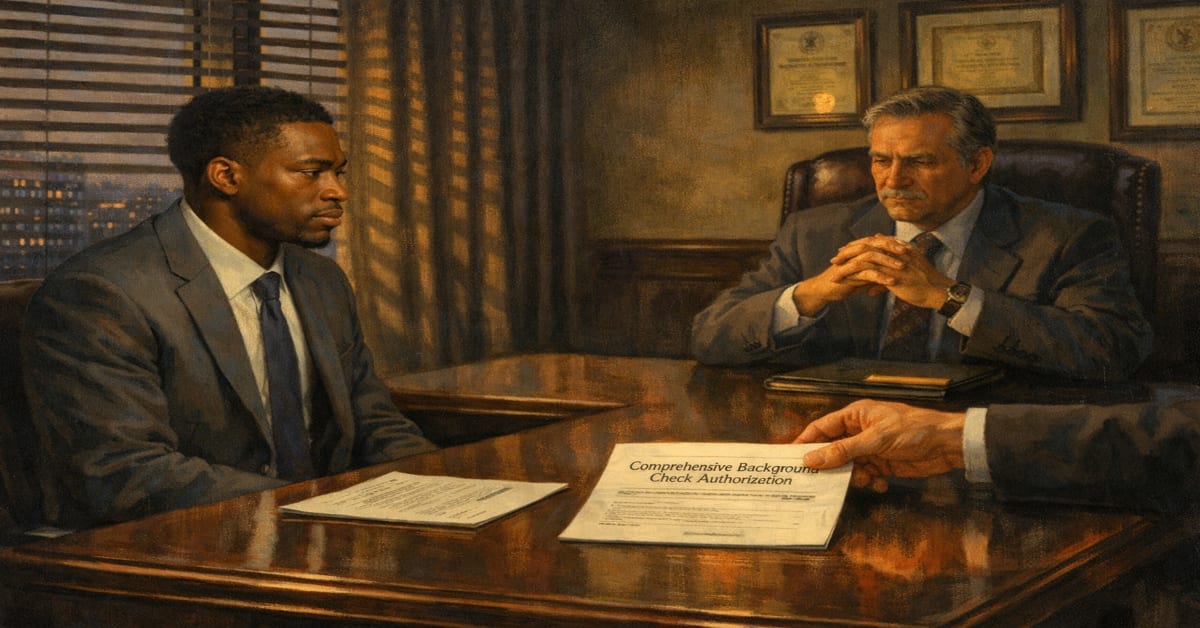
Let’s Be Real: Are Background Checks Actually Constitutional?
Some folks point to court decisions, like the U.S. Supreme Court Holds that Constitutional Privacy … ruling, as proof background checks are fine. They say the courts have consistently allowed these checks, seeing them as reasonable limits on rights. You might wonder, does that make them truly constitutional in spirit?
Are we just accepting them because the courts say so, or do we really feel they align with our foundational freedoms? This isn’t just about legality; it’s about what feels right for a free people.
My take on whether they’re unconstitutional by design or just abuse
Picture this: The government wants to know everything about you before you can do anything. That feels pretty intrusive, doesn’t it? Background checks, when they dig too deep, start to feel like they’re designed to make you prove your worthiness for basic rights.
You see, the core idea of liberty is that you don’t need permission to be free. When a system demands you open your life for scrutiny just to exercise a right, it shifts the power dynamic. It makes you ask, “Am I free, or am I just conditionally allowed to be free?”
Is a background check really constitutional when we’re talking about liberty?
Imagine wanting to buy a firearm for self-defense, a fundamental right. Suddenly, you’re subjected to a check that delays or even denies your purchase based on old information or minor infractions. This makes you question: Is my liberty truly unalienable if it can be so easily withheld?
You might feel like you’re being treated as a suspect, not a citizen. This process feels less like a safeguard and more like a hurdle, turning a right into a privilege. It challenges the very notion of personal freedom.
Your right to liberty shouldn’t be contingent on government approval. When exercising a basic freedom requires pre-screening, it sets a dangerous precedent for all your other rights. You shouldn’t have to prove your innocence to enjoy what’s inherently yours.
Why the way we do background checks might be unconstitutional in practice
Consider the sheer volume of information collected and the opaque nature of some background check systems. Errors happen, and they can have devastating consequences for your life. You might be denied a job or a right due to inaccurate data you can’t easily challenge.
Think about it: who truly oversees these systems? If the process lacks transparency and accountability, it becomes a tool that can be misused. This lack of oversight and potential for errors makes the practical application of background checks deeply concerning.
When a background check system is inefficient, riddled with errors, or lacks clear due process for appeals, it moves beyond a simple “check.” It becomes a system of control that can arbitrarily strip you of opportunities and rights. You’re left feeling powerless, subject to a flawed process with little recourse.
The Blueprint: Who’s Supposed to Be Checking Whom?
The Constitution’s design is pretty clear about checks and balances, right? It sets up a system to keep government branches from getting too powerful. But when you think about background checks, a really interesting question pops up: are these checks meant for the government, or are they being turned back on you, the citizen?
It feels like we’re seeing an inversion of the original idea. Instead of you checking government power, the government is increasingly checking your records. This shift can feel like a fundamental change to our constitutional framework.
Does the Constitution check the government or the citizens?
The Constitution’s very structure was built to restrain government power. It divides authority, creates separate branches, and lists specific powers. These mechanisms exist to prevent tyranny.
Citizens, on the other hand, are endowed with rights that pre-exist government. You are meant to be free, not to be constantly vetted by the state. This fundamental difference is key to understanding the debate.
How those checks and balances are supposed to keep us free
Our Founders understood human nature; they knew power could corrupt. They designed a system where each government branch could limit the others’ reach. This way, no single entity could become all-powerful and threaten your liberty.
This structure ensures that legislative overreach, executive abuses, or judicial activism are met with resistance. It’s designed to make sure the government always answers to a higher authority: the Constitution, and ultimately, you. You should feel secure knowing these safeguards are there.
Imagine a world without these checks; government could enact any law, enforce it however it wished, and judge you without recourse. The system prevents this by making sure different parts of the government must agree and oversee each other. It’s a constant tug-of-war, but it’s a good one, protecting your individual freedoms from an overzealous state. This intricate dance of power is meant to be a bulwark against any attempts to diminish your rights.
Honestly, who’s checking the government when they’re checking us?
This is where it gets tricky. If the government is constantly checking you – your history, your associations, your eligibility for rights – who’s providing the oversight on *their* process? Are there adequate constitutional safeguards to ensure these checks aren’t abused or expanded without limit?
When you consider the vast amount of data collected and the agencies involved, it’s fair to ask: who truly holds the power in this exchange? Does this constant scrutiny erode the very presumption of innocence that underpins our legal system? It’s a question that keeps many awake at night.
Think about it: when government agencies collect and store your personal information for background checks, there’s a real potential for mission creep or unchecked power. We trust these institutions with incredibly sensitive data, but the checks *on them* can feel less transparent. You deserve to know that your privacy and rights aren’t being quietly undermined by an ever-expanding system of government scrutiny.

What’s the Supreme Court Actually Saying? (And What Are They Hiding?)
The Supreme Court, our highest judicial authority, often shapes our understanding of constitutional limits. You might wonder, what have they really said about background checks, and what silence might be speaking volumes? We’ll look closely at their rulings, or lack thereof, to uncover the hidden truths.
You know, sometimes what isn’t said is just as important as what is. Are they silently endorsing something that goes against the Founders’ vision? It’s a question every freedom-loving American should be asking.
A quick look at the big Supreme Court background check rulings
Consider the landmark case of *District of Columbia v. Heller*. The Court affirmed an individual’s right to bear arms, a monumental victory for liberty. They also mentioned that this right isn’t unlimited, allowing for some “reasonable” regulations.
However, the Court has consistently avoided a direct ruling on the constitutionality of federal background checks. This leaves a perplexing gap.
Does the Court’s silence mean they’re okay with it?
Some folks interpret the Court’s quiet approach as a tacit approval of background checks. They might argue that if the Court hasn’t struck them down, they must be considered valid. This perspective often overlooks the potential for future challenges.
But, does silence truly equate to consent when it comes to fundamental rights? You might feel a chill knowing that the lack of a definitive ruling leaves so much unanswered and vulnerable.
Imagine your local sheriff, suddenly enforcing a “temporary” rule, claiming the Supreme Court’s silence means it’s fine. This same logic applies here. The absence of a direct ruling on federal background checks means this issue remains unsettled. It’s not an endorsement, it’s an unresolved question hanging over our Second Amendment rights.
Are these “interim” background check rules even legal?
Many background check rules are treated as temporary administrative procedures, not full-fledged laws. You might see agencies setting up “interim” guidelines that affect your rights. This raises a serious red flag about due process.
When agencies create these rules, without clear legislative backing or judicial review, it looks less like regulation and more like unaccountable government overreach.
Think about it: who gave these agencies the power to restrict your rights without direct constitutional authority? These “interim” rules often bypass the legislative process, meaning we, the people, have no say. It’s a dangerous path, allowing unelected bureaucrats to chip away at our freedoms.

Federal Power: At What Point Does It Become Domination?
You’ve seen the arguments for and against background checks. Now, consider the sheer scale of federal power these checks represent. Is the government’s reach in “vetting” citizens truly keeping us safer, or is it slowly eroding our fundamental liberties? This isn’t just about public safety; it’s about the very nature of federal authority.
Imagine a world where every aspect of your life requires federal approval. The expansion of background checks raises serious questions about where the line is drawn. When does necessary regulation morph into an unconstitutional overreach that threatens the core principles of a free society? This is the critical juncture we face.
Where does the FBI get the authority for these checks anyway?
You might wonder about the specific source of the FBI’s authority for these pervasive checks. Congress has passed legislation, such as the Brady Handgun Violence Prevention Act, creating the National Instant Criminal Background Check System (NICS). This system relies on FBI databases for its operation.
This legislative framework grants the FBI significant power to collect and maintain vast amounts of personal data. The question remains: Does this power align with the Founders’ vision of a limited federal government? Or has it expanded far beyond what was originally intended?
The gap between federal power and what the Constitution actually allows
The Constitution enumerates specific powers for the federal government. You should ask yourself if the current scope of federal background checks fits within those carefully defined boundaries. Many argue that these checks stretch the interpretation of interstate commerce and general welfare clauses.
Think about the potential for unchecked federal agencies to expand their authority through broad interpretations. This gap between enumerated power and actual practice creates a dangerous precedent. It allows for a gradual expansion of government influence into areas the Constitution never explicitly permitted.
This expansion of federal power, particularly in areas not explicitly granted by the Constitution, is a slippery slope. The Founders meticulously crafted a system of checks and balances to prevent any single branch or level of government from becoming too powerful. When federal agencies, like the FBI, operate with broad mandates that seem to exceed the Constitution’s original intent, it undermines the very foundation of our republic. This isn’t just about a single background check; it’s about the cumulative effect of federal agencies operating with ever-increasing authority, potentially without sufficient oversight or clear constitutional backing. This trend can lead to a fundamental shift in the balance of power, moving it away from individual liberty and towards centralized control.
Seriously, at what point does regulation turn into domination?
Consider the cumulative effect of constant “vetting” and “screening.” When every significant life event – from employment to exercising a constitutional right – requires federal permission, aren’t we moving towards a system of government domination? This isn’t just about ensuring public safety; it’s about who holds the ultimate power.
You have to ask yourself: Are these checks protecting your freedom, or are they subtly conditioning you to accept state control as a normal part of life? The line between necessary regulation and outright control is thin, and we must be vigilant against its erosion.
The persistent expansion of federal regulations, particularly those requiring prior approval for exercising fundamental rights, can subtly but profoundly alter the relationship between citizens and their government. When you must seek permission to engage in activities once considered inherent liberties, it redefines the very concept of freedom. This isn’t just about obeying laws; it’s about whether the government is merely regulating behavior or actually controlling access to rights. The potential for government to dictate the terms of your liberty is a serious concern, and it demands constant scrutiny to ensure that regulation never crosses the line into outright domination.
Due Process: Why Are We Assuming Everyone’s Guilty?
You might wonder, how do background checks fit into our constitutional framework? Our system is built on the idea that you’re innocent until proven guilty, right? But background checks often flip that on its head, treating you like a suspect before you’ve done anything wrong.
Consider the core principle here: a right that requires permission is no longer a right. When you must pass a check just to exercise a fundamental liberty, isn’t that a form of pre-emptive judgment? It forces you to prove your innocence to the state.
Are background checks actually admissible in a court of law?
In a court of law, evidence must meet strict standards. Background checks, especially those used for civil purposes like employment or gun ownership, usually aren’t subject to the same rigorous scrutiny as criminal evidence.
This means the information used to deny you a right might not even hold up in court. It raises serious questions about fairness and consistency. Should unverified data impact your freedom?
The scary truth about how inaccurate criminal history checks can be
Studies have shown that a significant percentage of criminal history records contain errors. Imagine having your gun rights or job prospects denied because of a mistake on a government database.
These inaccuracies aren’t just minor glitches; they can be devastating. They often include misidentified individuals, outdated information, or even records of charges that were dismissed or expunged. This means the “facts” used against you might not be facts at all.
You might find yourself fighting to correct an error that shouldn’t have been there in the first place. Think about the time, money, and emotional toll just to clear your name. It’s a system that can punish you for someone else’s mistake or a bureaucratic oversight.
Why should innocent people have to prove they’re innocent to be free?
The very notion of having to prove your innocence to exercise a right feels un-American. Our Founders envisioned a system where liberty was the default, not something granted after government approval.
This approach places an unjust burden on law-abiding citizens. It flips the constitutional design, making you accountable to the government before you’ve even had a chance to exercise your freedom. Who truly holds the power in such a system?
It’s a shift from a government that protects individual rights to one that screens and permits them. This constant need for approval can erode the very spirit of liberty, turning a fundamental right into a privilege. Shouldn’t your freedom be inherent, not conditional?
Privacy and the 4th Amendment: Can I Just Say No?
Can you legally say no to a background check?
You might wonder if you can just refuse a background check. Generally, in many contexts, you absolutely can say no. However, understand that saying no often comes with consequences.
For instance, an employer might simply not hire you. A landlord could deny your application. Your refusal could prevent you from exercising certain privileges, but it doesn’t usually lead to legal penalties.
Is it illegal to dig into someone’s past without their okay?
No, it’s not always illegal to look into someone’s past without explicit permission. Public records, for example, are generally fair game. Think about court documents or arrest records-they’re often accessible.
However, there are strict rules about how certain information can be collected and used. Laws like the Fair Credit Reporting Act (FCRA) protect your privacy regarding consumer reports. These laws mean certain types of “digging” require your consent, especially for employment or housing.
This is where the line gets fuzzy, right? While some information is public, using it for specific purposes, especially in official capacities, often requires adherence to federal and state regulations. Violating these privacy laws can lead to significant legal trouble for those doing the digging.
If your consent is “implied,” is it even consent at all?
Implied consent is a tricky concept. It suggests that by taking a specific action, you’ve agreed to something, even if you didn’t explicitly say “yes.” For example, applying for a job might imply consent for a background check.
Many argue that true consent must be clear and unambiguous. If you don’t actively agree, is it really fair to assume you’ve given permission? This raises serious questions about genuine freedom of choice.
The core of this debate hinges on whether you genuinely had a choice. If the only way to get a job or housing is to submit to a background check, is your “consent” truly voluntary, or is it coerced? This gray area can profoundly impact your constitutional rights.
Job Background Checks: Are They a Safeguard or Silent Coercion?
The real deal on background checks for getting a job
You might think job background checks are just standard practice, but they carry a heavy weight. These screenings can determine your ability to earn a living, impacting your family and future. It’s a system that fundamentally shapes your economic freedom.
Consider this: does a past mistake forever bar you from opportunity? You’re often forced to disclose personal history, giving employers immense power. This process can feel less like a safeguard and more like a permanent judgment.
Private checks vs. government-mandated screening – what’s the difference?
There’s a big difference between a private company deciding to run a check and the government requiring one. Private employers might use them for specific roles, but government mandates often cast a wider net. One feels like a business decision, the other, a decree.
Government-mandated screenings introduce a layer of state authority into your job prospects. This shift from voluntary employer choice to compulsory governmental action changes the dynamic completely. It raises questions about who truly holds the reins of your employment eligibility.
Private checks are initiated by the employer and are generally tied to the perceived risks of a specific role, often focusing on criminal history or past employment verification. Government-mandated screenings, however, are typically required by law for certain industries or positions, like those involving national security or working with vulnerable populations. These often involve more extensive checks, including federal databases, and carry the weight of state authority.
When your living depends on a check, is your freedom still voluntary?
Your ability to provide for yourself and your family is a core component of liberty. When a background check becomes the gatekeeper to that ability, the concept of “voluntary” employment feels strained. Is it truly voluntary if you can’t work without state approval?
This situation creates a dependency where your freedom to contract and earn is subject to external review. It challenges the idea that your rights are inherent, making them conditional upon passing a government-sanctioned hurdle.
When your livelihood hinges on passing a background check, your economic freedom becomes conditional. It’s a subtle but significant shift from inherent rights to a system where your ability to earn is granted only after state or employer approval. This makes the exercise of your liberty feel less voluntary and more like a required permission slip.
The Commerce Clause: Is This Just a Legal Stretch?
How buying and selling turned into a reason for surveillance
The Commerce Clause began as a way to regulate trade between states. Its original purpose was to stop states from creating tariffs that hurt other states’ economies. You might wonder, how did this foundational concept evolve into a justification for federal background checks?
This expansion of power transformed a simple economic regulatory tool into a broad instrument. Now, it arguably permits the government to monitor citizens’ activities far beyond traditional buying and selling. It’s a significant shift from its initial intent.
Are background check laws actually constitutional under commerce power?
Many argue that federal background checks, especially for firearms, fall under the Commerce Clause. They say buying and selling guns across state lines clearly constitutes interstate commerce. This perspective suggests the government has a constitutional basis to regulate these transactions.
Others question if the Founders intended such a wide-reaching interpretation. You have to ask yourself, does the act of acquiring a firearm truly become a federal issue just because it might involve a product manufactured elsewhere? This interpretation can feel like a considerable overreach.
The Supreme Court has, at times, upheld expansive interpretations of the Commerce Clause, allowing Congress to regulate activities with a “substantial effect” on interstate commerce. This broad reading has been central to validating many federal laws, including those mandating background checks. However, critics often point to cases where the Court has tried to rein in this power, suggesting an ongoing tension about its true limits. You must consider if the current application aligns with the original, more limited vision of the Founders.
Was the Commerce Clause meant to give the government a license to watch us?
Initially, the Commerce Clause aimed to prevent economic disputes and foster a unified market. Did the Framers envision it as a mechanism for federal surveillance? Many believe the answer is a resounding “no.” They saw a limited federal government.
You have to consider if allowing background checks under this clause creates a dangerous precedent. It could give the government a “license to watch” in nearly any area touching economic activity. This raises serious concerns about privacy and individual liberty.
The original intent behind the Commerce Clause focused on ensuring fair trade and preventing states from imposing protectionist barriers. It was about economic harmony, not individual scrutiny. You might ask yourself if using this clause to justify background checks fundamentally alters the balance of power, shifting it away from individual freedom and towards broader government control. This expansion certainly redefines the scope of federal authority in ways the Founders likely never imagined, especially regarding personal rights.
Stealth Amendments: How We’re Getting Used to Losing Rights
You might not realize it, but the very fabric of your freedoms is subtly shifting. We’re witnessing a quiet transformation, where what was once considered an inherent right increasingly requires government approval.
This process of normalization chips away at the foundational principles you hold dear. It’s time to ask: are we inadvertently consenting to a different constitutional reality?
How background checks are changing the Constitution through normalization
Consider how background checks have become an everyday expectation. What began as a specific measure now feels like a standard part of life, almost invisible.
This widespread acceptance, however, subtly alters the meaning of liberty. Are you comfortable with a system where your rights become conditional permissions?
What happens when laws replace liberty without a real vote?
Think about the profound impact when broad changes occur without direct, explicit consent from the people. Many background check expansions happen through administrative rules or judicial interpretations, bypassing the clear will of the electorate.
This process bypasses the legislative process, effectively rewriting constitutional norms outside of a direct vote. It raises a serious question: are you truly consenting to these shifts when you don’t even get a say?
You see, when regulations and interpretations expand, they often create new barriers to exercising established rights. This happens without the people ever directly voting on such fundamental changes. It’s a subtle but dangerous shift from liberty as an inherent right to liberty as a privilege granted by administrative decree.
Can doing something over and over actually rewrite our rights?
Imagine a right you once held unconditionally now requiring a “check” every time you want to exercise it. Repeatedly performing these checks creates a new normal, where the requirement itself becomes ingrained.
This constant repetition redefines your expectations of freedom. It makes you wonder: does frequent application of these checks eventually imply they were always constitutional?
This isn’t just about convenience; it’s about precedent. Each time a background check is performed and accepted, it reinforces the idea that such a hurdle is legitimate. Over time, this repeated action can subtly, yet powerfully, influence how you perceive your constitutional rights, making you forget their original, unfettered nature.

Who’s Really Winning Here? Follow the Power and Money
The push for widespread background checks isn’t just about safety; it’s about control. You see, when the government and big corporations gain more information about you, they gain power. This constant “checking” shifts the balance, subtly eroding your autonomy and expanding their reach into your private life.
This dynamic creates a system where your personal data becomes a commodity, used to justify ever-increasing oversight. What does it cost you in freedom when every transaction, every application, every right requires prior approval?
How the government and big corporations gain power from this
Governments collect vast amounts of your data through these checks, building extensive profiles on citizens. This information allows them to monitor and categorize you, influencing your access to rights and opportunities. They can then justify expanded databases and surveillance, citing “public safety” as the reason.
Corporations also profit immensely from this system, selling background check services and data analysis. They turn your personal history into a business, often without your full knowledge or consent, ultimately strengthening their market position and control over hiring and services.
Citizens vs. the system: who’s actually in control here?
You might feel like you’re in control, making choices about your life. Yet, every background check reminds you that your rights are increasingly conditional. This system positions you as a subject to be screened, not a sovereign individual with inherent liberties. It’s a subtle but significant shift.
This constant need for approval, for proving your innocence before exercising a right, turns the constitutional framework on its head. It makes you wonder: if the government must be checked, why are you the one constantly under scrutiny?
The system, with its layers of bureaucracy and data collection, dictates terms. You’re expected to comply, to provide information, and to await approval. This creates a psychological shift where you internalize the idea that your freedom is a privilege, not an unalienable right, and that your past can always be used against you.
Honestly, if everyone is getting checked, who do we actually trust?
When everyone, from your neighbor to your employer, is subjected to checks, it breeds a pervasive sense of distrust. You start to question the motives behind every request for information, wondering who truly benefits from this constant vetting. It creates a society where suspicion becomes the default setting.
This environment erodes the foundational trust necessary for a free society. It implies that without external verification, you cannot be trusted to exercise your rights responsibly, which is a dangerous precedent for liberty.
The constant checking creates a chilling effect, making people hesitant to fully engage in society or express themselves freely, fearing that any misstep, however minor, could resurface in a future background check. It makes you wonder if anyone is truly beyond suspicion, and if your reputation is always at the mercy of a database.
The Messy Middle Ground: Can We Ever Make This Work?
You’ve seen the strong arguments on both sides. It’s clear this isn’t a simple “yes” or “no” question. Instead, we find ourselves in a complex space where constitutional principles collide with modern challenges, leaving many wondering if a true alignment is even possible.
How do we honor both individual liberty and the government’s duty to protect? This is the core tension, isn’t it? Finding a balance that respects the Founders’ intent while addressing today’s realities feels like navigating a minefield.
The debate over “narrowly tailored” checks that actually respect rights
Many argue that if background checks are to exist, they must be “narrowly tailored.” This means they shouldn’t cast too wide a net, infringing on rights unnecessarily. The focus should be specific, not sweeping.
What does “narrowly tailored” truly mean in practice for your rights? It suggests checks should target specific, demonstrable risks, avoiding blanket presumptions of guilt for all citizens. We must ask: are current checks truly precise?
Can we fix the system with transparency and accountability?
Imagine a system where every check is transparent, showing exactly what information is accessed and why. Such radical transparency could rebuild trust. Accountability, with clear penalties for misuse, would also deter overreach.
Could knowing the precise criteria and data sources for your background check ease your concerns? When government actions are open to scrutiny, citizens can better ensure their rights aren’t quietly eroded.
This transparency isn’t just about what data is collected; it’s about the entire process. You should know who initiates the check, who sees the results, and what recourse you have if errors occur. A truly accountable system would also feature independent oversight, ensuring checks remain within their intended scope and respect your privacy.
Is the whole premise flawed, or is there a way to align with the Constitution?
Perhaps the fundamental question isn’t how to tweak background checks, but whether their very existence aligns with the Founders’ vision. Did they intend for citizens to seek permission to exercise rights?
Consider if any system requiring pre-approval for a right inherently contradicts the idea of an uninfringeable liberty. This perspective suggests that the premise itself might be at odds with the spirit of individual freedom the Constitution aimed to secure.
If we believe rights are inherent, then any system that requires you to prove your worthiness before exercising them becomes suspect. The challenge is immense: can we create checks that genuinely protect without transforming a right into a privilege, or does the very act of “checking” fundamentally alter the constitutional relationship between citizen and state?
FAQ
Q: Do Background Checks Align With the Constitution’s Intent?
A: This question sparks intense debate. Many believe background checks protect public safety, aligning with government’s duty. Others see them as eroding individual liberty and core constitutional principles. What do you think?
Q: How do supporters argue background checks are constitutional?
A: Supporters point to legislative authority for public safety, like regulating interstate commerce. They note the Supreme Court has allowed reasonable conditions on rights. They also argue checks offer due process through standardized procedures. Is protecting people not a primary government role?
Q: What are the main arguments against background checks being constitutional?
A: Critics argue checks infringe the Second Amendment, turning a right into a privilege. They suggest checks presume guilt, reversing a fundamental principle. Concerns about federal overreach and privacy violations under the Fourth Amendment are also common. Should you need permission for a right?
Q: Did the Founders envision something like background checks?
A: The Founders lived in a very different world. They feared government surveillance and centralized power. They believed in law and order, but also in individual liberty. Did they intend a government powerful enough to pre-screen liberty? Or only to punish wrongdoing?
Q: How do background checks relate to the concept of checks and balances?
A: The Constitution established checks and balances to restrain government power. A dangerous paradox arises when background checks expand. Is government increasingly checking citizens instead of citizens checking government? When does a safeguard become a threat?
Q: Why is this debate about background checks so persistent and emotional?
A: Background checks sit at the crossroads of public safety and individual liberty. Both sides claim the Constitution supports their view. Both invoke the Founders’ intent. They ask: Is a government that must be checked constitutionally justified in checking its own citizens? This tension is deeply felt.
Q: What is the ultimate question we must ask about background checks and the Constitution?
A: The Constitution was designed to restrain power, not normalize it. Do background checks align with that restraint, or do they erode it? The answer depends on whether we believe liberty is still a right, or merely a permission slip. The Constitution leaves that profound question to us.


About the author


Understanding Allodial Titles, Land Patents, and Their Legal Implications
In property rights and land ownership, the concepts of allodial titles and land patents hold significant legal weight. These terms are often used in discussions related to the protection of property rights, land ownership, and the interplay between various areas of law such as the Uniform Commercial Code, contract law, constitutional law, and statutory law. In this in-depth blog post, we will explore into the intricacies of allodial titles and land patents, exploring their definitions, legal implications, and dispelling common myths and misconceptions associated with them. Key Takeaways: Allodial Titles Explained: An allodial title represents the highest form of land ownership, granting the owner absolute and unburdened ownership of the property, free from any encumbrances, liens, or taxes imposed by external parties. Land Patents and Their Legal Implications: A land patent is a legal document issued by the government that […]

Outsmart the System: Top Legal Strategies You Need to Know
Understanding the Legal Landscape While the legal system may seem intimidating, grasping its core concepts can empower you to navigate its complexities effectively. Understanding this landscape is vital for anyone looking to outsmart the system and optimize their legal strategies. Whether you’re seeking legal hacks for small businesses or tips on how to use legal loopholes to your advantage, recognizing the different legal frameworks at play can be crucial in making informed decisions. Overview of Legal Systems An understanding of the various legal systems is pivotal for recognizing your rights and obligations. Legal frameworks can vary significantly from one country to another, with common systems including civil law, common law, and religious law. Each system has its own structure, offering unique legal strategies and challenges. For example, in a common law system, previous judicial decisions can influence future cases, allowing […]

Ilataza Ban Yasharahla EL’s Public Records Request for Elyria Board of Education
24-0001492: Ilataza Ban Yasharahla EL's Public Records Request for Elyria Board of Education. All Rights Expressly Reserved and Retained. https://nationalnoticerecord.com/elyria-boe-members-required-to-follow-rulings https://nationalnoticerecord.com/is-elyria-school-board-bound-by-ohio-courts https://nationalnoticerecord.com/understanding-the-oath-of-office-legal-obligations-and-consequences

Ohio Legalizing Recreation Marijuana Use May Hurt Dispensaries in Monroe, Michigan
In recent years, the movement to legalize marijuana for adult recreational use has gained significant momentum across the United States. Ohio, a state long synonymous with conservative values, has also embraced this shift in public opinion. With the passing of Ohio Issue 2 and the Ohio Home Grow Bill, the state has joined the ranks of those allowing the recreational use of marijuana. This blog post will delve into the pros and cons of Ohio's legalization, as well as the potential implications for marijuana dispensaries in Monroe, Michigan, which previously benefited from Ohio buyers crossing state lines. https://www.youtube.com/watch?v=0KRzqZ8dUwc Pros of Ohio's Recreational Marijuana Legalization 1. Economic Boost: Legalizing recreational marijuana in Ohio has the potential to generate substantial economic benefits for the state. The marijuana industry has proven to be a lucrative market, with tax revenue and job creation being […]

The Etymology of “Bey” EXPOSED
TURN UP YOUR VOLUME & PRESS PLAY Have you ever wondered what the true origin and meaning of "Bey" is? We've been told that it means "Governor", "Law Enforcer", Chief, etc. But, what if that's incorrect? What if we've been using the "title", "Bey", incorrectly? FILL OUT THE FORM TO GET STARTED First Name: Last Name: Phone Number: Email: I agree to receive email updates and promotions. Submit

Are You A “Colored Person”?
Tune in as we dissect the term "person of color", exposing how its PURPOSELY steeped in plausibility, DECEPTION, and used as a weapon.

We’ve Been FORCED to Make Some Changes
Due to receiving so many tasks that our work has become more tedious, we've been forced to make some changes at National Notice Record.

Gas Go Express Food Mart Unjust Enrichment Via Debit Card Surcharge Fees
https://www.youtube.com/watch?v=eJknhtE9JEI In this video, I talk about a consumer experience I had while shopping at Gas Go Express Food Mart Gas Station, located at 237 Lake Avenue, Elyria, Ohio. On November 24, 2021, I made a purchase for 4 taxable items at the location. Each item was $0.99 per. With taxes, it came up to $4.26. As I got ready to place my debit card into the card reader, the Gas Go Express Food Mart clerk immediately added a $.50 debit card surcharge fee. As a common practice, some merchants/stores add a surcharge to your total purchase amount when you spend less than $5 or $10 when using a credit/debit card to process the payment. Being a merchant myself, I know that Master Card, Visa, Discover, and some of the other financial institutions have a strict policy that states that […]

Is Your Signature a Trap? The UCC Truth
Just a quick question for you: Are you sure about what your signature really means? Your signature, under the Uniform Commercial Code (UCC), isn't just an autograph. It can be a legal trap, binding you to terms you never fully understood. Learn to protect yourself from these hidden dangers in commercial transactions. Seriously, is your signature actually a legal trap or just a silent endorsement? You probably think your signature is just a formality, right? But under the Uniform Commercial Code (UCC), it's much more. Your signature acts as a binding endorsement, fueling the financial system, often at your personal expense. Why we're conditioned to sign stuff without looking and the bad news that follows Ever feel rushed to sign? This conditioning makes you enter "contracts of adhesion." You're then seen as a "debtor" or "representative", not a living person […]

The Merchant’s Bible: Decoding UCC Article 1
Many entrepreneurs overlook the bedrock of commercial law. You must understand UCC Article 1. This article governs your business transactions, from agreements to definitions. Ignoring these foundational provisions can lead to costly disputes. Master this crucial legal framework to protect your interests and achieve success. Key Takeaways: * UCC Article 1 forms the foundational rules of US commercial law. It defines core concepts, distinguishing an "agreement" from a binding "contract."* Merchants must recognize that UCC Article 1 rules often supersede common law in business dealings. This shift dictates different legal obligations and expectations.* Certain mandates cannot be disclaimed, including good faith, diligence, reasonableness, and care. These duties always govern commercial transactions.* Past actions, such as course of dealing and course of performance, can redefine written contracts. Documenting reservations of rights protects legal leverage.* UCC Article 1 is adapting to the […]

Hidden in Plain Sight: The UCC 1-308 Shield
You probably feel something is off. You sign documents daily, but do you truly understand their hidden implications? This little-known shield can protect your inherent rights. It's a secret many miss, but you don't have to be one of them. Key Takeaways: You know, there's this growing buzz online about reclaiming personal sovereignty, and a lot of folks are looking into how the Uniform Commercial Code fits into that. It feels like we're all just waking up to how much of our lives are governed by unspoken rules. * Signing documents "without prejudice UCC 1-308" isn't just legal jargon; it's a profound declaration. This simple act communicates you are performing an action, but you aren't consenting to hidden contract terms. * Many everyday agreements, like your driver's license application, are "adhesion contracts." You typically accept their terms completely, or you […]

UCC Secrets: The Code That Owns Your Daily Life
UCC is everywhere, shaping your financial reality. You might not realize it, but the Uniform Commercial Code governs your daily life. This code dictates how your assets are handled, often without your explicit understanding. You need to know these secrets. Key Takeaways: You know, most folks think they're playing by "Civil Law" rules, but the truth is, the Uniform Commercial Code (UCC) is the real silent puppet master pulling the strings of daily life. It's not just some obscure legal jargon; it's the very foundation of our commercial world. That "Corporate Personhood" stuff in the UCC isn't just for big companies; it's about the "Strawman" created with your birth certificate. This legal fiction might be the key to understanding why your identity feels like a perfected security interest. UCC 1-308, that "without prejudice" phrase, it's not a magic spell, but […]

What If Traffic Tickets Are Just Municipal Profit Schemes?
The Great Harvesting: Why Traffic Tickets are Municipal Profit Schemes I. What If Traffic Tickets Were Never About Safety? What if everything you’ve been told about traffic tickets is wrong? What if traffic enforcement has quietly shifted from “public safety” to public revenue? This shift transforms ordinary citizens into municipal ATMs. You are not being “protected” on the road. Instead, you are being harvested. This is happening algorithmically, administratively, and unconstitutionally. For decades, Americans accepted traffic tickets as routine. But here is the question almost no one asks. Are traffic tickets unconstitutional? Is this a cleverly disguised municipal profit scheme? These municipal corporations depend on fines. They need them like businesses depend on sales. There is a massive rise in public distrust today. People ask: “Are traffic tickets unconstitutional revenue streams?” This is an explosive search trend across all major […]

Service Providers Are Hiding Fees-and It’s NOT Legal
Many of you have likely felt the sting of unexpected charges on your bills. You signed a contract, yet the total is higher than expected. This isn't just annoying; it's often illegal. You deserve to know every cost upfront. Are you tired of feeling cheated by hidden fees? Key Takeaways: * Does that bill make your stomach drop? Hidden fees are a sneaky strategy, not an accident, making your monthly charges mysteriously higher than expected.* Are they playing fair with your money? Companies often use vague terms like “service fees” or “administrative costs” to mask charges you never agreed to.* Is this even legal? No, concealing fees violates consumer protection laws, making it deceptive and unfair to you.* Why did they hide it from you? Businesses exploit emotions, getting you to commit before revealing the costly details in fine print.* […]
Related
Is Your Signature a Trap? The UCC Truth
Just a quick question for you: Are you sure about what your signature really means? Your signature, under the Uniform Commercial Code (UCC), isn't just an autograph. It can be a legal trap, binding you to terms you never fully understood. Learn to protect yourself from these hidden dangers in commercial transactions. Seriously, is your signature actually a legal trap or just a silent endorsement? You probably think your signature is just a formality, right? But under the Uniform Commercial Code (UCC), it's much more. Your signature acts as a binding endorsement, fueling the financial system, often at your personal expense. Why we're conditioned to sign stuff without looking and the bad news that follows Ever feel rushed to sign? This conditioning makes you enter "contracts of adhesion." You're then seen as a "debtor" or "representative", not a living person […]
The Merchant’s Bible: Decoding UCC Article 1
Many entrepreneurs overlook the bedrock of commercial law. You must understand UCC Article 1. This article governs your business transactions, from agreements to definitions. Ignoring these foundational provisions can lead to costly disputes. Master this crucial legal framework to protect your interests and achieve success. Key Takeaways: * UCC Article 1 forms the foundational rules of US commercial law. It defines core concepts, distinguishing an "agreement" from a binding "contract."* Merchants must recognize that UCC Article 1 rules often supersede common law in business dealings. This shift dictates different legal obligations and expectations.* Certain mandates cannot be disclaimed, including good faith, diligence, reasonableness, and care. These duties always govern commercial transactions.* Past actions, such as course of dealing and course of performance, can redefine written contracts. Documenting reservations of rights protects legal leverage.* UCC Article 1 is adapting to the […]
Hidden in Plain Sight: The UCC 1-308 Shield
You probably feel something is off. You sign documents daily, but do you truly understand their hidden implications? This little-known shield can protect your inherent rights. It's a secret many miss, but you don't have to be one of them. Key Takeaways: You know, there's this growing buzz online about reclaiming personal sovereignty, and a lot of folks are looking into how the Uniform Commercial Code fits into that. It feels like we're all just waking up to how much of our lives are governed by unspoken rules. * Signing documents "without prejudice UCC 1-308" isn't just legal jargon; it's a profound declaration. This simple act communicates you are performing an action, but you aren't consenting to hidden contract terms. * Many everyday agreements, like your driver's license application, are "adhesion contracts." You typically accept their terms completely, or you […]
UCC Secrets: The Code That Owns Your Daily Life
UCC is everywhere, shaping your financial reality. You might not realize it, but the Uniform Commercial Code governs your daily life. This code dictates how your assets are handled, often without your explicit understanding. You need to know these secrets. Key Takeaways: You know, most folks think they're playing by "Civil Law" rules, but the truth is, the Uniform Commercial Code (UCC) is the real silent puppet master pulling the strings of daily life. It's not just some obscure legal jargon; it's the very foundation of our commercial world. That "Corporate Personhood" stuff in the UCC isn't just for big companies; it's about the "Strawman" created with your birth certificate. This legal fiction might be the key to understanding why your identity feels like a perfected security interest. UCC 1-308, that "without prejudice" phrase, it's not a magic spell, but […]
What If Traffic Tickets Are Just Municipal Profit Schemes?
The Great Harvesting: Why Traffic Tickets are Municipal Profit Schemes I. What If Traffic Tickets Were Never About Safety? What if everything you’ve been told about traffic tickets is wrong? What if traffic enforcement has quietly shifted from “public safety” to public revenue? This shift transforms ordinary citizens into municipal ATMs. You are not being “protected” on the road. Instead, you are being harvested. This is happening algorithmically, administratively, and unconstitutionally. For decades, Americans accepted traffic tickets as routine. But here is the question almost no one asks. Are traffic tickets unconstitutional? Is this a cleverly disguised municipal profit scheme? These municipal corporations depend on fines. They need them like businesses depend on sales. There is a massive rise in public distrust today. People ask: “Are traffic tickets unconstitutional revenue streams?” This is an explosive search trend across all major […]
Service Providers Are Hiding Fees-and It’s NOT Legal
Many of you have likely felt the sting of unexpected charges on your bills. You signed a contract, yet the total is higher than expected. This isn't just annoying; it's often illegal. You deserve to know every cost upfront. Are you tired of feeling cheated by hidden fees? Key Takeaways: * Does that bill make your stomach drop? Hidden fees are a sneaky strategy, not an accident, making your monthly charges mysteriously higher than expected.* Are they playing fair with your money? Companies often use vague terms like “service fees” or “administrative costs” to mask charges you never agreed to.* Is this even legal? No, concealing fees violates consumer protection laws, making it deceptive and unfair to you.* Why did they hide it from you? Businesses exploit emotions, getting you to commit before revealing the costly details in fine print.* […]