


As you walk down the street, surveillance drones may be watching your every move, capturing your image, and collecting your data without your knowledge or consent. The rapid advancement of drone technology has sparked a heated debate: are drones necessary for security, or do they pose a significant threat to your privacy? In this detailed exploration, we research into the legal issues with drone surveillance, uncovering the controversies, legal battles, and the impact on your right to privacy. Get ready to enter the Drone Wars, where the battle for your privacy has only just begun.

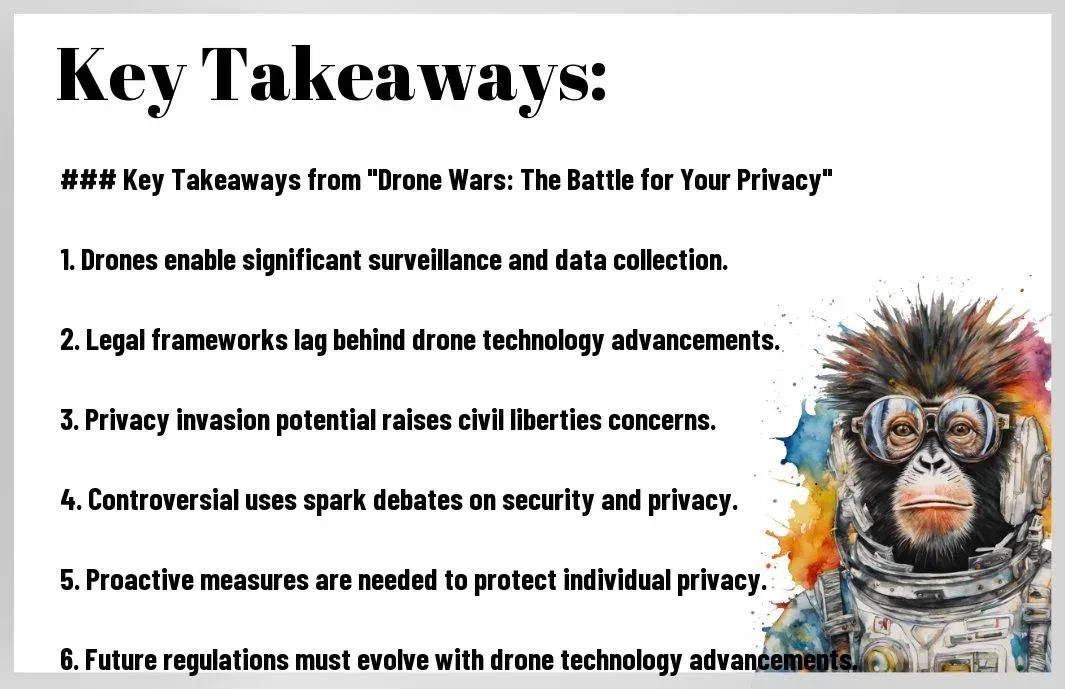
Key Takeaways:
- Privacy Invasion: The use of drones for surveillance raises significant concerns about privacy invasion and the legal implications of their use, highlighting the need for stricter regulations and enforcement.
- Legal Framework: The legal framework surrounding drone surveillance is still evolving, and many privacy concerns remain unresolved, emphasizing the importance of updating existing laws and developing new regulations.
- Balancing Security and Privacy: The controversy surrounding drone surveillance requires a balanced approach that addresses both security and privacy concerns, ensuring that drones are used responsibly and individual rights are protected.
Drone Wars: The Battle for Your Privacy
How drone surveillance is reshaping our world and privacy rights
Across the globe, drones are increasingly being used for surveillance, transforming the way we think about privacy and security. With their ability to capture high-resolution images and videos, drones have become a powerful tool for law enforcement, private companies, and even individuals. While this technology offers numerous benefits, such as improved security and efficiency, it also raises serious concerns about privacy invasion and the potential misuse of personal data.
In the hands of law enforcement, drones can be used to monitor protests, track suspects, and gather evidence. However, this increased surveillance capacity also erodes your privacy rights, allowing authorities to gather intimate details about your personal life without your knowledge or consent. As drones become more prevalent, it’s necessary to consider the implications of this technology on your privacy and civil liberties.
The growing concerns of privacy invasion and the need for drone regulations
About 70% of Americans believe that the use of drones for surveillance poses a significant threat to their privacy. This concern is not unfounded, as drones equipped with facial recognition technology, thermal imaging, and real-time data transmission can capture highly sensitive information about individuals. The lack of robust regulations and enforcement mechanisms only exacerbates these concerns, leaving your privacy vulnerable to abuse.
Even more alarming is the fact that drones can be used to gather data on entire communities, targeting specific racial, ethnic, or religious groups. This raises serious questions about discrimination, bias, and the potential misuse of surveillance technology. As the use of drones for surveillance continues to grow, it’s necessary to establish clear regulations and safeguards to protect your privacy and prevent abuse.
Even as drones offer benefits such as improved security and efficiency, the risks associated with privacy invasion and misuse cannot be ignored. It’s crucial to strike a balance between security and privacy, ensuring that drones are used responsibly and with respect for individual rights. By understanding the risks and advocating for effective regulations, you can help protect your privacy in the era of drone surveillance.
The Rise of Drone Surveillance
One of the most significant factors contributing to the growth of drone surveillance is the increasing availability and affordability of drone technology. This has led to a surge in the adoption of drones by law enforcement agencies, private companies, and individuals, who are using them for a wide range of purposes, from monitoring borders to tracking package deliveries.
Unmanned aerial vehicles (UAVs) and their increasing role in surveillance technology
Beside their recreational use, drones have become an vital tool in surveillance and data collection, raising significant concerns about privacy invasion and the legal implications of their use. Law enforcement agencies, in particular, have been quick to adopt drone technology, using it to monitor crowds, track suspects, and gather evidence.
As drone technology continues to evolve, we can expect to see even more sophisticated UAVs capable of capturing high-resolution images and videos, detecting thermal signatures, and transmitting data in real-time. These advancements have significant implications for surveillance and privacy, and it is vital to consider the potential risks and consequences of their use.
The rapid evolution and accessibility of drone technology
Accessibility to drone technology has increased significantly in recent years, with prices dropping dramatically and the range of available models expanding. This has led to a proliferation of drones in various industries, from aerial photography to package delivery.
Also, the development of autonomous drone systems has enabled drones to operate independently, without human intervention, further increasing their potential for surveillance and data collection.
The rapid evolution of drone technology has also led to concerns about the potential misuse of drones, particularly in terms of privacy invasion and data collection. As drones become more sophisticated and widespread, it is vital to consider the potential risks and consequences of their use.
Benefits versus risks: How drone privacy issues are becoming more prevalent
Among the many benefits of drone technology, including increased efficiency and cost savings, there are also significant risks, particularly when it comes to privacy. The use of drones for surveillance raises important questions about privacy rights and the potential for abuse.
Consequently, it is vital to weigh the benefits of drone technology against the potential risks and consequences, particularly in terms of privacy. This requires a nuanced understanding of the legal and ethical implications of drone surveillance and a commitment to developing effective regulations and safeguards to protect individual privacy.
Legal Framework and Regulations
For a comprehensive understanding of the legal landscape surrounding drone surveillance, it is crucial to research into the existing laws and regulations governing their use. The United States has enacted various laws to address the use of drones and protect privacy rights, but the legal framework is still evolving, and many privacy concerns remain unresolved.
The legal framework for drone surveillance is complex, with multiple agencies and laws involved. At the federal level, the Federal Aviation Administration (FAA) is responsible for regulating drone operations, while the Federal Trade Commission (FTC) oversees privacy concerns. Additionally, state and local governments have their own laws and regulations governing drone use.
Understanding the current U.S. drone laws and privacy protection measures
Between the lines of the existing laws and regulations, there are gaps and ambiguities that need to be addressed to ensure adequate privacy protection. The Privacy Act of 1974 and the Fourth Amendment to the U.S. Constitution provide some safeguards against privacy invasion, but these laws were enacted before the widespread use of drones.
Moreover, the FAA’s rules on drone operations focus primarily on safety concerns, with limited provisions for privacy protection. The agency’s regulations require drone operators to avoid flying over people and to keep their drones in sight, but these rules do not explicitly address privacy concerns.
Key regulations from the FAA and their implications for drone operations
After the FAA’s rules on drone operations came into effect, there was a significant shift in the way drones are used and regulated. The agency’s regulations require drone operators to register their drones, obtain certifications, and comply with operational restrictions.
Laws governing drone operations are constantly evolving, and the FAA regularly updates its regulations to address emerging concerns. For instance, the agency has introduced rules for flying drones over people and at night, which have significant implications for privacy protection.
The FAA’s regulations have far-reaching implications for drone operations, including those used for surveillance. By understanding these regulations, individuals and organizations can ensure compliance and minimize the risk of privacy invasion.
The debate over the adequacy of existing drone legislation and the call for updated drone privacy laws
Around the country, there is a growing concern about the inadequacy of existing drone legislation to protect privacy rights. Many argue that the current laws and regulations are insufficient to address the unique challenges posed by drone surveillance.
This debate has sparked a call for updated drone privacy laws that can effectively balance security concerns with individual privacy rights. Proponents of stronger privacy laws argue that the current regulatory framework is too permissive, allowing for widespread privacy invasion and abuse.
The debate highlights the need for a comprehensive approach to drone regulation, one that considers the rapidly evolving technology and its implications for privacy protection. By updating existing laws and regulations, policymakers can ensure that drones are used responsibly and that individual privacy rights are safeguarded.
Privacy Invasion and Civil Liberties
Once again, the rise of drone surveillance has sparked intense debate about the potential invasion of privacy and the impact on civil liberties. As drones equipped with advanced surveillance technologies become more widespread, concerns about privacy rights and civil liberties continue to grow.
The use of drones for surveillance raises questions about the limits of government power and the protection of individual privacy. With drones capable of capturing detailed images and videos, often without the subject’s knowledge or consent, the risk of privacy invasion is significant. This has led to widespread concerns about the violation of privacy rights and civil liberties, as well as the potential for abuse and misuse of drone surveillance.
Drone privacy invasion: Real-life examples and privacy concerns
Behind the scenes, drones have been used to capture intimate moments, monitor private activities, and even track individuals without their knowledge or consent. For instance, in 2019, a drone surveillance program was launched in Baltimore, Maryland, sparking concerns about privacy invasion and racial bias. Similarly, in 2020, a drone privacy lawsuit was filed against the city of Chicago, alleging that the city’s drone surveillance program violated citizens’ Fourth Amendment rights.
In both cases, the use of drones for surveillance raised serious concerns about privacy invasion and the potential for abuse. As drones become more prevalent, it is vital to address these concerns and ensure that privacy rights are protected.
The impact on civil liberties and the violation of privacy rights
Among the most significant concerns about drone surveillance is its potential impact on civil liberties. The use of drones for surveillance can lead to a chilling effect, where individuals feel reluctant to exercise their rights due to the fear of being monitored. This can have a profound impact on free speech, freedom of assembly, and other fundamental rights.
At the heart of this issue is the question of whether the government has the right to monitor citizens without their knowledge or consent. As drones become more sophisticated, the risk of privacy invasion and civil liberties violations increases, highlighting the need for robust regulations and oversight mechanisms.
Furthermore, the use of drones for surveillance can also lead to discrimination and profiling, particularly in communities of color. This can result in a disproportionate impact on marginalized groups, exacerbating existing social and economic inequalities.
How drone surveillance can lead to privacy encroachment and what it means for individuals
Above all, the use of drones for surveillance raises significant concerns about privacy encroachment and the potential for abuse. As drones become more widespread, individuals may feel that their privacy is being constantly monitored, leading to a sense of vigilance fatigue.
Examples of drone surveillance include the use of facial recognition technology, thermal imaging, and real-time data transmission. These technologies can be used to monitor and track individuals, often without their knowledge or consent. This can lead to a significant invasion of privacy, as well as potential legal disputes and violations of civil liberties.
In brief, the use of drones for surveillance raises significant concerns about privacy invasion, civil liberties, and the potential for abuse. As drones become more prevalent, it is vital to address these concerns and ensure that privacy rights are protected.
Surveillance Technology and Its Impact
Many surveillance technologies have been integrated into drones, enabling them to collect vast amounts of data on individuals. These technologies include facial recognition, thermal imaging, and real-time data transmission, which can be used for various purposes, from law enforcement to commercial applications.
The widespread use of these technologies also increases the risk of privacy encroachment and misuse, leading to potential legal disputes. As drones become more prevalent, it is imperative to understand the implications of these surveillance technologies on your privacy.
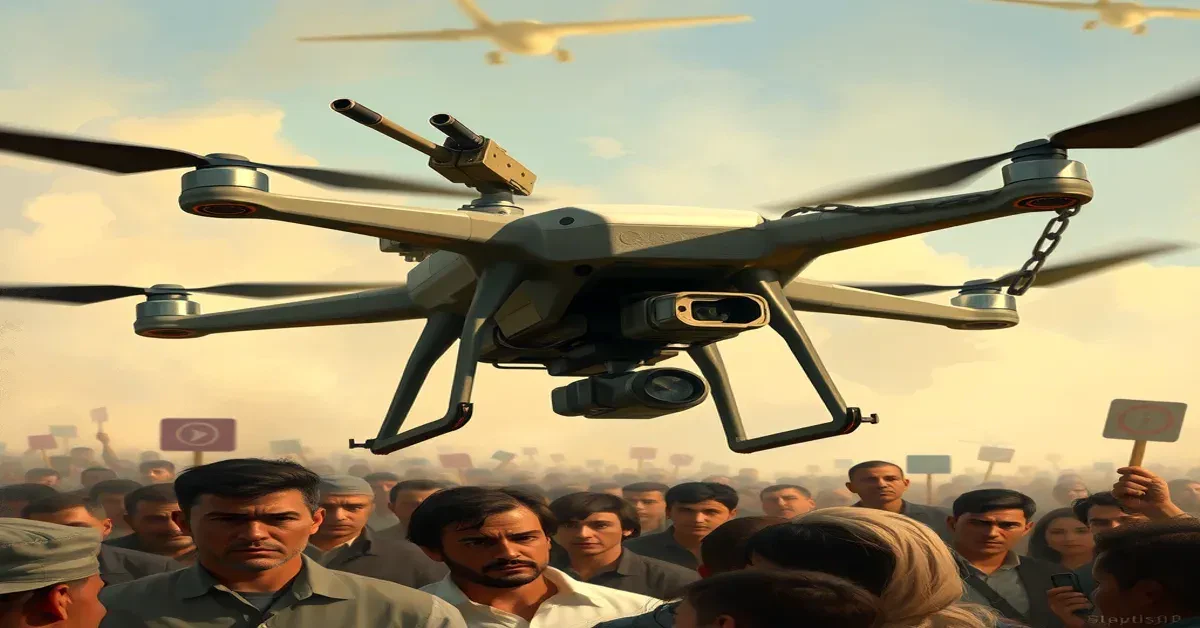
Advances in surveillance technology used by drones, including facial recognition and thermal imaging
Between the development of advanced sensors and the miniaturization of surveillance equipment, drones have become increasingly capable of collecting sensitive information. Facial recognition technology, in particular, has raised concerns about the potential for mass surveillance and the erosion of privacy rights.
Additionally, thermal imaging capabilities allow drones to detect heat signatures, enabling them to track individuals even in complete darkness or through obstacles. These advances have significant implications for your privacy, as they can be used to gather intimate details about your daily life.
The potential for misuse and privacy violations
Violations of privacy are a significant concern when it comes to drone surveillance. With the ability to capture high-resolution images and videos, drones can easily infringe upon your privacy, especially in private spaces such as homes or backyards.
Another issue is the potential for drones to be used for malicious purposes, such as stalking or harassment. The lack of effective regulations and enforcement mechanisms exacerbates these risks, leaving individuals vulnerable to privacy violations.
In addition, the use of drones for surveillance can lead to a chilling effect, where individuals feel hesitant to exercise their rights or engage in lawful activities due to the fear of being monitored. This can have a profound impact on your freedom and autonomy.
Legal implications of high-resolution cameras and real-time data transmission on personal privacy
Before the widespread adoption of drone surveillance, it is imperative to consider the legal implications of these technologies on your privacy. The use of high-resolution cameras and real-time data transmission raises questions about the boundaries of privacy and the limits of surveillance.
Indeed, the legal framework surrounding drone surveillance is still evolving, and it is crucial to establish clear guidelines and regulations to protect individual privacy. This includes addressing issues such as data storage, sharing, and retention, as well as ensuring that individuals have recourse in cases of privacy violations.
Legal Battles and Court Cases
Despite the increasing use of drones for surveillance, the legal framework surrounding their use is still evolving. As a result, several high-profile legal battles have emerged, challenging the legality of drone surveillance and its impact on individual privacy.
High-profile legal battles over drone surveillance and their outcomes
Around the world, courts have been grappling with the complex issues surrounding drone surveillance. One notable case is Boggs v. Meridian Public Schools, where a Mississippi school district used drones to monitor students, sparking concerns about privacy invasion. The court ultimately ruled in favor of the students, highlighting the need for clearer guidelines on drone use in educational settings.
In another significant case, Hughes v. Boston Police Department, a journalist challenged the police department’s use of drones for surveillance, citing First Amendment violations. The court ruled in favor of the journalist, emphasizing the importance of protecting freedom of the press and individual privacy.
How courts are addressing the conflict between security needs and privacy protection
High-profile court cases have brought attention to the delicate balance between security needs and privacy protection. Courts are now tasked with navigating this complex issue, weighing the benefits of drone surveillance against the potential risks to individual privacy.
Battles over drone surveillance have led to a re-examination of existing laws and regulations. For instance, the Fourth Amendment, which protects against unreasonable searches and seizures, has been invoked in several drone-related cases. Courts have had to consider whether drone surveillance constitutes a search, and if so, whether it requires a warrant.

The significance of these court cases for future drone regulation
Before we can fully realize the benefits of drone technology, we must address the legal and ethical implications of their use. These high-profile court cases have significant implications for the future of drone regulation, as they shape the legal landscape and inform policy decisions.
In fact, the outcomes of these cases will likely influence the development of more comprehensive regulations, ensuring that drones are used responsibly and with respect for individual privacy. As the legal framework evolves, it is vital to prioritize privacy protection and ensure that drones are not used to exploit or infringe upon individual rights.
Protecting Privacy from Drones
Now, as the use of drones for surveillance continues to grow, it is crucial to explore ways to protect your privacy. This includes implementing privacy safeguards and developing technologies to counter unauthorized drone surveillance. Individuals can also take proactive steps to secure their privacy, such as using anti-drone systems and advocating for stronger privacy laws.
The role of public awareness and advocacy cannot be overstated in the fight to protect privacy from drones. By understanding the legal issues with drone surveillance and advocating for effective regulations, you can ensure that drones are used responsibly and that your privacy remains safeguarded.
Strategies for privacy protection against drone surveillance
Surveilling drones can be a significant threat to your privacy, but there are strategies to protect yourself. One approach is to use physical barriers, such as privacy screens or anti-drone nets, to prevent drones from flying over your property. Another strategy is to implement drone detection systems, which can alert you to the presence of a drone in your vicinity.
You can also take legal action to protect your privacy. For example, you can file a complaint with the Federal Aviation Administration (FAA) if you believe a drone is being used to invade your privacy. Additionally, you can advocate for stronger privacy laws and regulations to limit the use of drones for surveillance.
Technological safeguards to counter unauthorized drone surveillance
Before the widespread adoption of drone surveillance, it is crucial to develop technological safeguards to counter unauthorized drone surveillance. One approach is to use signal jamming technology, which can disrupt the communication between a drone and its operator. Another strategy is to implement drone tracking systems, which can identify and locate drones in real-time.
Further, researchers are exploring the use of anti-drone lasers and drone-catching drones to neutralize unauthorized drones. These technological safeguards can help prevent privacy invasions and ensure that drones are used responsibly.
Further, the development of drone detection apps can also play a crucial role in countering unauthorized drone surveillance. These apps can alert users to the presence of a drone in their vicinity, allowing them to take action to protect their privacy.
Individual actions: Steps to secure your privacy from drones and advocacy for stronger privacy rights
With the increasing use of drones, it is crucial to take individual action to secure your privacy. One step is to educate yourself about the laws and regulations surrounding drone surveillance. You can also take proactive measures to protect your privacy, such as using anti-drone systems and advocating for stronger privacy laws.
You can also join advocacy groups and participate in public debates to raise awareness about the importance of privacy protection in the era of drone surveillance. By taking individual action and advocating for stronger privacy rights, you can help ensure that your privacy remains safeguarded.
Safeguards such as privacy impact assessments and data protection laws can also play a crucial role in protecting your privacy from drones. By implementing these safeguards, you can ensure that your personal data is protected from unauthorized collection and use.

Controversial Use of Drones
After years of debate, the use of drones for surveillance remains a highly contentious issue, with proponents arguing that they are necessary for security and opponents raising concerns about privacy violations.
The controversy surrounding drone surveillance continues to drive the need for a balanced approach that addresses both security and privacy concerns. As the use of drones becomes more widespread, it is necessary to examine the arguments for and against their use in surveillance and the impact on individual privacy.
The Controversial Aspects of Drone Usage in Both Security and Commercial Sectors
Any examination of drone surveillance must consider the benefits and drawbacks of their use in both security and commercial sectors. On one hand, drones offer a range of benefits, including enhanced security, improved efficiency, and valuable data collection. On the other hand, their use raises significant concerns about privacy invasion, civil liberties, and the potential for abuse.
In the security sector, drones are often used for surveillance, border patrol, and search and rescue missions. While these applications can be beneficial, they also raise concerns about the violation of privacy rights and the potential for misuse. In the commercial sector, drones are used for a range of purposes, including data collection, marketing, and delivery. However, these uses also raise concerns about privacy and the potential for unauthorized surveillance.
Arguments for and Against the Use of Drones for Surveillance
Any discussion of drone surveillance must consider the arguments for and against their use. Proponents argue that drones are necessary for enhancing security, improving efficiency, and providing valuable data. They also argue that drones can be used to monitor and prevent criminal activity, such as drug trafficking and terrorism.
On the other hand, opponents argue that drones pose a significant threat to individual privacy and civil liberties. They raise concerns about the potential for abuse, misuse, and unauthorized surveillance. Opponents also argue that the use of drones for surveillance is often unregulated and lacking in transparency, making it difficult to hold those responsible accountable.
Consequently, the debate surrounding drone surveillance is complex and multifaceted, with valid arguments on both sides. It is necessary to carefully consider the benefits and drawbacks of drone surveillance and to develop a balanced approach that addresses both security and privacy concerns.
The Public Debate on Drone Privacy and the Need for Balanced Drone Regulations
Along with the controversy surrounding drone surveillance, there is a growing public debate about the need for balanced drone regulations. Many argue that the current regulatory framework is inadequate and lacking in transparency, making it difficult to ensure that drones are used responsibly.
The public debate surrounding drone privacy is characterized by a sense of urgency and concern. Many individuals are worried about the potential for privacy invasion and civil liberties violations, and are calling for stricter regulations and greater transparency.
The debate surrounding drone privacy and the need for balanced regulations is complex and multifaceted, with valid arguments on both sides. It is necessary to carefully consider the benefits and drawbacks of drone surveillance and to develop a balanced approach that addresses both security and privacy concerns.
The Future of Drone Regulation
Once again, the rapid evolution of drone technology has outpaced the legal and regulatory framework, leaving a significant gap in privacy protection. As drone surveillance becomes increasingly prevalent, it is necessary to anticipate the legal challenges that lie ahead and develop a comprehensive approach to address them.
The future of drone regulation will require a multifaceted strategy that considers technological advancements, legal challenges, and the protection of individual rights. This includes updating existing laws, developing new regulations, and ensuring robust enforcement mechanisms to prevent privacy violations and misuse.
Anticipating future legal challenges in drone surveillance
Any attempt to regulate drone surveillance must consider the potential legal challenges that will arise from their increased use. One of the primary concerns is the lack of transparency in drone operations, which can lead to abuse and privacy violations. Another challenge is the difficulty in tracking and identifying drone operators, making it hard to hold them accountable for any misuse.
Furthermore, the blurred lines between public and private spaces will continue to pose a significant challenge in drone regulation. As drones become more ubiquitous, it will be necessary to define the boundaries of private property and public spaces to prevent unauthorized surveillance.

Evolution of the legal and regulatory landscape to address drone privacy concerns
Future regulations must prioritize privacy protection and ensure that drone operators are held accountable for any violations. This can be achieved by implementing stricter data protection laws and establishing clear guidelines for drone operations in public and private spaces.
Further, the development of industry standards for drone manufacturing and operation can help to ensure that privacy safeguards are built into the design and deployment of drones. This can include features such as data encryption and anonymous mode to protect individual privacy.
Further, the evolution of the legal and regulatory landscape must also consider the role of international cooperation in addressing the global nature of drone surveillance. This includes collaborating with other countries to develop common standards and guidelines for drone regulation, ensuring that individual privacy is protected across borders.
The role of international collaboration in global drone regulation
About 100 countries have already deployed drones for various purposes, highlighting the need for international collaboration in regulating their use. International cooperation can help to establish common standards for drone design, operation, and data protection, ensuring that individual privacy is protected globally.
In fact, several international organizations, such as the International Civil Aviation Organization (ICAO), are already working to develop global standards for drone regulation. These efforts must be supported and expanded to ensure that individual privacy is protected in the face of increasing drone surveillance.
Technological Advancements and Their Impact
Now, as drone technology continues to evolve, it’s imperative to examine the impact of these advancements on surveillance capabilities and privacy concerns.
The impact of emerging technologies on drone surveillance capabilities
Above all, the integration of emerging technologies like artificial intelligence (AI), machine learning, and the Internet of Things (IoT) has significantly enhanced drone surveillance capabilities. AI-powered drones can now detect and track targets with increased accuracy, while machine learning algorithms enable them to analyze vast amounts of data in real-time. Additionally, the connection of drones to the IoT network allows for seamless data transmission and analysis, further amplifying their surveillance potential.
Furthermore, advancements in sensor technology have equipped drones with high-resolution cameras, thermal imaging capabilities, and other sophisticated sensors. These enhancements enable drones to capture detailed images and videos, even in low-light conditions, making them increasingly effective for surveillance purposes.
The need for adaptive regulations to address new drone technologies
Against this backdrop of rapid technological progress, it’s crucial to recognize the need for adaptive regulations that address the emerging privacy concerns. As drones become more sophisticated, the risk of privacy invasion and misuse increases, highlighting the importance of robust regulatory frameworks to safeguard individual rights.
Also, the lack of clear guidelines and standards for drone development and deployment has created a regulatory vacuum, allowing for potential abuses of power and privacy violations. It’s imperative to establish and enforce strict regulations that balance the benefits of drone technology with the need to protect individual privacy.
In particular, regulations must address issues like data protection, surveillance protocols, and accountability mechanisms to prevent misuse and ensure transparency. By adapting regulations to the rapidly evolving drone landscape, we can mitigate the risks associated with these technologies and protect our privacy.
Balancing innovation with privacy protection in the drone industry
Alongside the development of new drone technologies, it’s vital to prioritize privacy protection and ensure that innovation doesn’t come at the expense of individual rights. This requires a collaborative effort from industry stakeholders, policymakers, and civil society organizations to establish clear guidelines and standards for responsible drone development and deployment.
With the proliferation of drones, it’s imperative to strike a balance between the benefits of innovation and the need to protect privacy. By doing so, we can harness the potential of drone technology while safeguarding our fundamental rights and freedoms.
With the increasing use of drones, it’s crucial to explore ways to protect privacy, including implementing privacy safeguards and developing technologies to counter unauthorized drone surveillance. Individuals can also take proactive steps to secure their privacy, such as using anti-drone systems and advocating for stronger privacy laws.
Privacy Concerns in Specific Industries
Unlike traditional surveillance methods, drones have the potential to penetrate deep into private spaces, capturing intimate moments and sensitive information. As drone technology becomes more pervasive, various industries are leveraging its capabilities, raising unique privacy concerns that warrant attention.
The intersection of drones and industry-specific applications has given rise to a complex web of privacy implications. From law enforcement to commercial sectors, the use of drones is redefining the boundaries of privacy, forcing us to reexamine our understanding of personal space and data protection.
Drone surveillance in law enforcement and its implications for privacy
Between the lines of public safety and individual privacy, law enforcement agencies are increasingly relying on drones to gather evidence, monitor crowds, and track suspects. While these efforts may enhance security, they also raise constitutional concerns about unreasonable searches and seizures, as well as the potential for bias in policing.
The use of drones in law enforcement has sparked intense debates about the need for transparent policies and stringent regulations. As drones become more sophisticated, the risk of mass surveillance and data misuse grows, underscoring the importance of balancing security with privacy protections.
The use of drones in commercial sectors and potential privacy risks
Drones are revolutionizing various commercial sectors, from real estate and construction to agriculture and delivery services. As companies harness drone technology to improve efficiency and reduce costs, they are also collecting vast amounts of data, including sensitive information about individuals and their properties.
Risks associated with commercial drone use include data breaches, unauthorized surveillance, and invasion of privacy. Without robust regulations, companies may exploit drone-collected data for targeted advertising, price discrimination, or other purposes that infringe upon individual privacy.
Risks of commercial drone use extend beyond data privacy to physical safety, as drone accidents and collisions can result in property damage and personal injury. As the commercial drone industry continues to expand, it is crucial to establish clear guidelines and enforceable standards to mitigate these risks.

Drone surveillance in public spaces and its impact on individual privacy
For many, the idea of being constantly monitored in public spaces is unsettling, yet drones are increasingly being used to surveil public events, city centers, and tourist attractions. This trend raises concerns about the erosion of privacy in public and the potential for social control.
This phenomenon has significant implications for free speech and assembly, as individuals may feel discouraged from expressing themselves or participating in public gatherings due to the presence of drones. Furthermore, the use of drones in public spaces can lead to discrimination and targeting of specific groups, exacerbating existing social inequalities.
International Cooperation and Drone Regulation
All eyes are on the international community as it grapples with the complexities of drone regulation. With the global nature of drone surveillance, it is important to establish cooperative frameworks that address the privacy concerns of citizens worldwide.
The need for global cooperation in addressing drone privacy concerns
Addressing the privacy implications of drone surveillance requires a concerted effort from governments, international organizations, and civil society. The lack of uniform regulations and standards has created a legal vacuum, making it challenging to protect individual privacy rights. As drone technology continues to advance, the need for global cooperation becomes increasingly urgent.
You, as a concerned citizen, must recognize the importance of international cooperation in establishing robust regulations that safeguard your privacy. The absence of a unified approach will only exacerbate the risks associated with drone surveillance, leaving your personal data vulnerable to exploitation.
International agreements and treaties related to drone surveillance
Surveillance technologies, including drones, have sparked intense debate about the need for international agreements and treaties that protect individual privacy. The development of such agreements is crucial in establishing a framework for responsible drone use and ensuring that privacy rights are respected across borders.
Indeed, the European Union’s General Data Protection Regulation (GDPR) serves as a model for robust data protection laws, emphasizing the importance of transparency, consent, and accountability in the collection and processing of personal data.
Challenges and opportunities in establishing global drone regulations
Drone regulation poses significant challenges, including the need to balance security concerns with individual privacy rights. However, this also presents opportunities for innovation and cooperation, as governments and international organizations work together to develop effective regulations that address the complexities of drone surveillance.
Related to this, the International Civil Aviation Organization (ICAO) has taken steps to develop global standards for drone operations, focusing on safety, security, and environmental concerns. While these efforts are commendable, more needs to be done to address the privacy implications of drone surveillance.
Advocating for Change
Keep in mind that the battle for your privacy is not a solitary effort. It requires collective action, awareness, and advocacy to bring about meaningful change. As you navigate the complexities of drone surveillance, it is imperative to recognize the importance of public awareness and education on drone privacy issues.
The importance of public awareness and education on drone privacy issues
Behind the scenes, a lack of understanding about drone surveillance and its implications can lead to complacency, further eroding your privacy rights. It is vital to educate yourself and others about the risks associated with drone surveillance, including facial recognition, thermal imaging, and real-time data transmission. By doing so, you can empower individuals to take control of their privacy and demand stronger regulations.
Raising awareness about drone privacy issues can also facilitate a broader discussion about the ethical implications of surveillance technology. This, in turn, can lead to a more informed public that is better equipped to make decisions about the use of drones and the protection of their privacy.
Strategies for advocating for stronger drone regulations and privacy protection
Across the globe, advocacy groups, civil society organizations, and individuals are working tirelessly to promote drone privacy rights. To join this effort, you can employ various strategies, such as participating in public consultations, engaging with lawmakers, and supporting organizations that champion privacy protection.
Consequently, it is imperative to stay informed about ongoing legal battles, court cases, and regulatory developments related to drone surveillance. By doing so, you can identify opportunities to contribute to the debate and push for stronger privacy protections.
The role of civil society organizations in promoting drone privacy rights
One of the most effective ways to advocate for change is through civil society organizations, which have the resources, expertise, and influence to drive policy reforms. These organizations can mobilize public support, conduct research, and engage with lawmakers to promote drone privacy rights.
Due to their independence and commitment to protecting individual rights, civil society organizations are well-positioned to hold governments and corporations accountable for their actions. By supporting these organizations, you can amplify your voice and contribute to a broader movement for privacy protection.
To wrap up
Hence, as you navigate the complexities of drone surveillance, it becomes evident that the battle for your privacy is far from over. Drone Wars have brought to the forefront the urgent need for a balanced approach that reconciles security concerns with the protection of individual rights. With drones increasingly being used for surveillance, the risk of privacy invasion and civil liberties violations looms large. It is imperative that you, as a concerned citizen, stay informed about the legal framework and regulations governing drone use, and advocate for stricter regulations and enforcement to safeguard your privacy.
In the face of emerging surveillance technology, it is crucial that you take proactive steps to secure your privacy. This includes supporting anti-drone systems and advocating for stronger privacy laws. The future of drone regulation depends on your awareness and activism. By understanding the controversial use of drones and the legal battles surrounding their use, you can contribute to shaping a regulatory landscape that prioritizes individual rights and privacy. Ultimately, the battle for your privacy is a collective responsibility, and it is up to you to ensure that drones are used responsibly and that your privacy remains protected.
FAQ
Q: What are the main concerns surrounding drone surveillance and privacy?
A: The primary concerns are privacy invasion, civil liberties violations, and the potential for misuse of surveillance technology. Drones equipped with high-resolution cameras and other surveillance technologies can capture detailed images and videos without the subject’s knowledge or consent, raising serious concerns about the violation of privacy rights and civil liberties.
Q: What laws and regulations are in place to address drone surveillance and privacy?
A: The U.S. has enacted various laws, including the FAA’s rules on drone operations, to ensure drone safety and limit their use in certain areas. However, the legal framework is still evolving, and many privacy concerns remain unresolved. Stricter regulations and enforcement are needed to protect individual privacy.
Q: How can individuals protect their privacy from drone surveillance?
A: Individuals can take proactive steps to secure their privacy by using anti-drone systems, advocating for stronger privacy laws, and being aware of their surroundings. Additionally, implementing privacy safeguards and developing technologies to counter unauthorized drone surveillance can help protect privacy.
Q: What are the implications of drone surveillance on civil liberties and human rights?
A: Drone surveillance has significant implications for civil liberties and human rights. The widespread use of surveillance technology increases the risk of privacy encroachment and misuse, leading to potential legal disputes and violations of individual rights. It is imperative to balance security concerns with the protection of individual privacy and civil liberties.
Q: What does the future hold for drone regulation and privacy protection?
A: The future of drone regulation will require a comprehensive approach that considers technological advancements, legal challenges, and the protection of individual rights. This includes updating existing laws, developing new regulations, and ensuring robust enforcement mechanisms. International collaboration is also imperative to address the global nature of drone surveillance and its impact on privacy.


About the author


Understanding Allodial Titles, Land Patents, and Their Legal Implications
In property rights and land ownership, the concepts of allodial titles and land patents hold significant legal weight. These terms are often used in discussions related to the protection of property rights, land ownership, and the interplay between various areas of law such as the Uniform Commercial Code, contract law, constitutional law, and statutory law. In this in-depth blog post, we will explore into the intricacies of allodial titles and land patents, exploring their definitions, legal implications, and dispelling common myths and misconceptions associated with them. Key Takeaways: Allodial Titles Explained: An allodial title represents the highest form of land ownership, granting the owner absolute and unburdened ownership of the property, free from any encumbrances, liens, or taxes imposed by external parties. Land Patents and Their Legal Implications: A land patent is a legal document issued by the government that […]

Outsmart the System: Top Legal Strategies You Need to Know
Understanding the Legal Landscape While the legal system may seem intimidating, grasping its core concepts can empower you to navigate its complexities effectively. Understanding this landscape is vital for anyone looking to outsmart the system and optimize their legal strategies. Whether you’re seeking legal hacks for small businesses or tips on how to use legal loopholes to your advantage, recognizing the different legal frameworks at play can be crucial in making informed decisions. Overview of Legal Systems An understanding of the various legal systems is pivotal for recognizing your rights and obligations. Legal frameworks can vary significantly from one country to another, with common systems including civil law, common law, and religious law. Each system has its own structure, offering unique legal strategies and challenges. For example, in a common law system, previous judicial decisions can influence future cases, allowing […]

Ilataza Ban Yasharahla EL’s Public Records Request for Elyria Board of Education
24-0001492: Ilataza Ban Yasharahla EL's Public Records Request for Elyria Board of Education. All Rights Expressly Reserved and Retained. https://nationalnoticerecord.com/elyria-boe-members-required-to-follow-rulings https://nationalnoticerecord.com/is-elyria-school-board-bound-by-ohio-courts https://nationalnoticerecord.com/understanding-the-oath-of-office-legal-obligations-and-consequences

Ohio Legalizing Recreation Marijuana Use May Hurt Dispensaries in Monroe, Michigan
In recent years, the movement to legalize marijuana for adult recreational use has gained significant momentum across the United States. Ohio, a state long synonymous with conservative values, has also embraced this shift in public opinion. With the passing of Ohio Issue 2 and the Ohio Home Grow Bill, the state has joined the ranks of those allowing the recreational use of marijuana. This blog post will delve into the pros and cons of Ohio's legalization, as well as the potential implications for marijuana dispensaries in Monroe, Michigan, which previously benefited from Ohio buyers crossing state lines. https://www.youtube.com/watch?v=0KRzqZ8dUwc Pros of Ohio's Recreational Marijuana Legalization 1. Economic Boost: Legalizing recreational marijuana in Ohio has the potential to generate substantial economic benefits for the state. The marijuana industry has proven to be a lucrative market, with tax revenue and job creation being […]

The Etymology of “Bey” EXPOSED
TURN UP YOUR VOLUME & PRESS PLAY Have you ever wondered what the true origin and meaning of "Bey" is? We've been told that it means "Governor", "Law Enforcer", Chief, etc. But, what if that's incorrect? What if we've been using the "title", "Bey", incorrectly? FILL OUT THE FORM TO GET STARTED First Name: Last Name: Phone Number: Email: I agree to receive email updates and promotions. Submit
Are You A “Colored Person”?
Tune in as we dissect the term "person of color", exposing how its PURPOSELY steeped in plausibility, DECEPTION, and used as a weapon.

We’ve Been FORCED to Make Some Changes
Due to receiving so many tasks that our work has become more tedious, we've been forced to make some changes at National Notice Record.

Gas Go Express Food Mart Unjust Enrichment Via Debit Card Surcharge Fees
https://www.youtube.com/watch?v=eJknhtE9JEI In this video, I talk about a consumer experience I had while shopping at Gas Go Express Food Mart Gas Station, located at 237 Lake Avenue, Elyria, Ohio. On November 24, 2021, I made a purchase for 4 taxable items at the location. Each item was $0.99 per. With taxes, it came up to $4.26. As I got ready to place my debit card into the card reader, the Gas Go Express Food Mart clerk immediately added a $.50 debit card surcharge fee. As a common practice, some merchants/stores add a surcharge to your total purchase amount when you spend less than $5 or $10 when using a credit/debit card to process the payment. Being a merchant myself, I know that Master Card, Visa, Discover, and some of the other financial institutions have a strict policy that states that […]

Is Your Signature a Trap? The UCC Truth
Just a quick question for you: Are you sure about what your signature really means? Your signature, under the Uniform Commercial Code (UCC), isn't just an autograph. It can be a legal trap, binding you to terms you never fully understood. Learn to protect yourself from these hidden dangers in commercial transactions. Seriously, is your signature actually a legal trap or just a silent endorsement? You probably think your signature is just a formality, right? But under the Uniform Commercial Code (UCC), it's much more. Your signature acts as a binding endorsement, fueling the financial system, often at your personal expense. Why we're conditioned to sign stuff without looking and the bad news that follows Ever feel rushed to sign? This conditioning makes you enter "contracts of adhesion." You're then seen as a "debtor" or "representative", not a living person […]

The Merchant’s Bible: Decoding UCC Article 1
Many entrepreneurs overlook the bedrock of commercial law. You must understand UCC Article 1. This article governs your business transactions, from agreements to definitions. Ignoring these foundational provisions can lead to costly disputes. Master this crucial legal framework to protect your interests and achieve success. Key Takeaways: * UCC Article 1 forms the foundational rules of US commercial law. It defines core concepts, distinguishing an "agreement" from a binding "contract."* Merchants must recognize that UCC Article 1 rules often supersede common law in business dealings. This shift dictates different legal obligations and expectations.* Certain mandates cannot be disclaimed, including good faith, diligence, reasonableness, and care. These duties always govern commercial transactions.* Past actions, such as course of dealing and course of performance, can redefine written contracts. Documenting reservations of rights protects legal leverage.* UCC Article 1 is adapting to the […]

Hidden in Plain Sight: The UCC 1-308 Shield
You probably feel something is off. You sign documents daily, but do you truly understand their hidden implications? This little-known shield can protect your inherent rights. It's a secret many miss, but you don't have to be one of them. Key Takeaways: You know, there's this growing buzz online about reclaiming personal sovereignty, and a lot of folks are looking into how the Uniform Commercial Code fits into that. It feels like we're all just waking up to how much of our lives are governed by unspoken rules. * Signing documents "without prejudice UCC 1-308" isn't just legal jargon; it's a profound declaration. This simple act communicates you are performing an action, but you aren't consenting to hidden contract terms. * Many everyday agreements, like your driver's license application, are "adhesion contracts." You typically accept their terms completely, or you […]

UCC Secrets: The Code That Owns Your Daily Life
UCC is everywhere, shaping your financial reality. You might not realize it, but the Uniform Commercial Code governs your daily life. This code dictates how your assets are handled, often without your explicit understanding. You need to know these secrets. Key Takeaways: You know, most folks think they're playing by "Civil Law" rules, but the truth is, the Uniform Commercial Code (UCC) is the real silent puppet master pulling the strings of daily life. It's not just some obscure legal jargon; it's the very foundation of our commercial world. That "Corporate Personhood" stuff in the UCC isn't just for big companies; it's about the "Strawman" created with your birth certificate. This legal fiction might be the key to understanding why your identity feels like a perfected security interest. UCC 1-308, that "without prejudice" phrase, it's not a magic spell, but […]

What If Traffic Tickets Are Just Municipal Profit Schemes?
The Great Harvesting: Why Traffic Tickets are Municipal Profit Schemes I. What If Traffic Tickets Were Never About Safety? What if everything you’ve been told about traffic tickets is wrong? What if traffic enforcement has quietly shifted from “public safety” to public revenue? This shift transforms ordinary citizens into municipal ATMs. You are not being “protected” on the road. Instead, you are being harvested. This is happening algorithmically, administratively, and unconstitutionally. For decades, Americans accepted traffic tickets as routine. But here is the question almost no one asks. Are traffic tickets unconstitutional? Is this a cleverly disguised municipal profit scheme? These municipal corporations depend on fines. They need them like businesses depend on sales. There is a massive rise in public distrust today. People ask: “Are traffic tickets unconstitutional revenue streams?” This is an explosive search trend across all major […]

Service Providers Are Hiding Fees-and It’s NOT Legal
Many of you have likely felt the sting of unexpected charges on your bills. You signed a contract, yet the total is higher than expected. This isn't just annoying; it's often illegal. You deserve to know every cost upfront. Are you tired of feeling cheated by hidden fees? Key Takeaways: * Does that bill make your stomach drop? Hidden fees are a sneaky strategy, not an accident, making your monthly charges mysteriously higher than expected.* Are they playing fair with your money? Companies often use vague terms like “service fees” or “administrative costs” to mask charges you never agreed to.* Is this even legal? No, concealing fees violates consumer protection laws, making it deceptive and unfair to you.* Why did they hide it from you? Businesses exploit emotions, getting you to commit before revealing the costly details in fine print.* […]
Related
Is Your Signature a Trap? The UCC Truth
Just a quick question for you: Are you sure about what your signature really means? Your signature, under the Uniform Commercial Code (UCC), isn't just an autograph. It can be a legal trap, binding you to terms you never fully understood. Learn to protect yourself from these hidden dangers in commercial transactions. Seriously, is your signature actually a legal trap or just a silent endorsement? You probably think your signature is just a formality, right? But under the Uniform Commercial Code (UCC), it's much more. Your signature acts as a binding endorsement, fueling the financial system, often at your personal expense. Why we're conditioned to sign stuff without looking and the bad news that follows Ever feel rushed to sign? This conditioning makes you enter "contracts of adhesion." You're then seen as a "debtor" or "representative", not a living person […]
The Merchant’s Bible: Decoding UCC Article 1
Many entrepreneurs overlook the bedrock of commercial law. You must understand UCC Article 1. This article governs your business transactions, from agreements to definitions. Ignoring these foundational provisions can lead to costly disputes. Master this crucial legal framework to protect your interests and achieve success. Key Takeaways: * UCC Article 1 forms the foundational rules of US commercial law. It defines core concepts, distinguishing an "agreement" from a binding "contract."* Merchants must recognize that UCC Article 1 rules often supersede common law in business dealings. This shift dictates different legal obligations and expectations.* Certain mandates cannot be disclaimed, including good faith, diligence, reasonableness, and care. These duties always govern commercial transactions.* Past actions, such as course of dealing and course of performance, can redefine written contracts. Documenting reservations of rights protects legal leverage.* UCC Article 1 is adapting to the […]
Hidden in Plain Sight: The UCC 1-308 Shield
You probably feel something is off. You sign documents daily, but do you truly understand their hidden implications? This little-known shield can protect your inherent rights. It's a secret many miss, but you don't have to be one of them. Key Takeaways: You know, there's this growing buzz online about reclaiming personal sovereignty, and a lot of folks are looking into how the Uniform Commercial Code fits into that. It feels like we're all just waking up to how much of our lives are governed by unspoken rules. * Signing documents "without prejudice UCC 1-308" isn't just legal jargon; it's a profound declaration. This simple act communicates you are performing an action, but you aren't consenting to hidden contract terms. * Many everyday agreements, like your driver's license application, are "adhesion contracts." You typically accept their terms completely, or you […]
UCC Secrets: The Code That Owns Your Daily Life
UCC is everywhere, shaping your financial reality. You might not realize it, but the Uniform Commercial Code governs your daily life. This code dictates how your assets are handled, often without your explicit understanding. You need to know these secrets. Key Takeaways: You know, most folks think they're playing by "Civil Law" rules, but the truth is, the Uniform Commercial Code (UCC) is the real silent puppet master pulling the strings of daily life. It's not just some obscure legal jargon; it's the very foundation of our commercial world. That "Corporate Personhood" stuff in the UCC isn't just for big companies; it's about the "Strawman" created with your birth certificate. This legal fiction might be the key to understanding why your identity feels like a perfected security interest. UCC 1-308, that "without prejudice" phrase, it's not a magic spell, but […]
What If Traffic Tickets Are Just Municipal Profit Schemes?
The Great Harvesting: Why Traffic Tickets are Municipal Profit Schemes I. What If Traffic Tickets Were Never About Safety? What if everything you’ve been told about traffic tickets is wrong? What if traffic enforcement has quietly shifted from “public safety” to public revenue? This shift transforms ordinary citizens into municipal ATMs. You are not being “protected” on the road. Instead, you are being harvested. This is happening algorithmically, administratively, and unconstitutionally. For decades, Americans accepted traffic tickets as routine. But here is the question almost no one asks. Are traffic tickets unconstitutional? Is this a cleverly disguised municipal profit scheme? These municipal corporations depend on fines. They need them like businesses depend on sales. There is a massive rise in public distrust today. People ask: “Are traffic tickets unconstitutional revenue streams?” This is an explosive search trend across all major […]
Service Providers Are Hiding Fees-and It’s NOT Legal
Many of you have likely felt the sting of unexpected charges on your bills. You signed a contract, yet the total is higher than expected. This isn't just annoying; it's often illegal. You deserve to know every cost upfront. Are you tired of feeling cheated by hidden fees? Key Takeaways: * Does that bill make your stomach drop? Hidden fees are a sneaky strategy, not an accident, making your monthly charges mysteriously higher than expected.* Are they playing fair with your money? Companies often use vague terms like “service fees” or “administrative costs” to mask charges you never agreed to.* Is this even legal? No, concealing fees violates consumer protection laws, making it deceptive and unfair to you.* Why did they hide it from you? Businesses exploit emotions, getting you to commit before revealing the costly details in fine print.* […]