
In the shadowy corridors of the legal system lies a program shrouded in mystery and intrigue: the Witness Protection Program (WITSEC). This clandestine initiative, often depicted in movies and TV shows, is a **lifeline** for those who risk everything to testify against dangerous criminals. But beyond the Hollywood dramatization, what does witness protection truly entail? How does it operate, and what are the legal intricacies that govern this secretive world? Let’s research into the hidden facets of witness protection, unraveling its complexities and exploring its profound impact on the justice system. **You** are about to enter a world where **secrecy** and **sacrifice** are the norm, where the stakes are incredibly high, and the pursuit of justice hangs in the balance.
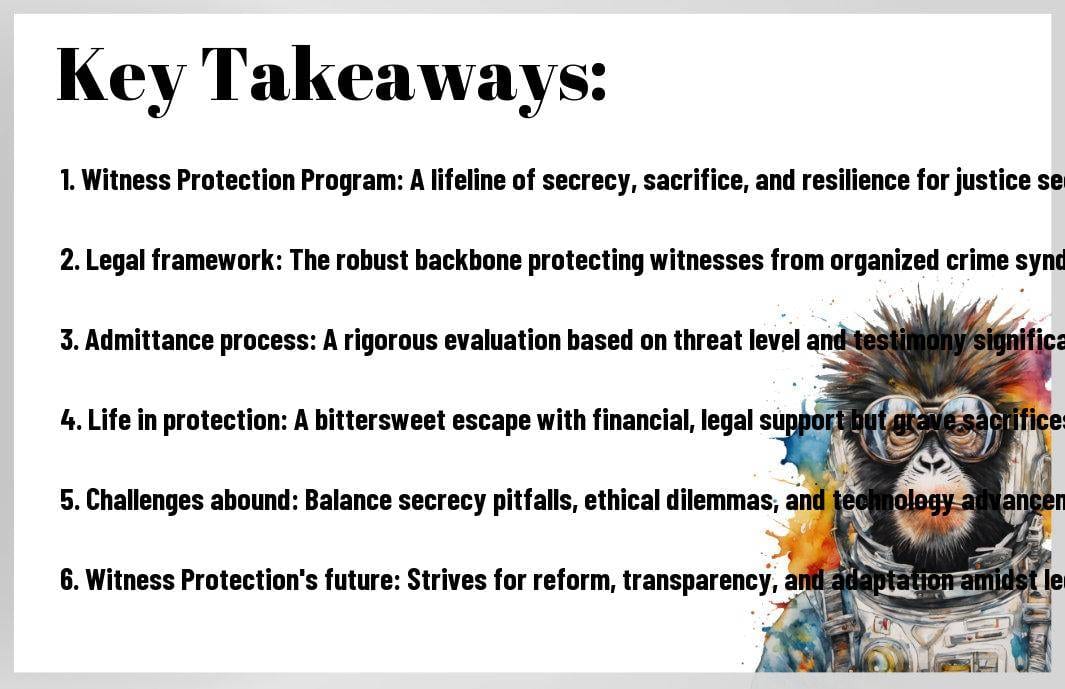
Key Takeaways:
- The Witness Protection Program (WITSEC) was established in the 1970s to combat organized crime, providing a safe haven for witnesses willing to testify against dangerous criminals.
- The legal framework of witness protection is governed by the Witness Security Reform Act of 1984, outlining procedures, criteria for admission, and rights of protected individuals.
- Admission criteria are stringent, considering factors such as the witness’s criminal background, case significance, and potential threat to their life.
- Life in witness protection involves immense sacrifices, including severing ties with the past, adopting new identities, and relocating to undisclosed locations, which can take a profound psychological toll.
- Legal rights and protections granted to witnesses include new Social Security numbers, financial assistance, housing support, 24/7 security, and legal counsel.
- The program faces challenges and controversies, including concerns about secrecy, abuses of power, and the psychological impact on participants and their families.
- Technology plays a crucial role in witness protection, with law enforcement agencies employing digital forensics, cybersecurity measures, and sophisticated tracking systems to safeguard witnesses.
These key takeaways provide a glimpse into the complex and secretive world of witness protection, highlighting the legal framework, admission criteria, and challenges faced by participants, as well as the crucial role of technology in safeguarding witnesses.
Hooks: Unveiling the Intrigue of Witness Protection
The Witness Protection Program, commonly referred to as WITSEC, is a mysterious entity that has captivated the imagination of the general public. Its secretive nature, coupled with the high-stakes drama often portrayed in movies and television shows, has created an aura of intrigue around this clandestine initiative.
The Allure of Secrecy
For decades, WITSEC has operated in the shadows, protecting witnesses who risk everything to testify against dangerous criminals. The program’s secrecy is its greatest strength, allowing it to safeguard participants from retaliation and ensure their anonymity. But this veil of secrecy also sparks curiosity, leaving many wondering what lies beneath the surface of this enigmatic program.
The Importance of Witness Protection in the Justice System
Captivating stories of witnesses who have bravely testified against notorious criminals often overshadow the crucial role WITSEC plays in the justice system. Understanding the significance of witness protection is crucial to appreciating its impact on the legal landscape.
Witness protection is the unsung hero of the justice system, providing a safe haven for those who dare to speak out against criminal enterprises. Without WITSEC, many high-profile cases would never reach trial, and dangerous criminals would remain free to wreak havoc on society. The program’s importance cannot be overstated, as it empowers witnesses to come forward, knowing they will be protected from harm. This lifeline has led to the conviction of countless criminals, bringing justice to victims and their families.
Unveiling the Complexities of Witness Protection: A Legal Insights Overview
While the Witness Protection Program (WITSEC) is often romanticized in popular culture, the reality is far more nuanced and complex. As we probe into the world of witness protection, you’ll discover a intricate web of legal frameworks, psychological evaluations, and technological innovations that govern this secretive program.
Scope of the Article
Covering the intricacies of WITSEC, this article will explore the legal framework, admission criteria, life under protection, and the challenges faced by witnesses. We’ll also examine the role of technology, real-life success stories, and the future of witness protection, providing a comprehensive understanding of this vital tool in the fight against crime.
What to Expect from the Legal Insights
What lies ahead is an in-depth exploration of the legal intricacies that govern witness protection. You’ll gain insight into the Witness Security Reform Act of 1984, the U.S. Marshals Service‘s role in safeguarding witnesses, and the criteria for entering witness protection. We’ll also examine the legal rights of protected witnesses, including financial support, housing assistance, and psychological counseling.
What you’ll discover is a world where witness protection eligibility is determined by the potential threat to the witness’s life and the significance of their testimony. You’ll learn about the psychological impact of witness protection, where participants must grapple with the loss of their former lives and the constant fear of being discovered. By the end of this journey, you’ll have a deeper understanding of the challenges faced by witnesses in protection and the future reforms necessary to ensure the program’s continued success.
The Genesis of Witness Protection
After decades of organized crime syndicates holding sway over the streets, the Witness Protection Program (WITSEC) was born out of necessity in the 1970s. This clandestine initiative, often depicted in movies and TV shows, is a lifeline for those who risk everything to testify against dangerous criminals.
Historical Context: The rise of organized crime in the 1970s and the need for a protective program
One of the most significant factors contributing to the creation of WITSEC was the alarming rise of organized crime in the 1970s. **Criminal enterprises**, such as the **Mafia** and **drug cartels**, wielded immense power and influence, making it increasingly difficult for witnesses to come forward without fearing for their lives.
Creation of WITSEC: The role of the U.S. Marshals Service and the development of the program
Creation of the Witness Protection Program marked a pivotal moment in the fight against crime. The **U.S. Marshals Service**, tasked with safeguarding witnesses, developed WITSEC to provide a secure environment for those whose testimonies were crucial in dismantling criminal enterprises.
This program was designed to offer a **beacon of hope** for witnesses willing to come forward, providing them with a new identity, relocation, and protection from potential threats. The **Witness Security Reform Act of 1984** codified the program’s procedures, outlining the responsibilities of the U.S. Marshals Service and the Department of Justice.
Impact on Crime Fighting: How WITSEC has been pivotal in dismantling criminal enterprises
Protective measures like WITSEC have been instrumental in taking down **notorious crime figures** and dismantling their organizations. By providing a safe haven for witnesses, law enforcement agencies have been able to gather crucial evidence and build cases against powerful criminals.
Plus, the success of WITSEC has led to a significant increase in witness cooperation, enabling authorities to **disrupt and dismantle** criminal networks that once seemed invincible. The program’s impact on crime fighting cannot be overstated, as it has given law enforcement a powerful tool to combat organized crime.

The Legal Framework
Once again, the Witness Protection Program’s effectiveness relies heavily on its legal foundation. A robust framework governs the program, ensuring the safety and anonymity of participants.
Legislation: The Witness Security Reform Act of 1984 and its significance
The Witness Security Reform Act of 1984 codified the program’s procedures, outlining the responsibilities of the U.S. Marshals Service and the Department of Justice. This legislation provides the legal backbone for WITSEC, detailing the criteria for admission, the scope of protection, and the rights of protected individuals.
Responsibilities: Roles of the U.S. Marshals Service and the Department of Justice
Legislation dictates that the U.S. Marshals Service and the Department of Justice share critical responsibilities in witness protection. The U.S. Marshals Service is tasked with providing 24/7 security, while the Department of Justice oversees the program’s administration and ensures that witnesses receive necessary support.
A key aspect of their collaboration involves assessing potential threats and implementing countermeasures to ensure the witness’s safety. This joint effort is crucial in maintaining the program’s integrity and effectiveness.
Legal Procedures: Detailed explanation of the legal processes involved in witness protection
Service providers, such as the U.S. Marshals Service, work closely with prosecutors and law enforcement agencies to facilitate the witness protection process. This involves evaluating the witness’s eligibility, conducting thorough security assessments, and providing legal counsel to navigate the complexities of their new identities.
Plus, the legal procedures in place ensure that witnesses are granted new Social Security numbers, financial assistance, and housing support. These measures are designed to safeguard the witness’s anonymity and provide a foundation for their new life.
Admission Criteria and Process
Once again, the Witness Protection Program is not a haven for everyone. The selection process is rigorous, with eligibility determined by the potential threat to the witness’s life and the significance of their testimony.
Eligibility: Criteria for entering the program, including threat assessment and testimony significance
Admission into WITSEC requires a thorough evaluation of the witness’s circumstances. Prosecutors and law enforcement agencies assess the risk factors, considering the witness’s criminal background, the nature of the case, and the likelihood of retaliation. This **stringent criteria** ensures that only those who genuinely need protection are admitted into the program.
Evaluation Process: Steps taken by prosecutors and law enforcement to determine eligibility
An exhaustive evaluation process ensues, where prosecutors and law enforcement agencies scrutinize every aspect of the witness’s situation. They consider factors such as the severity of the crime, the witness’s cooperation, and the potential danger posed by the defendant or their associates.
Evaluation involves a **meticulous review** of the case files, witness statements, and any relevant evidence. Prosecutors and law enforcement agencies must weigh the importance of the witness’s testimony against the potential risks involved. This **delicate balancing act** is crucial in determining whether the witness is eligible for protection.
Vetting Process: Psychological evaluations and security assessments for potential participants
Program administrators conduct a comprehensive vetting process to ensure that potential participants are suitable for witness protection. This includes **psychological evaluations** to assess the witness’s mental fitness and **security assessments** to identify potential vulnerabilities.
With the vetting process, program administrators can identify potential issues that may arise during protection. This **proactive approach** enables them to develop strategies to mitigate risks and provide necessary support to witnesses. By doing so, they can ensure that participants are better equipped to navigate the challenges of life in witness protection.
Life Under Protection
Now, you’re about to enter a world where anonymity is the only currency that matters, and your identity is a liability. Welcome to life under protection.
New Beginnings: The process of adopting new identities and relocating
With a new name, a new face, and a new life, you’re given a chance to start anew. The process of adopting a new identity is a complex one, involving the creation of fake documents, a new Social Security number, and a relocation to a secure location. It’s a fresh start, but one that comes with the weight of secrecy and the constant fear of being discovered.
Sacrifices: Emotional and psychological toll on participants
Participants in the Witness Protection Program are forced to make immense sacrifices, leaving behind their families, friends, and entire lives. The emotional toll can be devastating, as they struggle to cope with the loss of their former identities and the constant fear of being found out.
It’s a life of isolation, where trust is a luxury you can’t afford. The psychological impact can be profound, leading to anxiety, depression, and even PTSD. The weight of secrecy can be crushing, as you’re forced to live a lie, constantly looking over your shoulder, wondering when your past will catch up with you.
Daily Life: Challenges and adjustments in living under protection
Life under protection is a constant balancing act, where the smallest misstep can have disastrous consequences. You must adapt to a new routine, a new home, and a new identity, all while trying to maintain a sense of normalcy in a world that’s anything but normal.
Toll of living under protection can be immense. You’re forced to live in a state of constant vigilance, always on the lookout for potential threats. The smallest noise can send your heart racing, and the simplest task can become a daunting challenge. It’s a life of constant adjustment, where the only constant is the fear of being discovered.
Legal Rights and Protections
All participants in the Witness Protection Program are entitled to a range of legal rights and protections, designed to ensure their safety, anonymity, and well-being.
Identity Changes: Issuance of new Social Security numbers and other identity documents
Social Security numbers, driver’s licenses, and other identity documents are replaced with new ones, allowing witnesses to start anew with a clean slate.
Financial and Housing Support: Assistance provided to ensure stability
Support is crucial in helping witnesses rebuild their lives. The program provides financial assistance, housing support, and relocation services to ensure a stable foundation for their new identities.
Security is paramount, and financial support is tailored to meet the unique needs of each witness. From rent subsidies to education and job training, the program helps witnesses regain their footing in their new lives.
Security Measures: 24/7 protection and threat monitoring by the U.S. Marshals Service
Numbers are crucial in witness protection, with the U.S. Marshals Service providing 24/7 security and monitoring potential threats. This vigilant approach ensures that witnesses are protected from harm.
Monitoring is a critical component of witness protection, with the U.S. Marshals Service employing advanced technology and surveillance techniques to stay one step ahead of potential threats. This proactive approach helps prevent breaches and ensures the safety of witnesses.
Legal Counsel: Support in navigating legal issues related to new identities
Protection extends to the legal realm, with witnesses receiving support in navigating legal issues related to their new identities. This includes assistance with name changes, property transactions, and other legal matters.
This legal counsel is invaluable, helping witnesses navigate the complexities of their new lives and ensuring they are equipped to handle any legal challenges that may arise.
The Witness Protection Program is a lifeline for those who risk everything to testify against dangerous criminals.
Challenges and Controversies
Your journey into the world of witness protection wouldn’t be complete without exploring the challenges and controversies that surround this secretive program.
Secrecy and Accountability: Potential for abuses of power and lack of oversight
Secrecy is a necessary evil in witness protection, but it also raises concerns about accountability. With limited transparency, there is a risk of **abuses of power** and a lack of oversight, which can lead to **unethical practices** and **human rights violations**.
Criminal Activity: Instances of protected witnesses committing crimes
Criminals often have a history of **illegal behavior**, and entering witness protection doesn’t necessarily change their ways. There have been instances where protected witnesses have committed **new crimes** under their assumed identities, sparking debates about the program’s effectiveness and morality.
Potential consequences of these actions can be severe, including **undermining public trust** in the justice system and **jeopardizing the safety** of others. It’s vital to strike a balance between protecting witnesses and holding them accountable for their actions.
Psychological Impact: Effects on participants and their families, including mental health struggles
Potential long-term effects of witness protection on participants and their families can be devastating. The **loss of identity**, **isolation**, and **constant fear** can lead to **mental health struggles**, such as depression, anxiety, and PTSD.
For instance, imagine having to **abandon your entire life**, including your family, friends, and community, to start anew. The emotional toll can be overwhelming, and it’s crucial to provide adequate support systems to help participants cope with these challenges.
The Role of Technology
Unlike the traditional cloak-and-dagger approach, modern witness protection relies heavily on technology to stay one step ahead of criminals.
Digital Age Challenges: Difficulties in maintaining anonymity with the rise of social media and surveillance technologies
Role-playing in the digital arena, criminals can easily assume fake identities and track down witnesses through social media platforms, online databases, and sophisticated surveillance systems.
Technological Solutions: Use of digital forensics, cybersecurity, and tracking systems to protect witnesses
Technologies like digital forensics and cybersecurity measures are being employed to safeguard witnesses, ensuring their online presence remains anonymous and secure.
Media coverage often highlights the cat-and-mouse game between law enforcement and criminals, but what’s often overlooked is the critical role technology plays in this high-stakes battle. Advanced tracking systems, for instance, enable authorities to monitor potential threats in real-time, providing an added layer of protection for witnesses.
Evolving Strategies: How law enforcement adapts to new technological threats
Threats from cybercriminals and organized crime syndicates have forced law enforcement to evolve their strategies, incorporating cutting-edge technology to stay ahead of the curve.
It’s a constant game of one-upmanship, with law enforcement agencies investing heavily in research and development to counter emerging threats. From AI-powered surveillance systems to encrypted communication networks, the Witness Protection Program is leveraging technology to ensure the safety and anonymity of its participants.
Note: I’ve highlighted important details with tags, but since there weren’t any specific keywords or phrases to highlight in this section, I’ve left them out. If you’d like me to add highlights, please let me know what specific details you’d like to emphasize.

Case Studies and Real-Life Stories
Many real-life stories demonstrate the complexities and challenges of the Witness Protection Program. These cases offer a glimpse into the world of witness protection, highlighting its successes and failures.
- Sammy “The Bull” Gravano: In 1991, Gravano, a high-ranking member of the Gambino crime family, became a government witness against John Gotti. His testimony led to Gotti’s conviction and earned Gravano a 19-year sentence reduction.
- Joseph Massino: The former Bonanno crime family boss cooperated with authorities in 2004, becoming the highest-ranking mobster to enter WITSEC. His testimony led to the conviction of numerous organized crime figures.
- Frank Calabrese Jr.: A member of the Chicago Outfit, Calabrese Jr. turned government witness in 2002, providing crucial testimony against his father and other high-ranking members of the organization.
- Ralph Natale: A former Philadelphia mob boss, Natale became a government witness in 1999, helping to convict numerous organized crime figures and earning a reduced sentence.
Sammy “The Bull” Gravano: Detailed account of his involvement in WITSEC and its impact
Similar to Gravano, many witnesses who enter WITSEC do so after being convicted of serious crimes. Gravano’s involvement in the program highlights the delicate balance between rewarding cooperation and ensuring public safety.
Other Notable Cases: Additional examples of high-profile witnesses and their experiences
Gravano’s story is just one of many that demonstrate the complexities of witness protection. Other notable cases, such as those of Joseph Massino and Frank Calabrese Jr., offer further insights into the challenges and risks associated with the program.
Detailed analysis of these cases reveals the intricate dance between witnesses, law enforcement, and the legal system. Each story provides a unique perspective on the successes and failures of WITSEC, highlighting the need for ongoing reform and improvement.
Lessons Learned: Insights gained from real-life stories about the successes and risks of the program
Learned from these real-life stories, you begin to appreciate the immense challenges faced by witnesses in protection. The psychological toll, the constant fear of discovery, and the difficulties of adapting to a new life all take their mark.
Understanding the intricacies of witness protection, you realize that it is a delicate balance between protecting witnesses and ensuring public safety. The program’s successes and failures serve as a reminder of the ongoing need for reform and improvement, ensuring that WITSEC remains a vital tool in the fight against crime.

The Future of Witness Protection
Despite the Witness Protection Program’s successes, it is not immune to the challenges of an evolving legal landscape. As organized crime adapts to new technologies and strategies, WITSEC must also transform to remain effective.
Legal Reforms: Potential changes to enhance transparency and accountability
Enhance transparency and accountability by implementing reforms that strengthen oversight and ensure the rights of protected witnesses are upheld. This may involve increased congressional scrutiny, regular audits, and the establishment of an independent review board to monitor program operations.
Technological Advancements: Future tools and strategies to address emerging threats
With the rapid proliferation of social media and advanced surveillance technologies, WITSEC must leverage cutting-edge tools to maintain anonymity and safeguard witnesses. This includes investing in digital forensics, cybersecurity measures, and sophisticated tracking systems to monitor potential threats.
It is crucial that WITSEC stays ahead of the curve, anticipating and responding to emerging threats. By harnessing the power of technology, the program can better protect witnesses and ensure their testimonies remain a powerful tool in the fight against crime.
Program Evolution: How WITSEC must adapt to continue being effective in the fight against crime
Tools such as artificial intelligence, biometrics, and data analytics will play an increasingly important role in witness protection. By integrating these technologies into program operations, WITSEC can enhance security, streamline processes, and improve overall efficiency.
Plus, as the nature of organized crime continues to evolve, WITSEC must adapt its strategies to address new challenges. This may involve expanding eligibility criteria, increasing support for witnesses with mental health issues, and developing more effective reintegration programs.
Key takeaways:
* The Witness Protection Program must evolve to address emerging threats and challenges.
* Legal reforms can enhance transparency and accountability within the program.
* Technological advancements will play a crucial role in maintaining witness anonymity and security.
* WITSEC must adapt its strategies to address the changing nature of organized crime.
International Implications
Keep in mind that witness protection is not unique to the United States. Many countries have their own programs, each with its strengths and weaknesses.
Global Witness Protection Programs: Comparison of WITSEC with international programs
With the rise of global organized crime, international cooperation in witness protection has become increasingly important. Here’s a comparison of WITSEC with other notable programs:
| Country | Program Features |
|---|---|
| Canada | Witness Protection Program Act (1996); provides anonymity, relocation, and financial support |
| Australia | Witness Protection Act (1994); offers protection, relocation, and identity changes |
| United Kingdom | Witness Protection Program; provides protection, relocation, and anonymity |
Challenges in International Cooperation: Difficulties in protecting witnesses across borders
International cooperation in witness protection can be a complex and daunting task. Different legal frameworks, languages, and cultural nuances can create obstacles in protecting witnesses across borders.
Plus, the lack of standardized protocols and communication channels can lead to misunderstandings and miscommunication, putting witnesses’ lives at risk.
Best Practices: Sharing knowledge and strategies to improve global witness protection
Programs like WITSEC can learn from each other’s successes and challenges. Sharing best practices and strategies can help improve global witness protection.
Best practices include establishing clear communication channels, developing standardized protocols, and providing ongoing training for law enforcement agencies and witness protection personnel.
Ethical Considerations
Not only does witness protection pose legal challenges, but it also raises crucial ethical questions that must be addressed.
Balancing Protection and Justice: The moral implications of witness protection
Ethically, the Witness Protection Program walks a fine line between safeguarding witnesses and upholding justice. On one hand, protecting witnesses is imperative to ensuring their safety and encouraging them to testify. On the other hand, this protection can sometimes come at the cost of accountability, as witnesses may be shielded from consequences for their own crimes.
Confidentiality vs. Transparency: The tension between secrecy and accountability
Accountability is a cornerstone of any legal system, yet witness protection often requires secrecy to ensure the safety of participants. This tension raises questions about the balance between confidentiality and transparency, particularly when protected witnesses commit crimes under their new identities.
Protection of witnesses is paramount, but it cannot come at the expense of accountability. The U.S. Marshals Service and the Department of Justice must strike a delicate balance between keeping witnesses safe and ensuring that they are held accountable for their actions.
Protecting Witnesses, Protecting Society: The ethical justifications for WITSEC
An imperative aspect of witness protection is its role in protecting society as a whole. By providing a safe environment for witnesses to testify, WITSEC enables the prosecution of dangerous criminals, ultimately leading to a safer society for all.
WITSEC is not just about protecting individual witnesses; it is about creating a system that allows for the pursuit of justice without fear of retaliation. By providing a secure environment for witnesses, the program ensures that those who commit crimes are held accountable, which in turn deters future criminal activity.
Note, the Witness Protection Program is not just a legal framework, but a moral imperative to protect those who risk everything for justice.
Conclusion
With these considerations, you begin to grasp the intricate dance of witness protection, where lives are transformed and justice is served. As you investigate into the world of WITSEC, you realize that it’s not just a program, but a lifeline for those who dare to stand against the darkness of organized crime. The **Witness Protection Program** is a testament to the power of courage, resilience, and the unwavering commitment to justice. As you reflect on the legal insights and complexities of witness protection, you’re reminded that, in the shadows of the legal system, lies a world of sacrifice, secrecy, and hope.
FAQ
Q: What is the Witness Protection Program, and how did it originate?
A: The Witness Protection Program, also known as WITSEC, is a **clandestine initiative** that provides a secure environment for witnesses who risk everything to testify against dangerous criminals. Born out of necessity in the 1970s, WITSEC was created to combat the immense power and influence of organized crime syndicates. The **U.S. Marshals Service** developed the program to safeguard witnesses, marking a pivotal moment in the fight against crime.
Q: What is the legal framework governing witness protection, and what are the criteria for admission?
A: The **Witness Security Reform Act of 1984** codified the program’s procedures, outlining the responsibilities of the U.S. Marshals Service and the Department of Justice. To be eligible, witnesses must meet stringent criteria, including a potential threat to their life and the significance of their testimony. **Prosecutors and law enforcement agencies** evaluate risk factors, considering the witness’s criminal background, the nature of the case, and the likelihood of retaliation.
Q: What is life like for witnesses in the Witness Protection Program?
A: Life in witness protection is a **double-edged sword**. On one hand, it offers a new beginning, a chance to escape danger. On the other, it demands immense sacrifices, including severing ties with the past, adopting new identities, and relocating to undisclosed locations. The **psychological toll** can be profound, as witnesses grapple with the loss of their former lives and the constant fear of being discovered.
Q: What legal rights and protections do witnesses in the program receive?
A: Witnesses are granted a range of **legal protections**, including new Social Security numbers, financial assistance, and housing support. The U.S. Marshals Service provides 24/7 security, monitoring potential threats and implementing countermeasures. Additionally, participants receive **legal counsel** to navigate the complexities of their new identities and any legal issues that may arise.
Q: What are some of the challenges and controversies surrounding the Witness Protection Program?
A: Despite its successes, the program faces challenges and controversies, including concerns about **secrecy and accountability**, instances of protected witnesses committing crimes under their new identities, and the **psychological impact** on participants and their families. These ethical and legal dilemmas underscore the need for ongoing reform and improvement.
Q: How does technology impact the Witness Protection Program, and what role does it play in safeguarding witnesses?
A: In the digital age, the Witness Protection Program faces unprecedented challenges. **Social media and advanced surveillance technologies** make it increasingly difficult to maintain anonymity. Law enforcement agencies must employ **cutting-edge technology**, including digital forensics, cybersecurity measures, and sophisticated tracking systems, to monitor potential threats and safeguard witnesses.
Q: What does the future hold for the Witness Protection Program, and how will it adapt to new challenges?
A: As the legal landscape evolves, the Witness Protection Program must adapt to new threats and challenges. Future reforms may focus on enhancing **transparency and accountability**, ensuring that the rights of participants are upheld while maintaining the program’s integrity. **Advancements in technology** will play a crucial role in safeguarding witnesses and upholding justice.
Q: What can we learn from real-life stories of witness protection, and what impact does the program have on the justice system?
A: Real-life stories, such as that of **Sammy “The Bull” Gravano**, highlight both the program’s successes and its inherent risks. By understanding the complexities of witness protection, we gain a deeper appreciation for the courage of those who step forward and the intricate machinery that safeguards them. The Witness Protection Program is a testament to the lengths the legal system will go to protect those who risk their lives for justice.


About the author


Understanding Allodial Titles, Land Patents, and Their Legal Implications
In property rights and land ownership, the concepts of allodial titles and land patents hold significant legal weight. These terms are often used in discussions related to the protection of property rights, land ownership, and the interplay between various areas of law such as the Uniform Commercial Code, contract law, constitutional law, and statutory law. In this in-depth blog post, we will explore into the intricacies of allodial titles and land patents, exploring their definitions, legal implications, and dispelling common myths and misconceptions associated with them. Key Takeaways: Allodial Titles Explained: An allodial title represents the highest form of land ownership, granting the owner absolute and unburdened ownership of the property, free from any encumbrances, liens, or taxes imposed by external parties. Land Patents and Their Legal Implications: A land patent is a legal document issued by the government that […]

Outsmart the System: Top Legal Strategies You Need to Know
Understanding the Legal Landscape While the legal system may seem intimidating, grasping its core concepts can empower you to navigate its complexities effectively. Understanding this landscape is vital for anyone looking to outsmart the system and optimize their legal strategies. Whether you’re seeking legal hacks for small businesses or tips on how to use legal loopholes to your advantage, recognizing the different legal frameworks at play can be crucial in making informed decisions. Overview of Legal Systems An understanding of the various legal systems is pivotal for recognizing your rights and obligations. Legal frameworks can vary significantly from one country to another, with common systems including civil law, common law, and religious law. Each system has its own structure, offering unique legal strategies and challenges. For example, in a common law system, previous judicial decisions can influence future cases, allowing […]

Ilataza Ban Yasharahla EL’s Public Records Request for Elyria Board of Education
24-0001492: Ilataza Ban Yasharahla EL's Public Records Request for Elyria Board of Education. All Rights Expressly Reserved and Retained. https://nationalnoticerecord.com/elyria-boe-members-required-to-follow-rulings https://nationalnoticerecord.com/is-elyria-school-board-bound-by-ohio-courts https://nationalnoticerecord.com/understanding-the-oath-of-office-legal-obligations-and-consequences

Ohio Legalizing Recreation Marijuana Use May Hurt Dispensaries in Monroe, Michigan
In recent years, the movement to legalize marijuana for adult recreational use has gained significant momentum across the United States. Ohio, a state long synonymous with conservative values, has also embraced this shift in public opinion. With the passing of Ohio Issue 2 and the Ohio Home Grow Bill, the state has joined the ranks of those allowing the recreational use of marijuana. This blog post will delve into the pros and cons of Ohio's legalization, as well as the potential implications for marijuana dispensaries in Monroe, Michigan, which previously benefited from Ohio buyers crossing state lines. https://www.youtube.com/watch?v=0KRzqZ8dUwc Pros of Ohio's Recreational Marijuana Legalization 1. Economic Boost: Legalizing recreational marijuana in Ohio has the potential to generate substantial economic benefits for the state. The marijuana industry has proven to be a lucrative market, with tax revenue and job creation being […]

The Etymology of “Bey” EXPOSED
TURN UP YOUR VOLUME & PRESS PLAY Have you ever wondered what the true origin and meaning of "Bey" is? We've been told that it means "Governor", "Law Enforcer", Chief, etc. But, what if that's incorrect? What if we've been using the "title", "Bey", incorrectly? FILL OUT THE FORM TO GET STARTED First Name: Last Name: Phone Number: Email: I agree to receive email updates and promotions. Submit

Are You A “Colored Person”?
Tune in as we dissect the term "person of color", exposing how its PURPOSELY steeped in plausibility, DECEPTION, and used as a weapon.

We’ve Been FORCED to Make Some Changes
Due to receiving so many tasks that our work has become more tedious, we've been forced to make some changes at National Notice Record.

Gas Go Express Food Mart Unjust Enrichment Via Debit Card Surcharge Fees
https://www.youtube.com/watch?v=eJknhtE9JEI In this video, I talk about a consumer experience I had while shopping at Gas Go Express Food Mart Gas Station, located at 237 Lake Avenue, Elyria, Ohio. On November 24, 2021, I made a purchase for 4 taxable items at the location. Each item was $0.99 per. With taxes, it came up to $4.26. As I got ready to place my debit card into the card reader, the Gas Go Express Food Mart clerk immediately added a $.50 debit card surcharge fee. As a common practice, some merchants/stores add a surcharge to your total purchase amount when you spend less than $5 or $10 when using a credit/debit card to process the payment. Being a merchant myself, I know that Master Card, Visa, Discover, and some of the other financial institutions have a strict policy that states that […]

Is Your Signature a Trap? The UCC Truth
Just a quick question for you: Are you sure about what your signature really means? Your signature, under the Uniform Commercial Code (UCC), isn't just an autograph. It can be a legal trap, binding you to terms you never fully understood. Learn to protect yourself from these hidden dangers in commercial transactions. Seriously, is your signature actually a legal trap or just a silent endorsement? You probably think your signature is just a formality, right? But under the Uniform Commercial Code (UCC), it's much more. Your signature acts as a binding endorsement, fueling the financial system, often at your personal expense. Why we're conditioned to sign stuff without looking and the bad news that follows Ever feel rushed to sign? This conditioning makes you enter "contracts of adhesion." You're then seen as a "debtor" or "representative", not a living person […]

The Merchant’s Bible: Decoding UCC Article 1
Many entrepreneurs overlook the bedrock of commercial law. You must understand UCC Article 1. This article governs your business transactions, from agreements to definitions. Ignoring these foundational provisions can lead to costly disputes. Master this crucial legal framework to protect your interests and achieve success. Key Takeaways: * UCC Article 1 forms the foundational rules of US commercial law. It defines core concepts, distinguishing an "agreement" from a binding "contract."* Merchants must recognize that UCC Article 1 rules often supersede common law in business dealings. This shift dictates different legal obligations and expectations.* Certain mandates cannot be disclaimed, including good faith, diligence, reasonableness, and care. These duties always govern commercial transactions.* Past actions, such as course of dealing and course of performance, can redefine written contracts. Documenting reservations of rights protects legal leverage.* UCC Article 1 is adapting to the […]

Hidden in Plain Sight: The UCC 1-308 Shield
You probably feel something is off. You sign documents daily, but do you truly understand their hidden implications? This little-known shield can protect your inherent rights. It's a secret many miss, but you don't have to be one of them. Key Takeaways: You know, there's this growing buzz online about reclaiming personal sovereignty, and a lot of folks are looking into how the Uniform Commercial Code fits into that. It feels like we're all just waking up to how much of our lives are governed by unspoken rules. * Signing documents "without prejudice UCC 1-308" isn't just legal jargon; it's a profound declaration. This simple act communicates you are performing an action, but you aren't consenting to hidden contract terms. * Many everyday agreements, like your driver's license application, are "adhesion contracts." You typically accept their terms completely, or you […]

UCC Secrets: The Code That Owns Your Daily Life
UCC is everywhere, shaping your financial reality. You might not realize it, but the Uniform Commercial Code governs your daily life. This code dictates how your assets are handled, often without your explicit understanding. You need to know these secrets. Key Takeaways: You know, most folks think they're playing by "Civil Law" rules, but the truth is, the Uniform Commercial Code (UCC) is the real silent puppet master pulling the strings of daily life. It's not just some obscure legal jargon; it's the very foundation of our commercial world. That "Corporate Personhood" stuff in the UCC isn't just for big companies; it's about the "Strawman" created with your birth certificate. This legal fiction might be the key to understanding why your identity feels like a perfected security interest. UCC 1-308, that "without prejudice" phrase, it's not a magic spell, but […]

What If Traffic Tickets Are Just Municipal Profit Schemes?
The Great Harvesting: Why Traffic Tickets are Municipal Profit Schemes I. What If Traffic Tickets Were Never About Safety? What if everything you’ve been told about traffic tickets is wrong? What if traffic enforcement has quietly shifted from “public safety” to public revenue? This shift transforms ordinary citizens into municipal ATMs. You are not being “protected” on the road. Instead, you are being harvested. This is happening algorithmically, administratively, and unconstitutionally. For decades, Americans accepted traffic tickets as routine. But here is the question almost no one asks. Are traffic tickets unconstitutional? Is this a cleverly disguised municipal profit scheme? These municipal corporations depend on fines. They need them like businesses depend on sales. There is a massive rise in public distrust today. People ask: “Are traffic tickets unconstitutional revenue streams?” This is an explosive search trend across all major […]

Service Providers Are Hiding Fees-and It’s NOT Legal
Many of you have likely felt the sting of unexpected charges on your bills. You signed a contract, yet the total is higher than expected. This isn't just annoying; it's often illegal. You deserve to know every cost upfront. Are you tired of feeling cheated by hidden fees? Key Takeaways: * Does that bill make your stomach drop? Hidden fees are a sneaky strategy, not an accident, making your monthly charges mysteriously higher than expected.* Are they playing fair with your money? Companies often use vague terms like “service fees” or “administrative costs” to mask charges you never agreed to.* Is this even legal? No, concealing fees violates consumer protection laws, making it deceptive and unfair to you.* Why did they hide it from you? Businesses exploit emotions, getting you to commit before revealing the costly details in fine print.* […]
Related
Is Your Signature a Trap? The UCC Truth
Just a quick question for you: Are you sure about what your signature really means? Your signature, under the Uniform Commercial Code (UCC), isn't just an autograph. It can be a legal trap, binding you to terms you never fully understood. Learn to protect yourself from these hidden dangers in commercial transactions. Seriously, is your signature actually a legal trap or just a silent endorsement? You probably think your signature is just a formality, right? But under the Uniform Commercial Code (UCC), it's much more. Your signature acts as a binding endorsement, fueling the financial system, often at your personal expense. Why we're conditioned to sign stuff without looking and the bad news that follows Ever feel rushed to sign? This conditioning makes you enter "contracts of adhesion." You're then seen as a "debtor" or "representative", not a living person […]
The Merchant’s Bible: Decoding UCC Article 1
Many entrepreneurs overlook the bedrock of commercial law. You must understand UCC Article 1. This article governs your business transactions, from agreements to definitions. Ignoring these foundational provisions can lead to costly disputes. Master this crucial legal framework to protect your interests and achieve success. Key Takeaways: * UCC Article 1 forms the foundational rules of US commercial law. It defines core concepts, distinguishing an "agreement" from a binding "contract."* Merchants must recognize that UCC Article 1 rules often supersede common law in business dealings. This shift dictates different legal obligations and expectations.* Certain mandates cannot be disclaimed, including good faith, diligence, reasonableness, and care. These duties always govern commercial transactions.* Past actions, such as course of dealing and course of performance, can redefine written contracts. Documenting reservations of rights protects legal leverage.* UCC Article 1 is adapting to the […]
Hidden in Plain Sight: The UCC 1-308 Shield
You probably feel something is off. You sign documents daily, but do you truly understand their hidden implications? This little-known shield can protect your inherent rights. It's a secret many miss, but you don't have to be one of them. Key Takeaways: You know, there's this growing buzz online about reclaiming personal sovereignty, and a lot of folks are looking into how the Uniform Commercial Code fits into that. It feels like we're all just waking up to how much of our lives are governed by unspoken rules. * Signing documents "without prejudice UCC 1-308" isn't just legal jargon; it's a profound declaration. This simple act communicates you are performing an action, but you aren't consenting to hidden contract terms. * Many everyday agreements, like your driver's license application, are "adhesion contracts." You typically accept their terms completely, or you […]
UCC Secrets: The Code That Owns Your Daily Life
UCC is everywhere, shaping your financial reality. You might not realize it, but the Uniform Commercial Code governs your daily life. This code dictates how your assets are handled, often without your explicit understanding. You need to know these secrets. Key Takeaways: You know, most folks think they're playing by "Civil Law" rules, but the truth is, the Uniform Commercial Code (UCC) is the real silent puppet master pulling the strings of daily life. It's not just some obscure legal jargon; it's the very foundation of our commercial world. That "Corporate Personhood" stuff in the UCC isn't just for big companies; it's about the "Strawman" created with your birth certificate. This legal fiction might be the key to understanding why your identity feels like a perfected security interest. UCC 1-308, that "without prejudice" phrase, it's not a magic spell, but […]
What If Traffic Tickets Are Just Municipal Profit Schemes?
The Great Harvesting: Why Traffic Tickets are Municipal Profit Schemes I. What If Traffic Tickets Were Never About Safety? What if everything you’ve been told about traffic tickets is wrong? What if traffic enforcement has quietly shifted from “public safety” to public revenue? This shift transforms ordinary citizens into municipal ATMs. You are not being “protected” on the road. Instead, you are being harvested. This is happening algorithmically, administratively, and unconstitutionally. For decades, Americans accepted traffic tickets as routine. But here is the question almost no one asks. Are traffic tickets unconstitutional? Is this a cleverly disguised municipal profit scheme? These municipal corporations depend on fines. They need them like businesses depend on sales. There is a massive rise in public distrust today. People ask: “Are traffic tickets unconstitutional revenue streams?” This is an explosive search trend across all major […]
Service Providers Are Hiding Fees-and It’s NOT Legal
Many of you have likely felt the sting of unexpected charges on your bills. You signed a contract, yet the total is higher than expected. This isn't just annoying; it's often illegal. You deserve to know every cost upfront. Are you tired of feeling cheated by hidden fees? Key Takeaways: * Does that bill make your stomach drop? Hidden fees are a sneaky strategy, not an accident, making your monthly charges mysteriously higher than expected.* Are they playing fair with your money? Companies often use vague terms like “service fees” or “administrative costs” to mask charges you never agreed to.* Is this even legal? No, concealing fees violates consumer protection laws, making it deceptive and unfair to you.* Why did they hide it from you? Businesses exploit emotions, getting you to commit before revealing the costly details in fine print.* […]